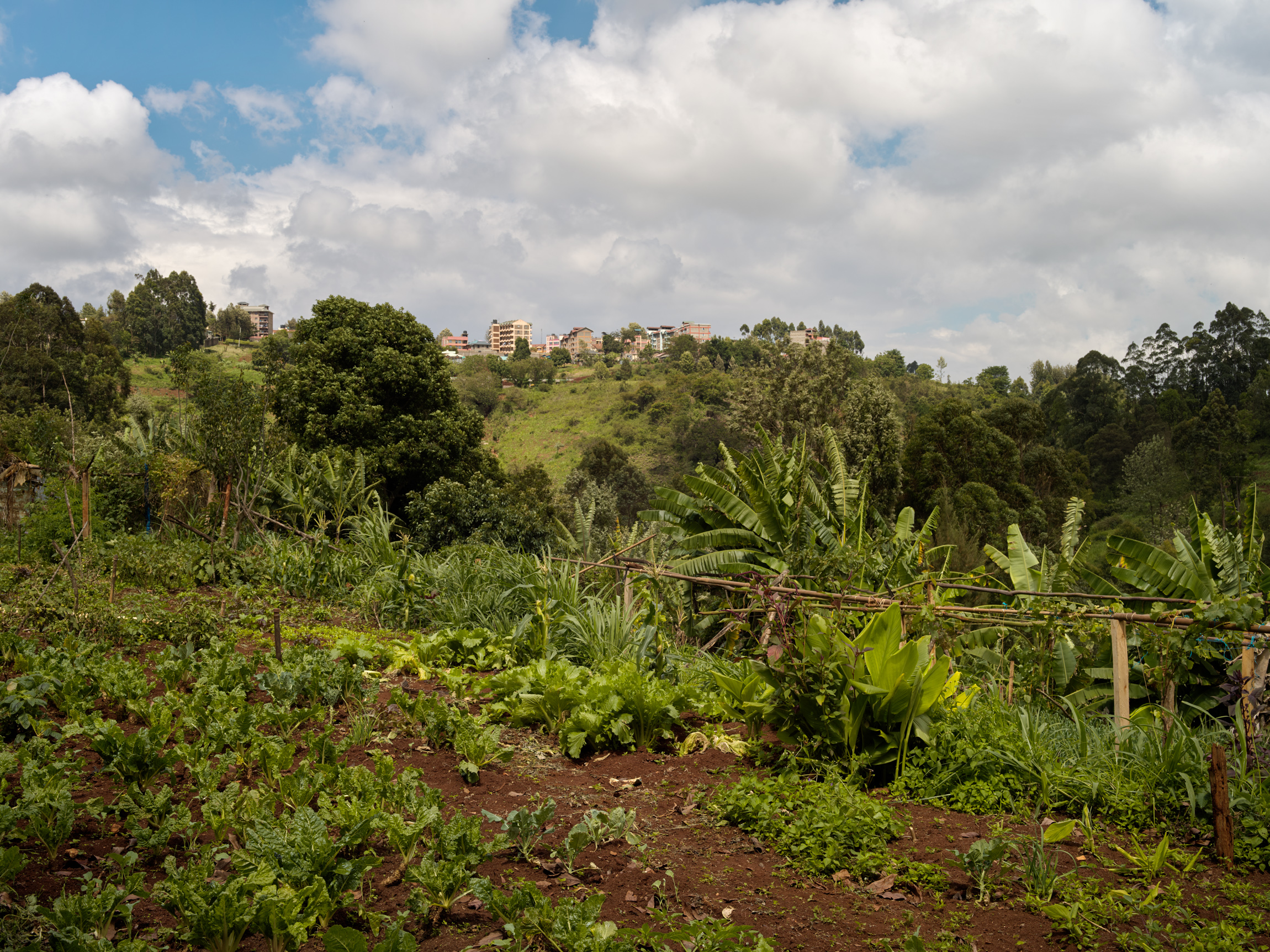
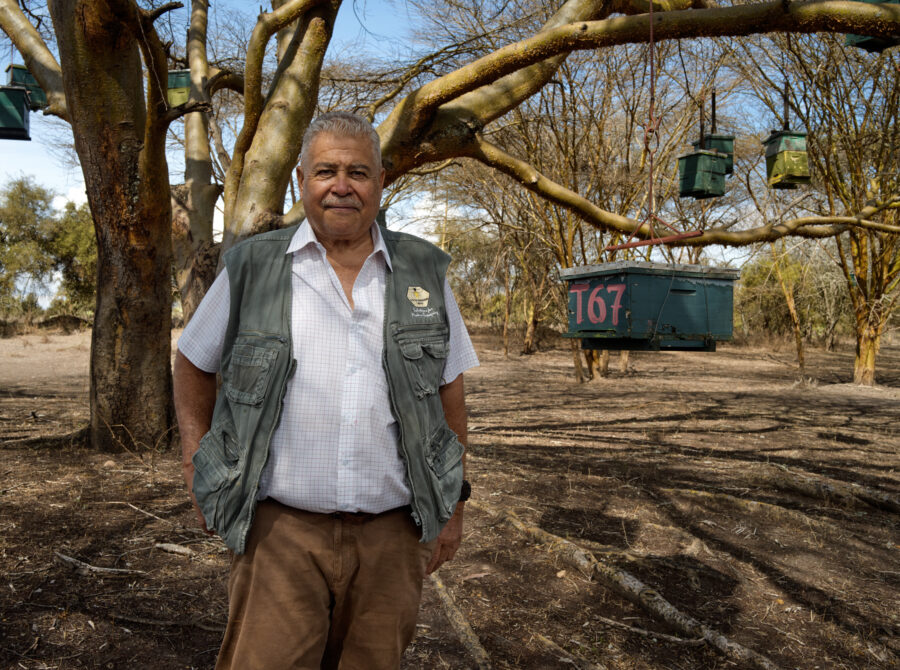
We meet Kiari Kamanu (71) at the farmers’ market in Nairobi, where at weekends he has a stall selling vegetables and fruit. He lays out his produce as if each item was a valuable diamond that he’d dug with great dedication from the steep piece of land behind his house. He’s been a farmer for quite a while, more than 45 years. He bought his first cow in 1973 and from day one he has always produced and eaten organic food.
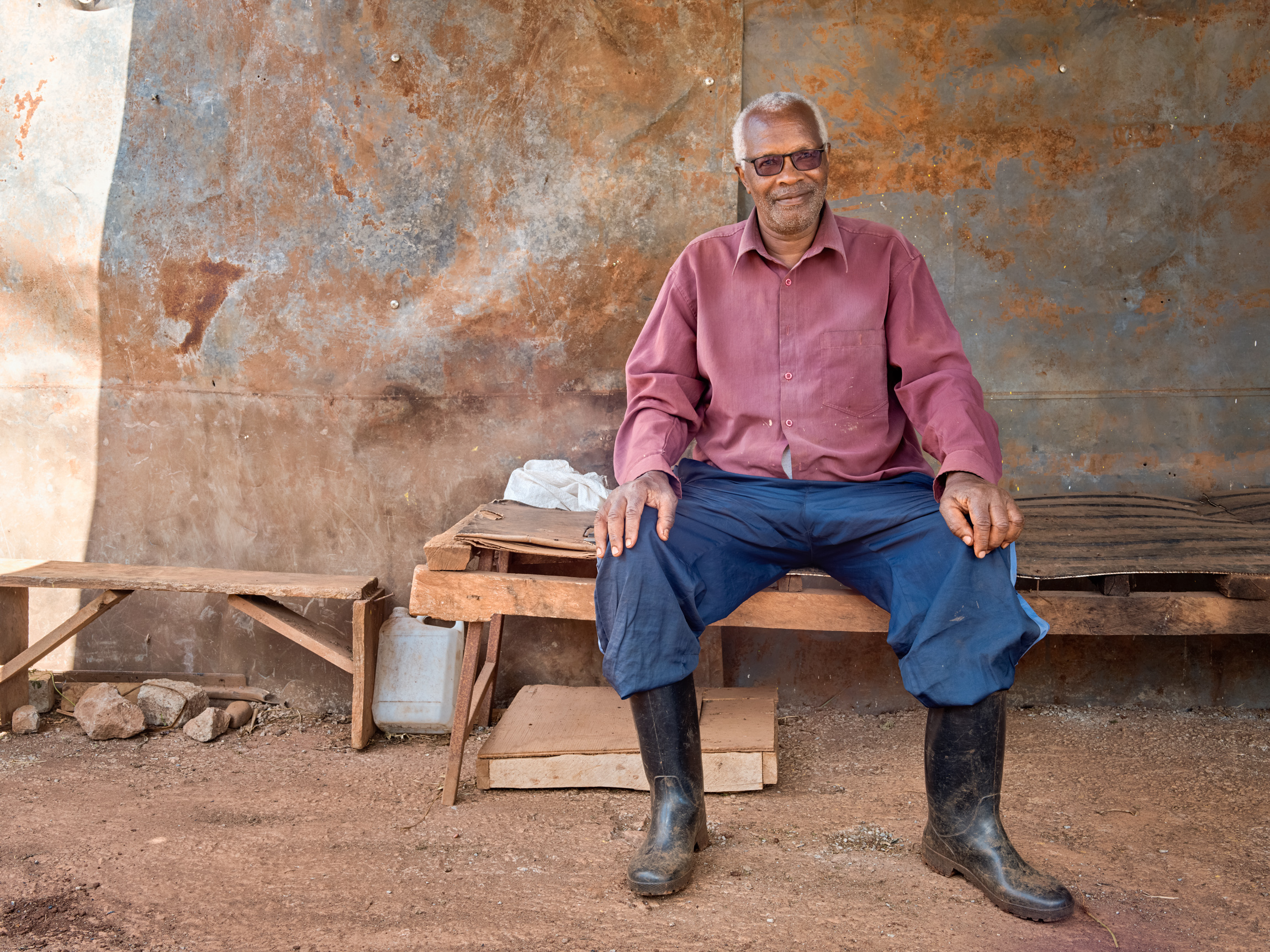 Kiari Kamanu Organic farmer
‘I have my cows, I have my goats, I have my rabbits, I have my chickens, I have my pigs.’ ‘My cows give me manure and that gives me biogas. My chickens give me meat, they give me compost. My fish give me water for seedlings. The seaweed will give me food for my chickens, for my cows and for my pigs.’
Kiari has dozens of rabbits and he uses their urine as fertilizer. Rabbit urine has a high nitrogen content, because rabbits drink very little water. It also contains a lot of phosphorus and potassium, which helps to improve soil fertility. Applying rabbit urine is an organic way of making the soil fertile. Kiari grows everything for everyone. More and more people visit his farm and participate in the work there as well as buying organically grown vegetables for themselves. He will grow specific varieties on request, as long as he can get hold of good quality seed, not GMO seed, and as long as people don’t expect him to treat his crops with artificial fertilizers, pesticides or fungicides. Kiari sometimes tires of the argument that organic farming is not productive, that it isn’t efficient. ‘With my 45 years of experience I can assure everyone that organic is the way to go.’
His biggest problem is getting good seed, organic seed, native seed, not GMO seed. He refuses to use GMO and has built up his own seedbank. He also has a secret source in the Netherlands who sends him seeds by post from time to time. It’s illegal, but that doesn’t bother him too much.
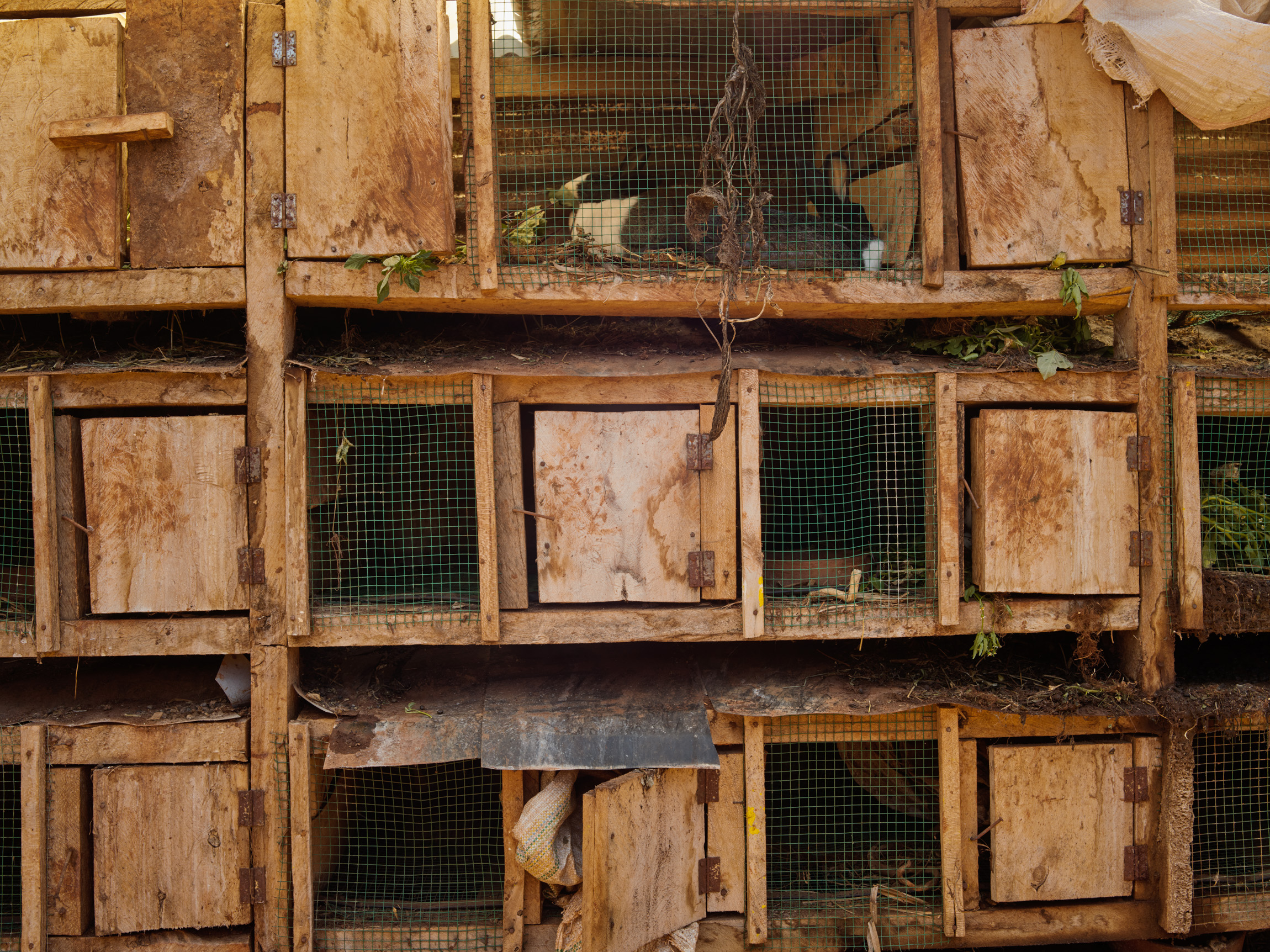
‘Over the past four or five years I’ve realized that the young people in Kenya, whom we sometimes call hustlers, are starting to come back to the farm. Because there’s nothing else they can do and they have a piece of land they want. But they don’t know how to go about it, and they don’t have the funds to go for the chemical production system. They come and ask me: What can we do? I tell them, Let’s grow organic. In terms of production it’s cheap. It’s long-term and it is healthy. The signals we are getting tell us that the mindset of the young community is geared to organic production. If we can help them, they’ll start helping themselves and they’ll start helping the next community, especially in this time of climate change.’