Along with Greece, Italy and Portugal, Spain is the country in continental Europe that is faced with the largest percentage of desertification and the greatest water shortages. Next to climate change, intensive and conventional farming are the main causes of this catastrophic form of land degradation. According to the European Commission, food security is at risk in the Mediterranean area, as 30% of its semi-arid regions have already been affected and 8.3 million hectares of agricultural land have been lost.
Conventional and intensive agriculture are causing many of the problems in these regions, which are already Europe’s poorest. The results include soil erosion and an ongoing reduction in soil fertility, a decline in biodiversity and a lack of both drinking water and water for crops. Another logical consequence is that more and more farmers are stopping without any prospect of a successor, abandoning these areas and thereby ensuring yet more desertification.
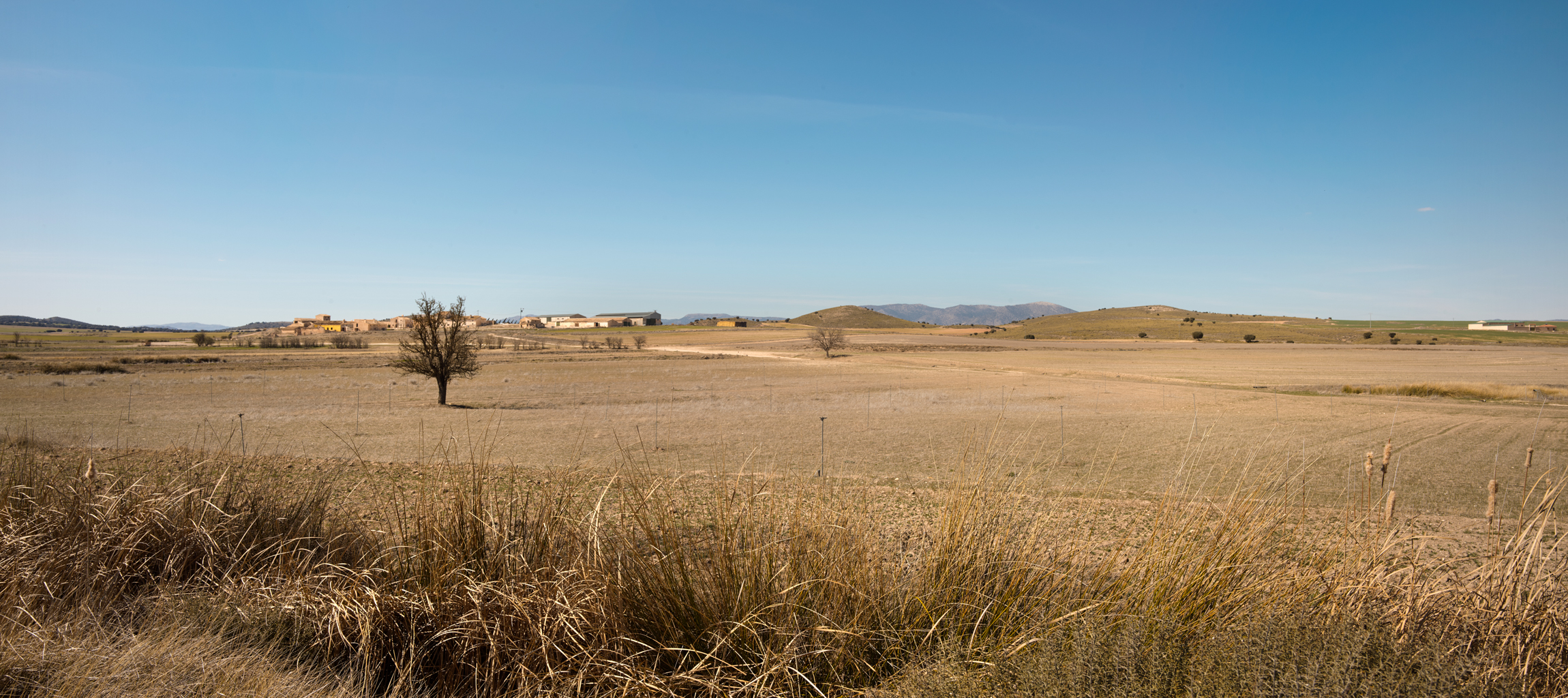
To create three stories about regenerative agriculture, we travelled to the Altiplano Estepario, a region of around a million hectares that encompasses five districts in the area where Almería, Murcia and Granada meet, three provinces that belong to the southernmost region of Spain, Andalusia. The land is semi-arid steppe (meaning a large area of flat, unforested grassland) and a transition zone between desert and Mediterranean woodland. In this landscape, water has always been scarce, but despite the demanding environment, it has been home to human settlement for centuries. Today its economy is mainly based on agriculture. Desertification and extreme climatic conditions, combined with unsustainable land management practices, have brought about a severe decline in biodiversity and in the land’s resilience to a harsh climate.
Methods of regenerative agriculture are intended to halt further desertification, but what exactly should we understand by the term? We asked four entrepeneurs in the Altiplano Estepario, all four of them pioneers of regenerative agriculture and all four passionate advocates of this sustainable way of farming, which does not exploit nature but works with it.
 La Junquera
We are on our way to La Junquera, the farm belonging to Yanniek Schoonhoven and Alfonso Chico de Guzman, to hear their story about regenerative agriculture. It’s early spring, the almond trees are blossoming, and even before ten in the morning, it is already much warmer than in previous years. It hasn’t rained here since May, ten months ago now.
La Junquera is a farm of 1,100 hectares in the Altiplano Murciano/Granadino, one of the areas of the Iberian Peninsula that exhibits the greatest desertification. Since 2015 it has been worked according to regenerative practices.
La Junquera is old. Its land has been farmed for more than a thousand years, for the past two centuries in a conventional manner, producing mainly grains. In 2012 Alfonso Chico de Guzman decided to take over the farm, which has been in his family for more than 200 years, from his father, and to try to breath new life into the degraded soil.
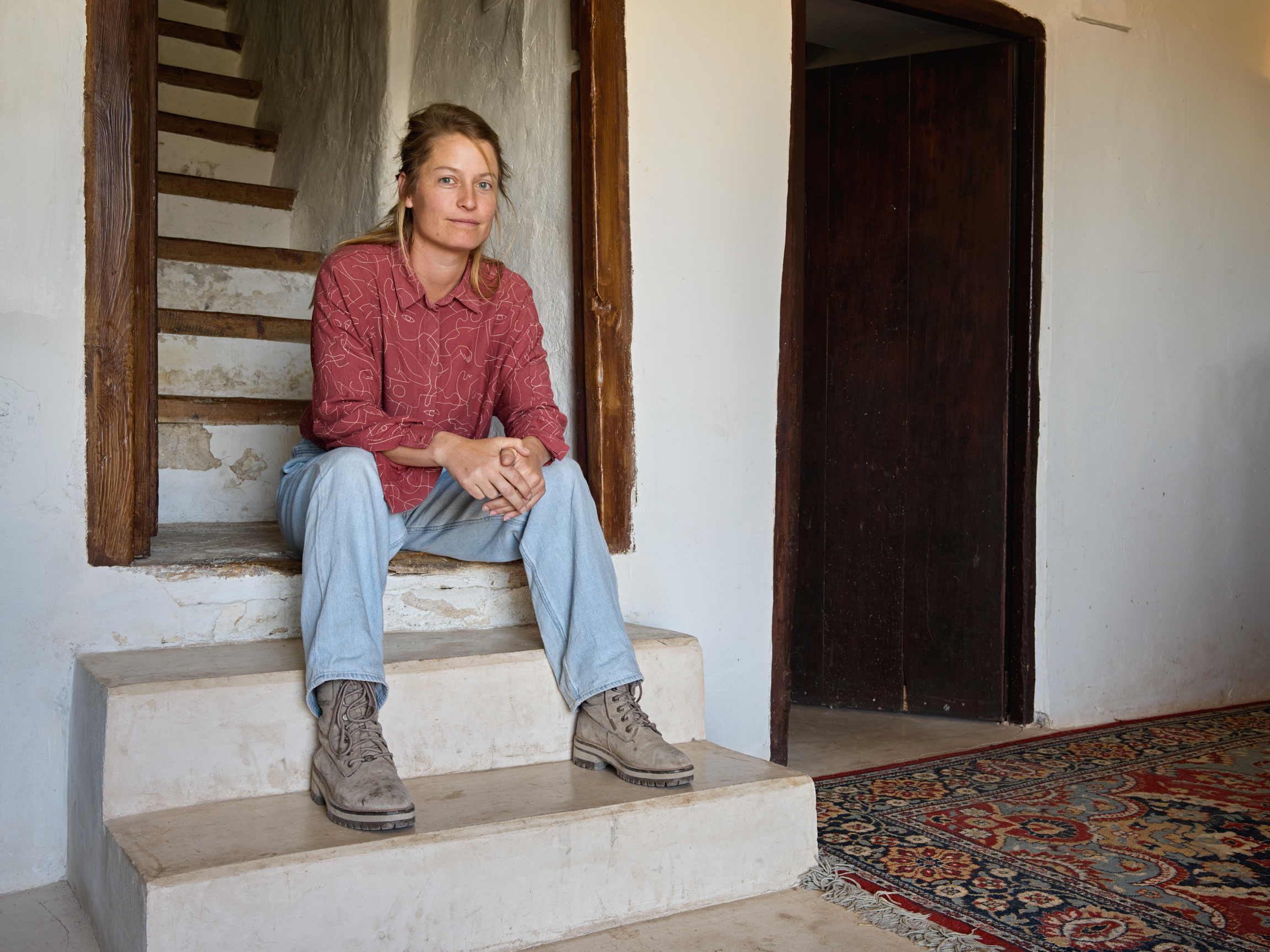 Yanniek Schoonhoven Trainer Regeneration Academy
We meet Alfonso’s wife Yanniek, who as a student left the Netherlands six years ago to research regenerative agriculture in this area for her thesis. She met Alfonso and never left. Now they run La Junquera together. More than just an agricultural enterprise, it’s a meeting place where regenerative and sustainable projects are developed in the fields of education, research, entrepreneurship and the restoration of ecosystems.
Ancient grains, almonds, wine, pistachios and vegetables are produced here. With a large group of volunteers and foreign students, they work on a 300-hectare forest restoration project and run The Regeneration Academy.
La Junquera is a lighthouse farm. Lighthouse farms bring together innovative farming methods from all parts of the world, which function as inspiration for the transition to sustainable food systems. Together they demonstrate the diversity and range of solutions that are available and necessary for worldwide agriculture if it is to meet the challenges of sustainability.
Regenerative agriculture’ is a catch-all term that has been hijacked by Big Agro as a form of greenwashing. ‘Regenerative agriculture is nothing more than fixing what we broke.’
In the film Yanniek tells her story, explaining how six years ago she was snowed in at La Junquera. That was how she met her husband and ally in the struggle against desertification and the destructive impact of industrial farming.
A group of people have decided to dedicate their lives to regeneration, all working in a community towards a great cause: to regenerate and restore the land and provide opportunities to the countryside. To protect the soil against erosion and to increase the amount of carbon capture, they are taking on ground-cover plants and starting a vermicompost project to add composted organic material to our fields. To manage the scarce water resources, they increase the amount of organic matter in the soil and dig ponds for water retention and storage. They also use sediment traps and infiltration ditches to improve the distribution of rainwater and to avoid the loss of nutrients as a result of erosion.
'We are reforesting our nature reserves with local species, and creating spaces where animals and pollinating insects can live at the farm. We also make livestock part of our regenerative practice, to improve the fertility and health of our soil.'
Yanniek SchoonhovenOur visit to La Junquera and our conversation with Yanniek has made an impression on us. ‘Fix What We Broke.’ Simple as that. Regenerative agriculture is more than a way of farming. What Yanniek and Alfonso are doing is not just restoring the soil but restoring and preserving communities, securing the future for generations to come. We take a beautiful road trip through the Altiplano Estepario. The landscape shows itself at its best: the almond blossom, the mountaintops, the vast open spaces, the blue skies. It’s absolutely beautiful. But in many places the landscape also displays the ugliness of industrial farming and monoculture. Every single bit of land, every little plot, is exploited for some form of agriculture – mainly almonds, with the inevitable consequences. It’s early March and already over thirty degrees.
We stop along the way to photograph one of the thousands of almond orchards in this region. They have brought the area both prosperity and calamity. It’s a surreal image, a lunar landscape of white rock, a desert with thousands of small trees lined up, standing there sucking the last drop of water out of the ground, where nothing else grows, not a single blade of grass. All leaves and flowers are seen as competition for that remaining scrap of water. This attitude results in depleted soils that are eroded by exposure to sun and wind, and overexploitation of aquifers and in loss of biodiversity. That is the toll of the almond industry.
Spain is the second largest producer of almonds in the world after the United States. Global consumption of almonds more than doubled in the first fifteen years of the twenty-first century, and over the next few years it will continue to grow by around 9% a year. Fortunately, the proportion of almonds grown using organic and regenerative agriculture is increasing hugely in this region, partly as a result of efforts by AlVelAl.
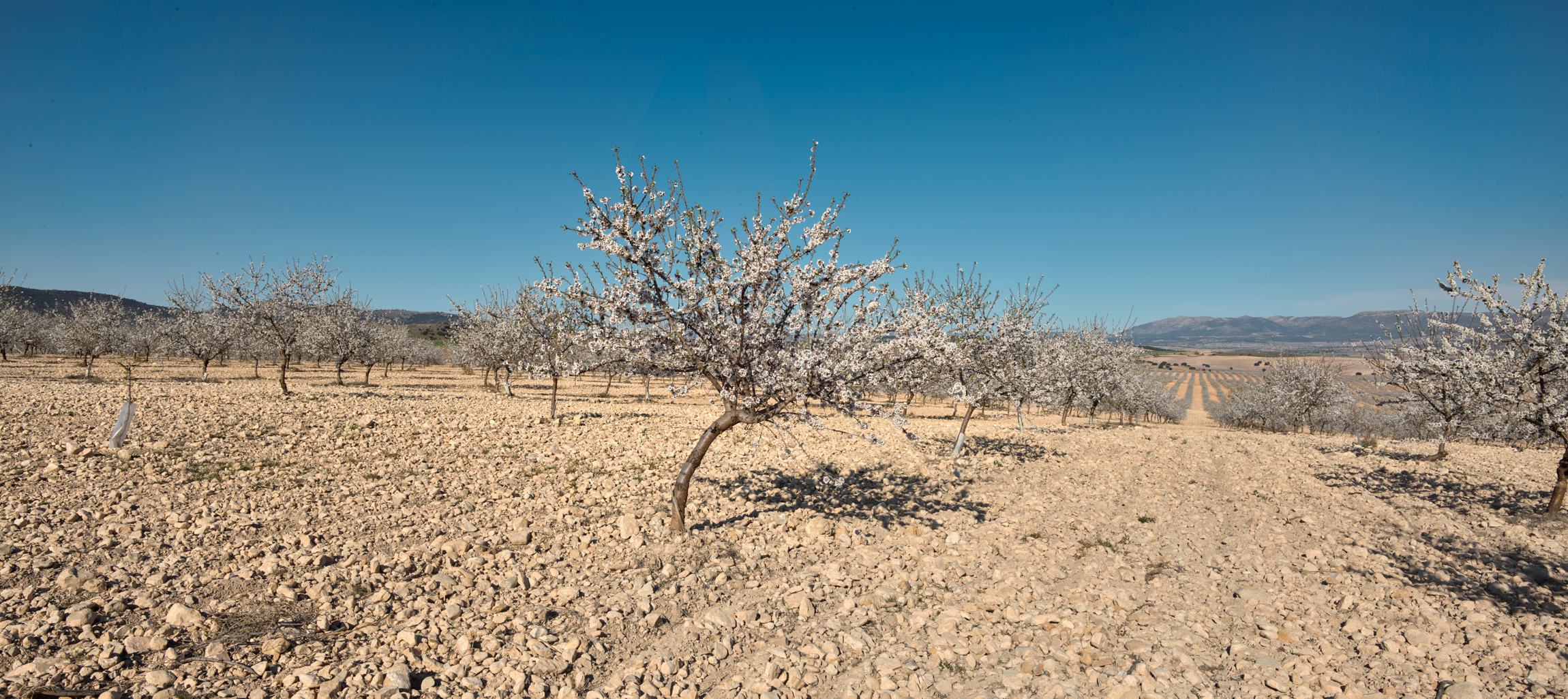 Conventional Almond Orchard
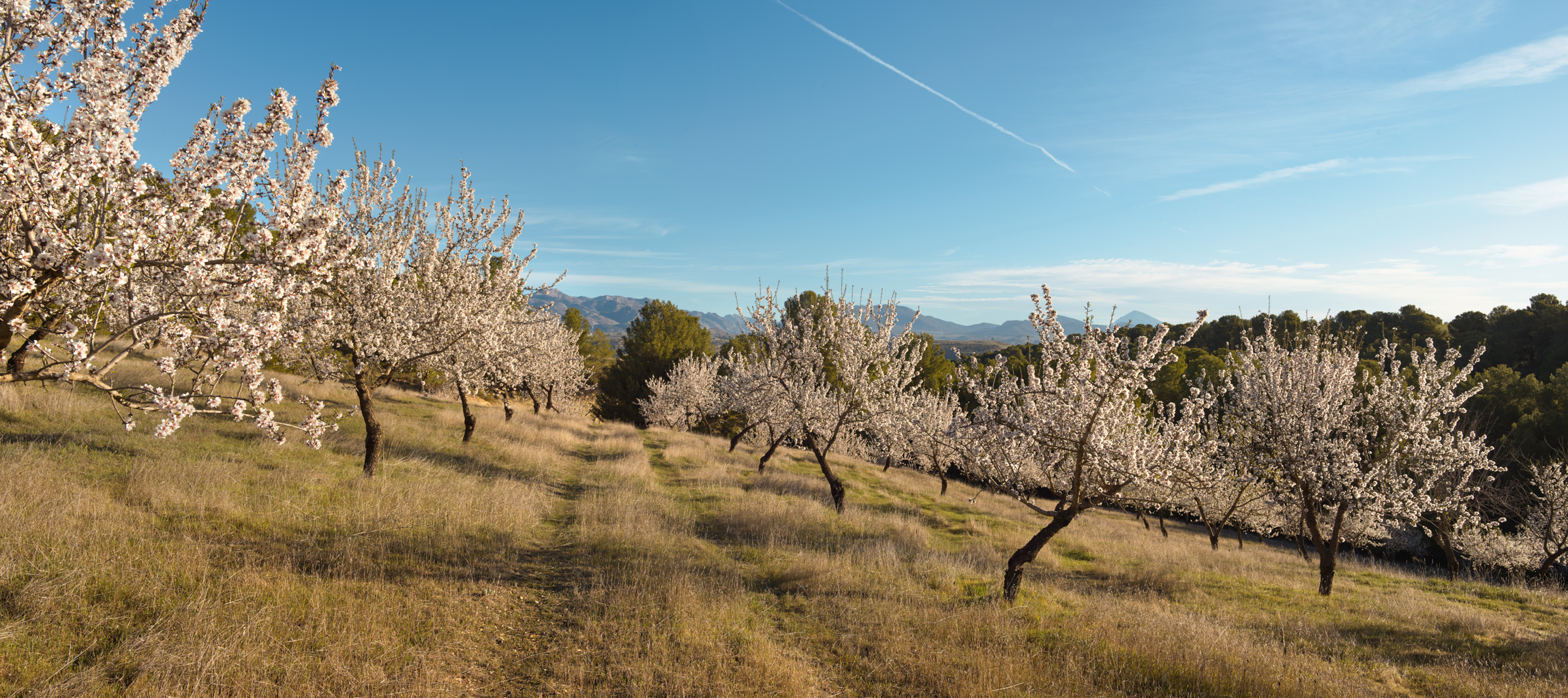 Regenerative Almond Orchard, Maikal Lara
‘I want a healthy soil that gets better every day, and to feel that what I do is my identity.’
Maikel Lara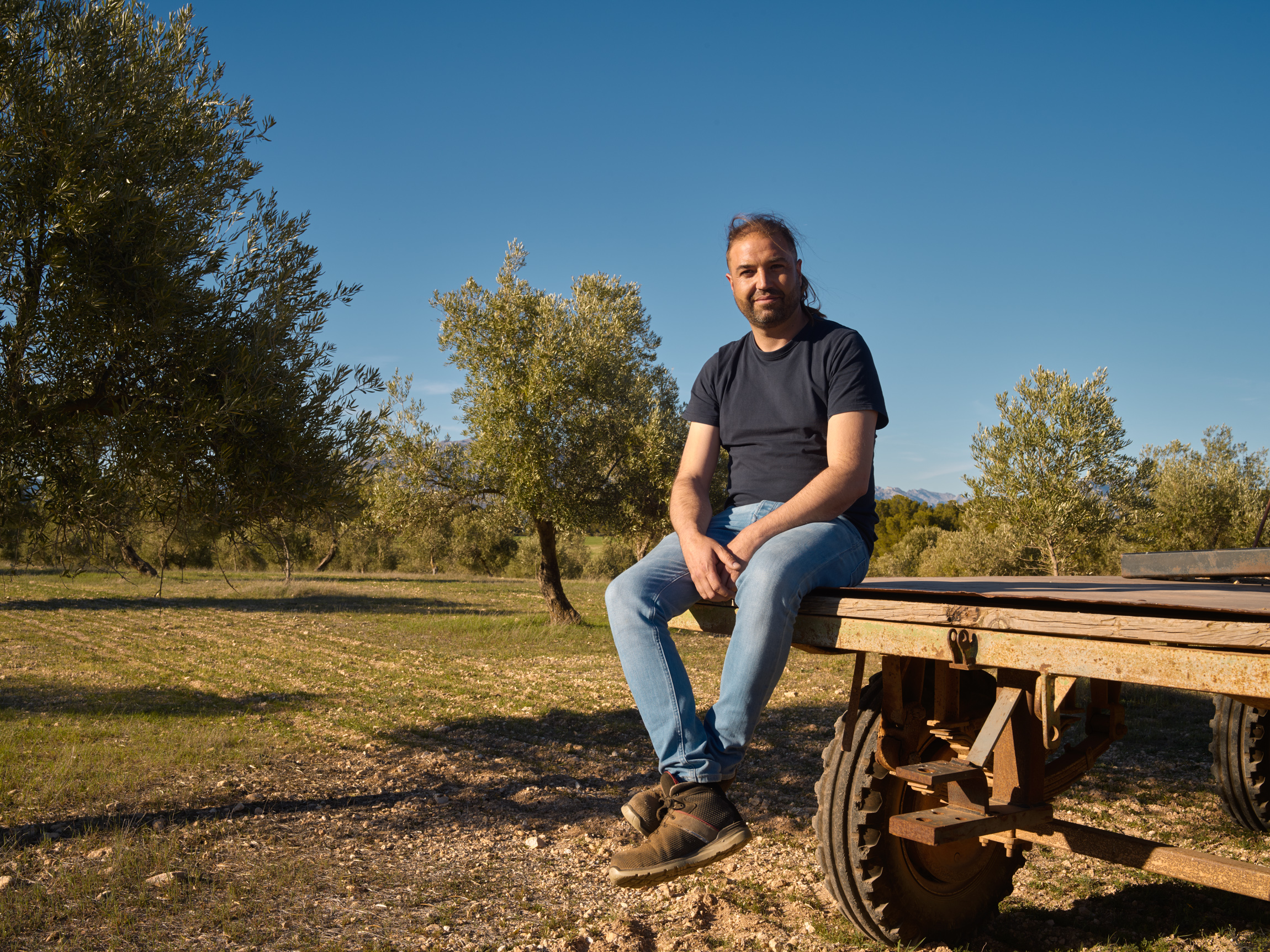 Maikel Lara Regenerative Organic Farmer
We meet Maikel in the café in his native village in Campocámara, a tiny village in the municipality of Cortes de Baza. Maikel comes from a farming family, and as a child he already knew he wanted to be a farmer like his father. We saw how that happened in the afternoon after lunch, on his 35 hectares of land. As soon as he got out of the car he was transformed into the little boy he had described, who went out into the fields with his father. He called his sheep and walked over to them, whistling and talking to them. Here Maikel feels at home. This is his habitat, his living room. Maikel runs his father’s family farm. He has extended the existing crops and introduced sheep to the business. For Maikel the sheep are key to the regenerative agricultural practices of mulching with excess wool, eating and managing the available green manure, saving on feed supplements, and fertilizing the soil with organic additives that are supplied by the animals. Maikel runs the 35-hectare farm alone and also makes a fantastic award-winning olive oil called ‘ORO Del DESIERTO’.
This type of agriculture is fundamental if we are to have a living countryside, both for us and for the generations to come. We go out onto Maikel’s land early to photograph the orchards. Here the landscape shows itself at its most beautiful. It demonstrates what is possible. We think back to what Maikel said to us the day before: ‘It’s not like the industries and engineers tell us; this is natural farming. I would like everyone to see it the way I see it.’
‘I practise regenerative agriculture because this is the future, so that tomorrow it will still be alive.’
Maikal Lara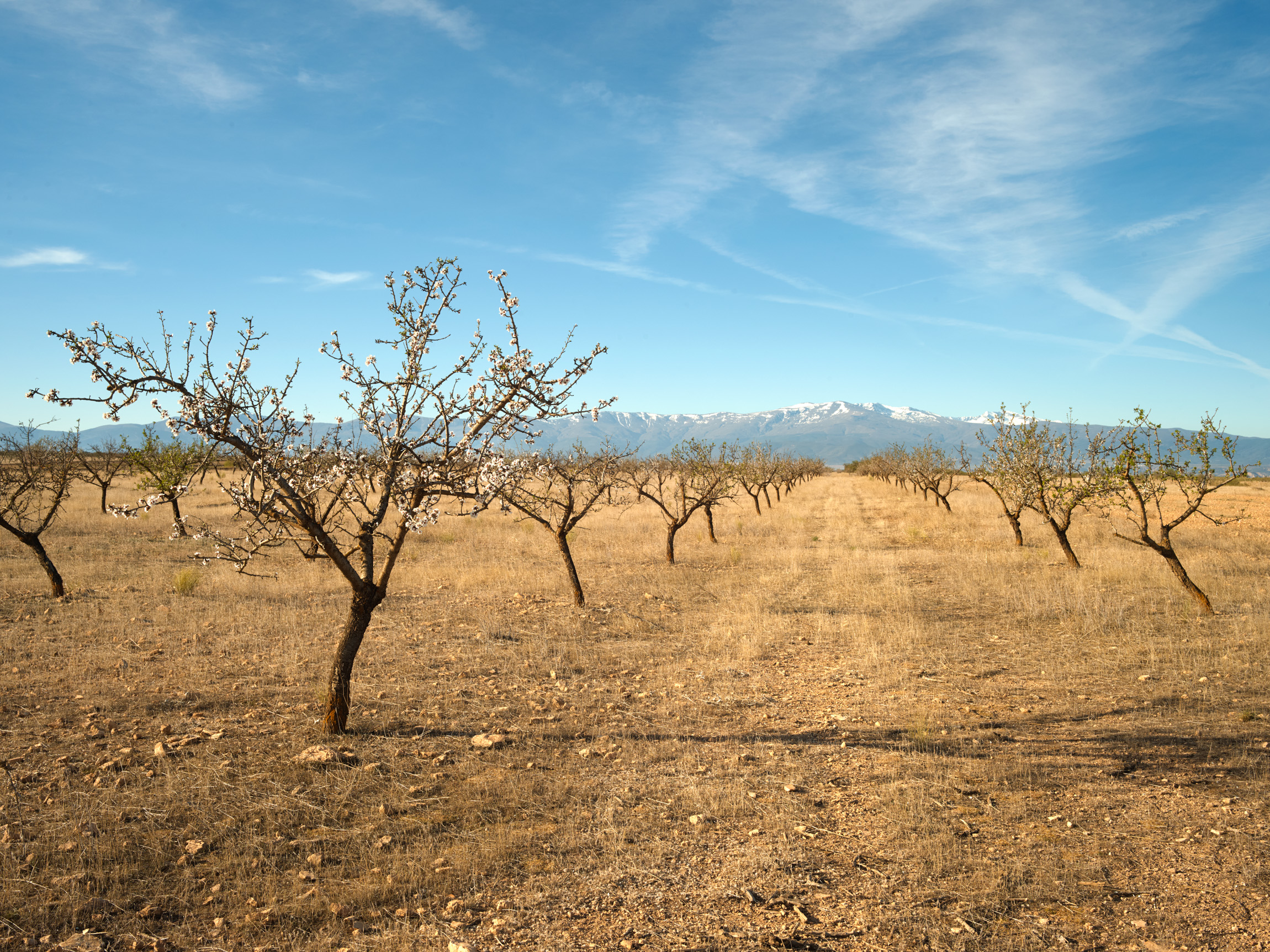
‘Right from when I was little, my father instilled in me love and pride in livestock farming.’
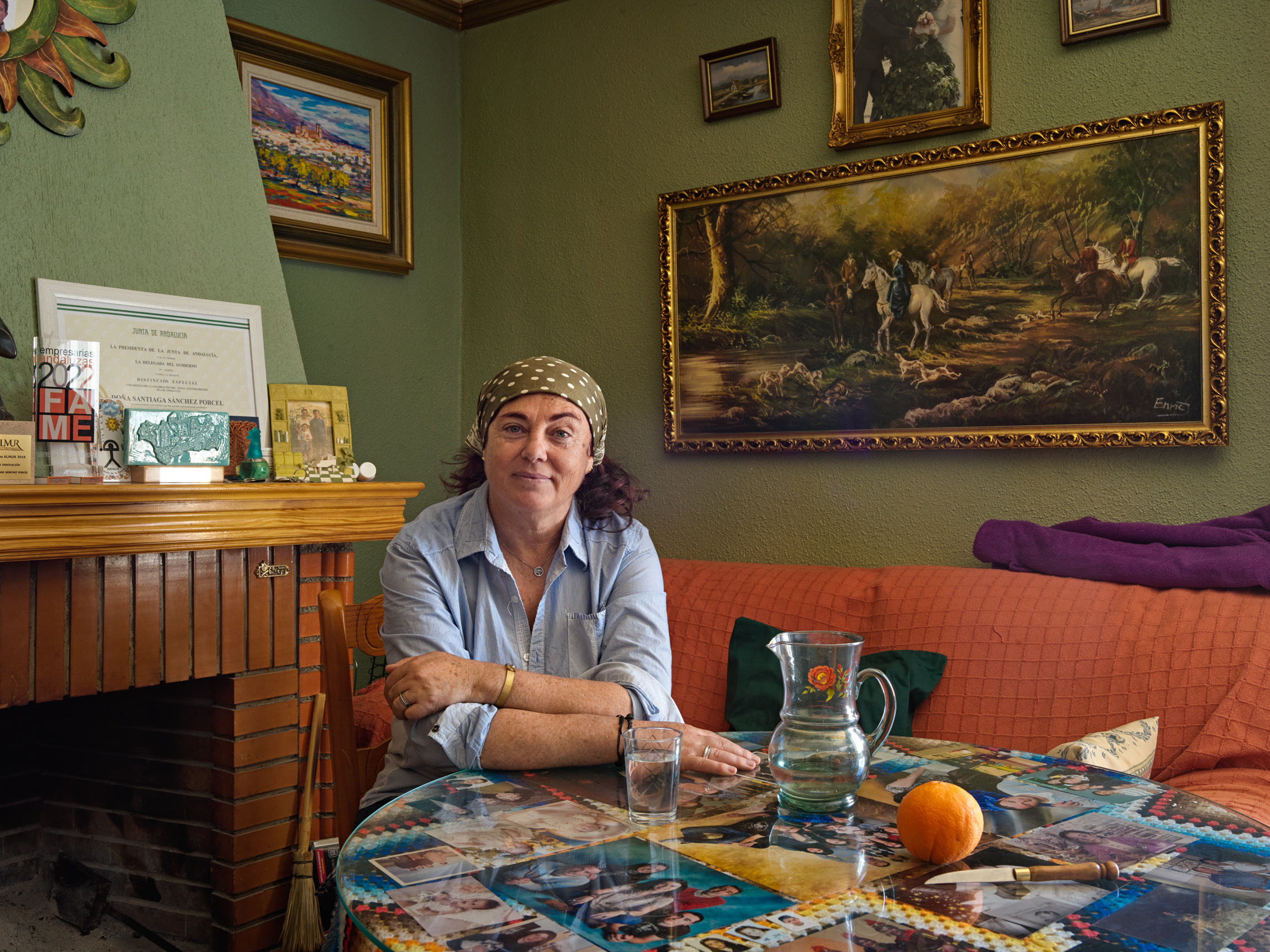
We are on our way for a visit to Santi (Santiaga) Sánchez, vice-president of AlVelAl, a crop and livestock farmer in the region of Los Vélez in Almería province in Andalusia, Spain. The trip shows us an endless number of almond orchards in a bone-dry desert landscape.
 Santiaga Sanchez Regenerative Farmer
We’re sitting around the table with Santi in her grandparents’ farmhouse. She inherited her love of farming from her father, who took her out onto the land with him when she was a young girl, and told her stories.
‘Right from when I was little, my father instilled in me a sense of love and pride in the land and the livestock. He told me inspiring stories: to me they were stories, but to him they were real. And when we came back from the land my mother and grandmother would be there. My widowed grandmother taught me everything she knew: how to knead dough for bread, to make cheese, pick olives, spin wool, make socks. It made me proud and taught me the importance of tradition.’ Santi tells her marvellous story on film, at the farmhouse table. To Santi this is not merely nostalgia but the essence of what regenerative agriculture is all about. After visiting the almond orchards with her, where she tells us about her farming practice, what she does and how she does it, we ask her to tell her story in front of the camera too.
‘Our farm is a system with a closed cycle. Everything is integrated. We have 56 hectares of almond trees here, of different ages.There are around 70 hectares of grains, legumes and fallow land, which we use in a rotation system. It’s grazed by our sheep. We have 60 Segureña sheep, a native breed that, as well as being grown for meat, produces dung that we use as compost. The sheep also help us to manage our ground-cover plants.
You could describe it as a holistic management system, an ecosystem in which everything works together. We grow aromatic plants between our trees, plants that hold onto moisture and add nutritional value to the almonds. We measure and study, in collaboration with researchers and scientists.’
Regenerative farming could also be called agro-ecological farming, or healthy farming, or common-sense farming, farming that has meaning. But it’s not just about regenerating the land, it’s about the people on the land too. How can we regenerate ourselves? Not just through regenerative agriculture but by creating self-respect in people whose parents, people of my generation, told them:
Go to university, gain qualifications, go away, get a diploma, move to the city; here in the countryside you’ll be a slave. Here you have no future, no steady job. You’ll always be watching the weather. Year after year, a whole generation drummed this into their children. We need to turn that around. That is regeneration.
‘Go to university, gain qualifications, go away, get a diploma, move to the city; here in the countryside you’ll be a slave. Here you have no future, no steady job. You’ll always be watching the weather. Year after year, a whole generation drummed this into their children. We need to turn that around. That is regeneration.’
Santiaga Sanchez