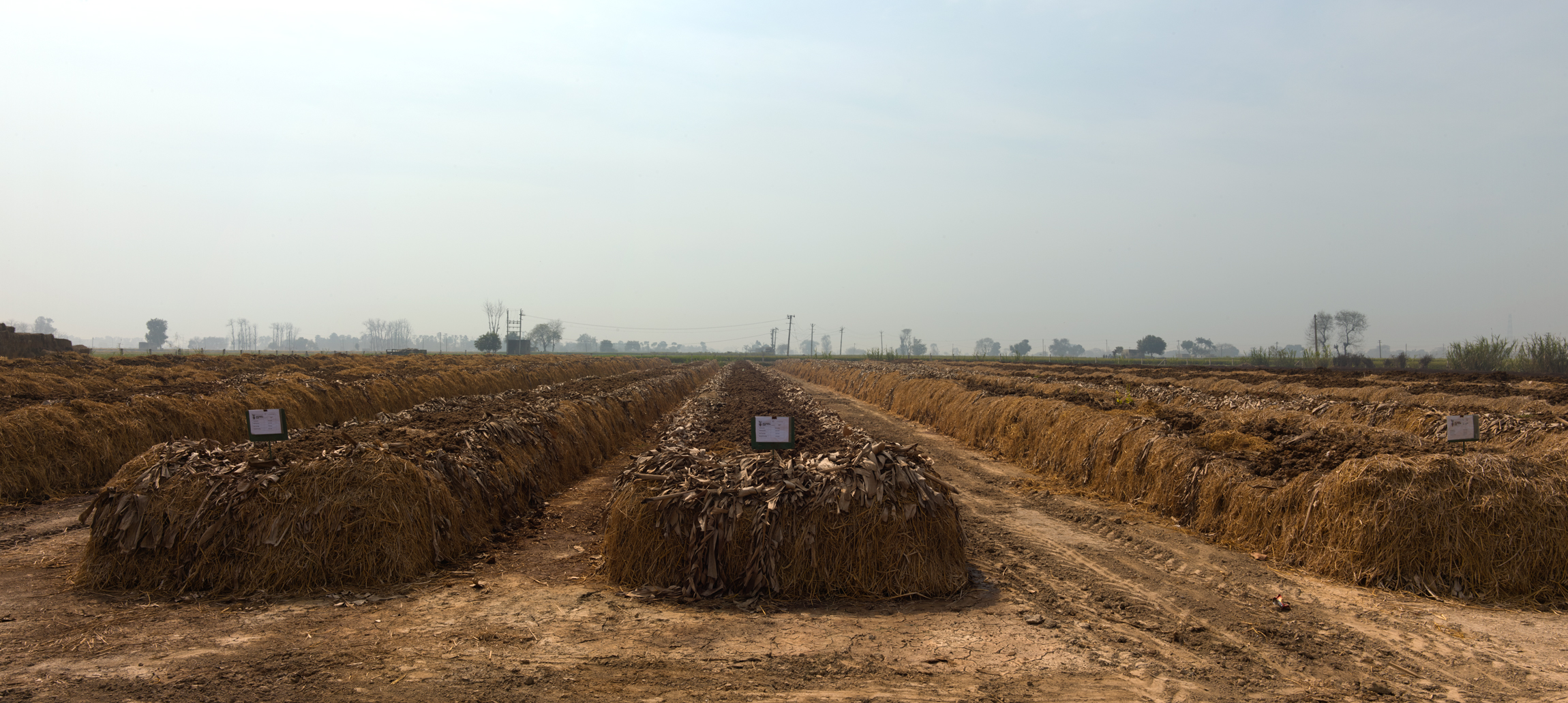
Where were we? A seven-acre stretch of farmland just outside the centre of the metropolis of New Delhi, a city with more than 27 million residents with mouths that need to be fed. Talking about India means talking about dizzying statistics. With only 4% of the world’s water supply and 2.4% of the world’s land surface, India feeds 18% of the world’s population and 15% of the world’s livestock. India is a great power in every respect. It is now the sixth biggest economy in the world, and it will soon catch up with Germany and Japan to become the third biggest. It is also a young country; 65% of the population is under the age of 35. India is the world’s largest producer of milk, legumes and spices. It has more livestock than any other country in the world, as well as the largest acreage of wheat, rice and cotton. It is the world’s second biggest producer of rice, wheat, cotton, sugarcane, farmed fish, mutton and goat’s meat, fruit, vegetables and tea. It farms around 195 million hectares, of which some 63% is dependent on rainwater (roughly 125 million hectares), while 37% is irrigated (70 million hectares). India also has some 70 million hectares of forest. Farming’s share of the Indian economy is declining year on year and now adds up to just 15%. This is a consequence of the growing economic importance of India’s industrial and services sectors. Hundreds of millions of people, however, amounting to more than half of the population, depend on farming for their income, the vast majority of them living and working in the countryside. They mostly belong to the poorest stratum of people in India. All kinds of political promises about the doubling of farming incomes, about subsidies and market interventions that would allow the rural population to share in the country’s increasing prosperity, have not been fulfilled up to now.
The Green Revolution
Indian agriculture is generally identified with the ‘Green Revolution’ that began in the 1960s. It enabled the country to achieve great progress in domestic food production and made a considerable contribution to advances in related sectors. It transformed India from a country of food shortages into an export-oriented country with surpluses; 42 countries in Asia and Africa, for example, are currently dependent on India for more than half their rice imports.
It is true to say that before the Green Revolution, all farming in India was entirely organic. The arrival of better crops and new agricultural techniques not only transformed the country from a land of food shortages to a land of surpluses, it opened the door to Big Agro. As a result, much of India’s biodiversity was lost, including many native plant species, and the coming of Big Agro also meant that much of its centuries-old farming knowledge and farming culture disappeared. Climate change, the excessive use of water, the degradation of soils as a consequence of the intensive use of artificial fertilizer and other chemicals, and poverty are the huge challenges that Indian farming faces.
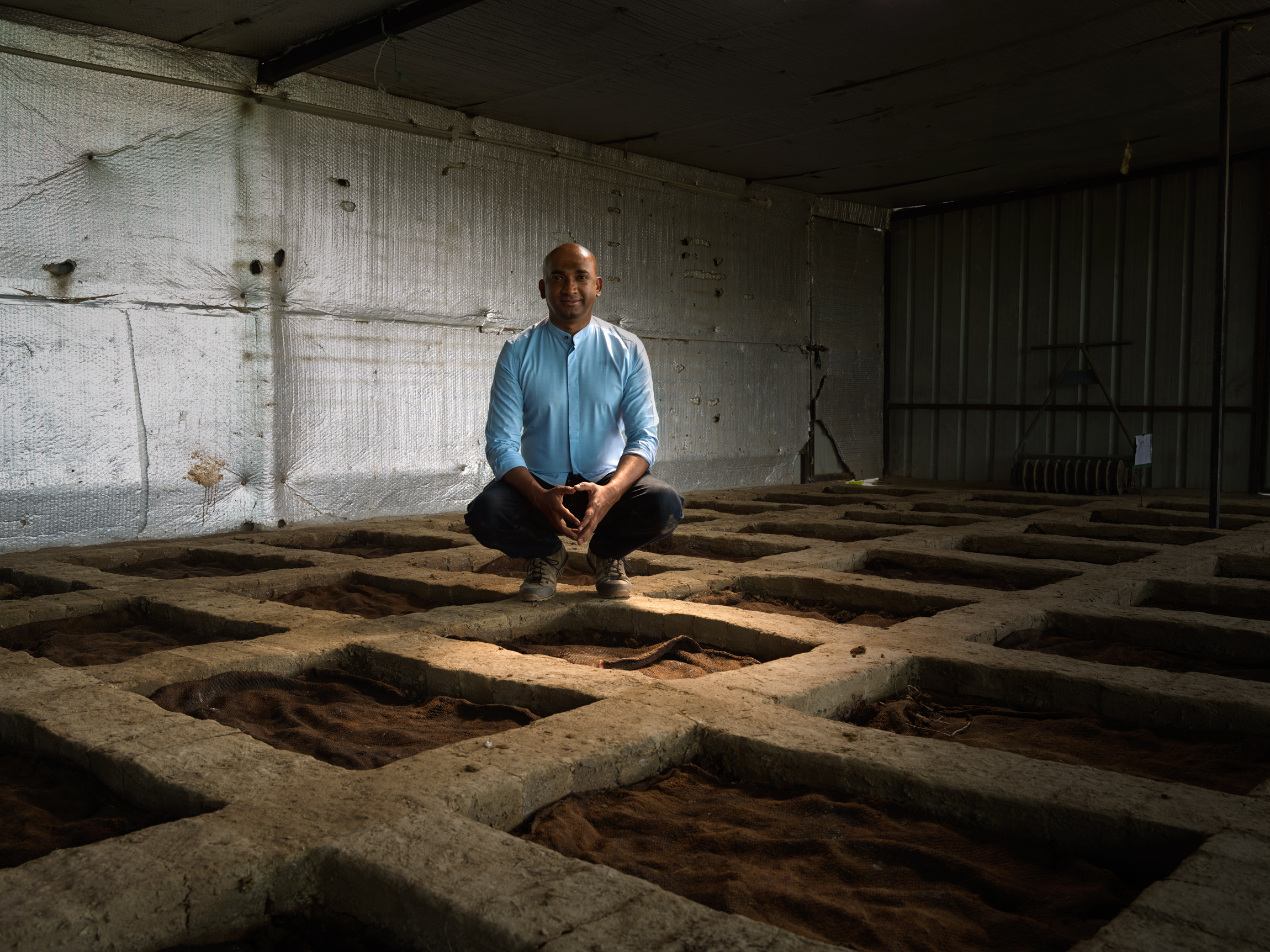 Vikash Abraham, CEO Urban Farms Co., India
‘We had to take responsibility across the food system to ensure that it's a transformation of the system as such.’
Vikash AbrahamWe met Vikash Abraham at one of the hubs where The Urban Farms Co. provides the compost and the locally produced inputs that stimulate the revitalization of soil life. We found ourselves looking down at a large number of pits in which C100 is produced, a very potent substance that gives a boost to the rhizosphere of the plants, helping with plant nutrition as well as disease resistance.
What Urban Farms and Vikash have in mind with their activities is nothing less than to change the entire food system. The fertility centre where we meet Vikash and his team is one place because of which farmers can make the transition to a regenerative way of growing food. It is not just the huge scale on which Urban Farms is developing its activities that makes an impression, it is also the combination of ancient farming techniques and farming wisdom with new technologies. Food, health, economic, social and spiritual aspects are all part of this holistic approach.
Vikash leads the Urban Farms Co. project within Naandi. He is convinced that soil fertility, the environment, farmers and consumers must be in a symbiotic relationship with each other. That alone can lead to a farming model that is profitable, scalable and focused on the health of human beings, plants, soil and the planet.
The hub and the fertility centre are located in the Palla region, very close to the Yamuna, one of the most important rivers in India. The region is blessed with fertile soils and plentiful water. It is a green area where traditionally very many small farmers have been based. The hub lies less than an hour’s drive from New Delhi. In this region, where mostly vegetables are grown, a great deal of pesticide and herbicide treatments have been used over the past 60 years. This has exhausted the soil and damaged health, including that of the farmers, their children and the people who have eaten the food.
The area is characterized by its multiplicity of small farms of less than about two and a half to five Acres. Some sixty varieties of summer and winter vegetables are grown here.
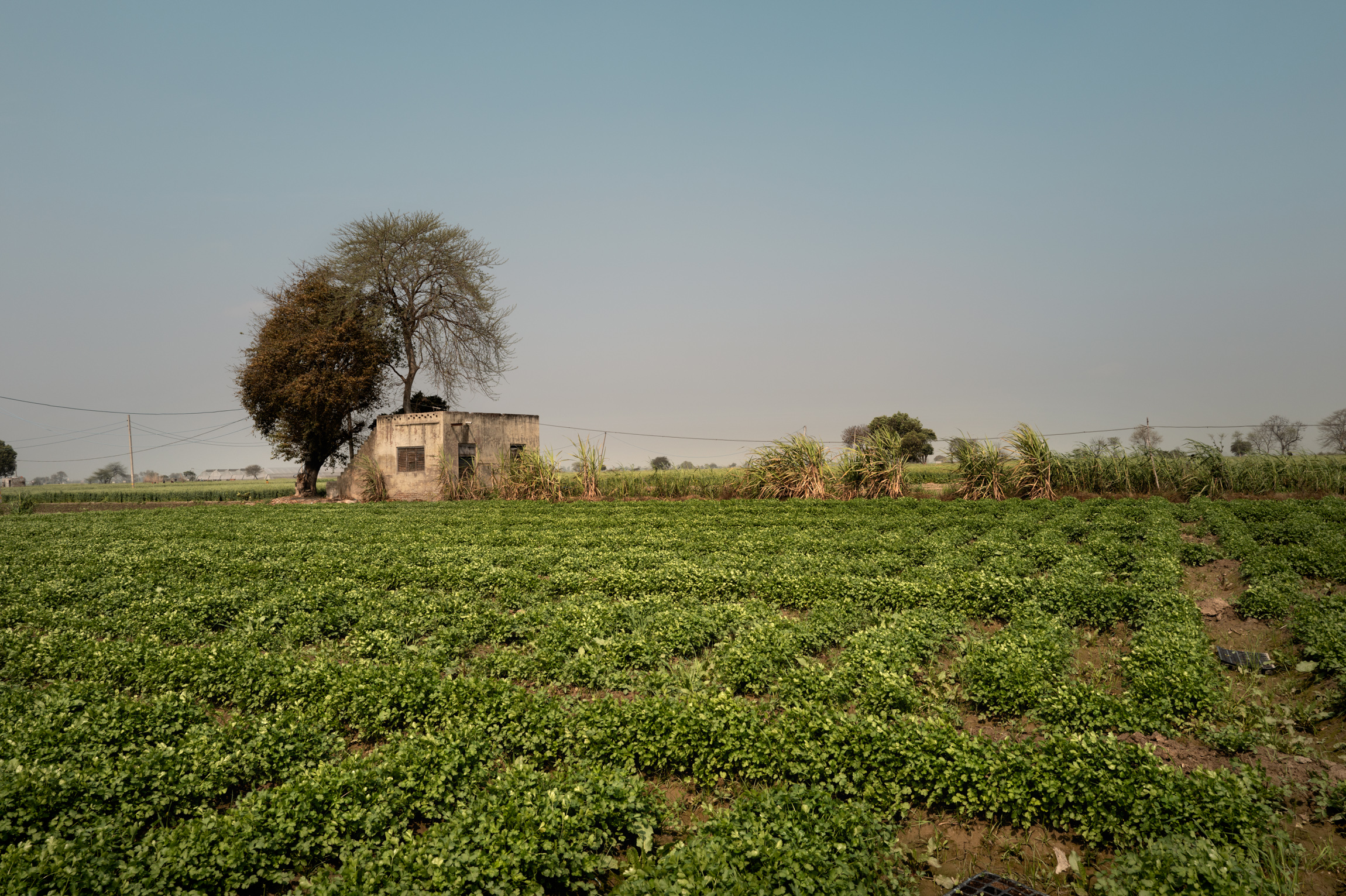
Nowhere does the landscape betray the fact that we are in India
There are no mountains; the land is as flat as our own Netherlands. Farmers in this area close to Delhi do not live in farmhouses but in homes some distance from the land on which they grow their crops. Huts indicate roughly where that land is. These simple shelters serve to protect people against the almost always scorching sun, and as a place for the farmers, their workers and their families, often including grandparents, to rest or to have lunch. Practically everyone in the family is involved in working the farm.
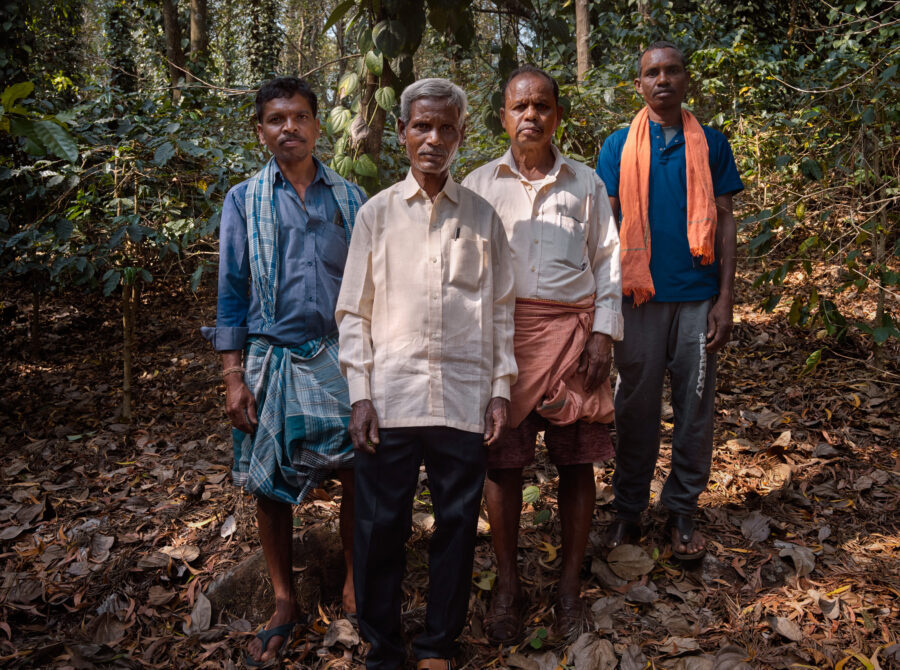
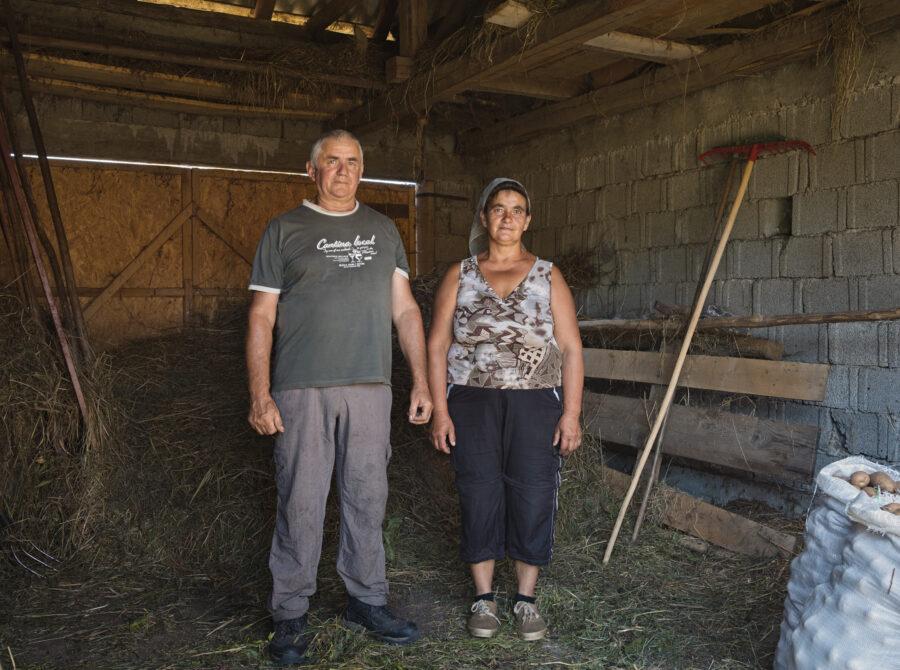
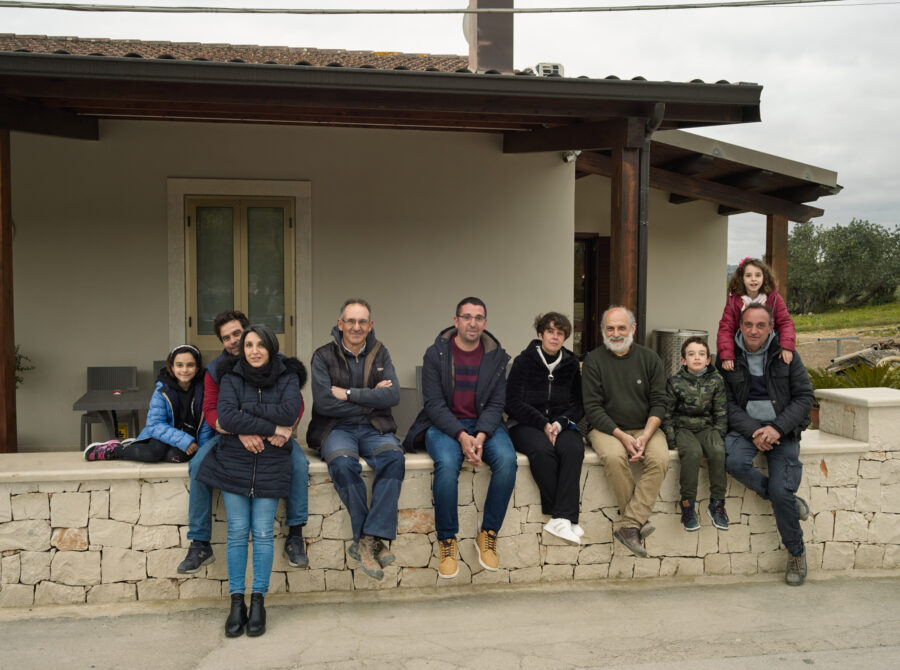
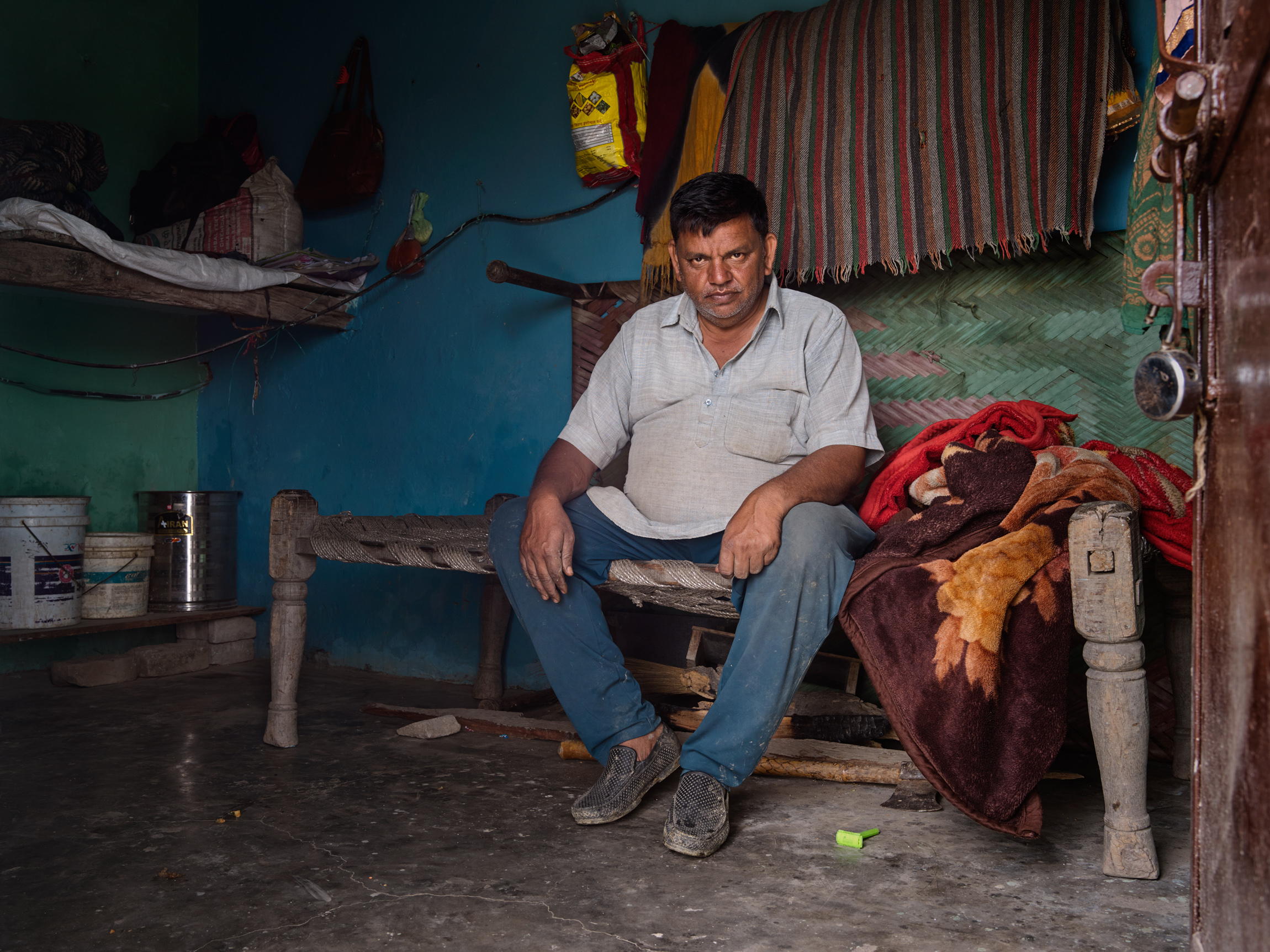
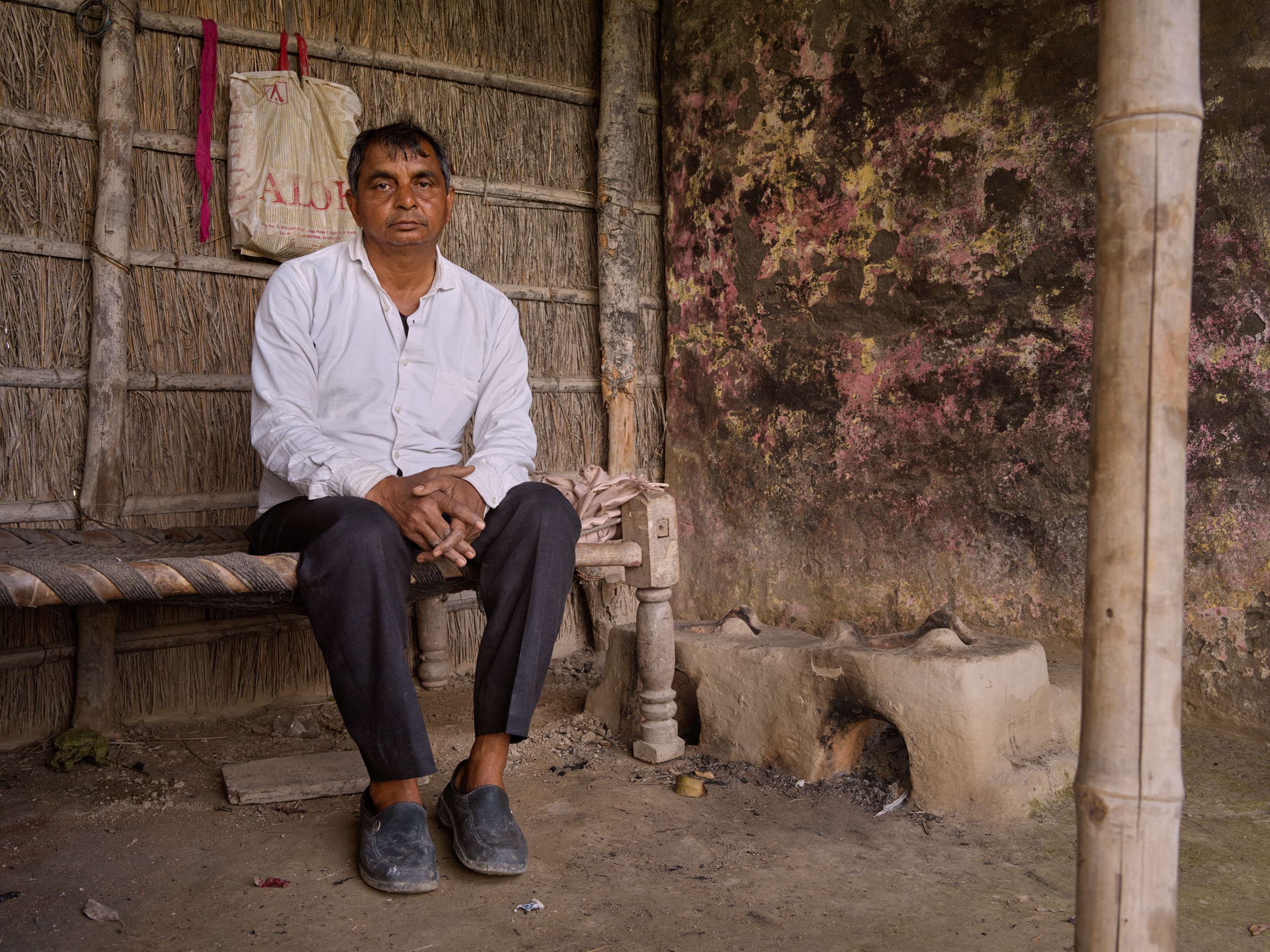
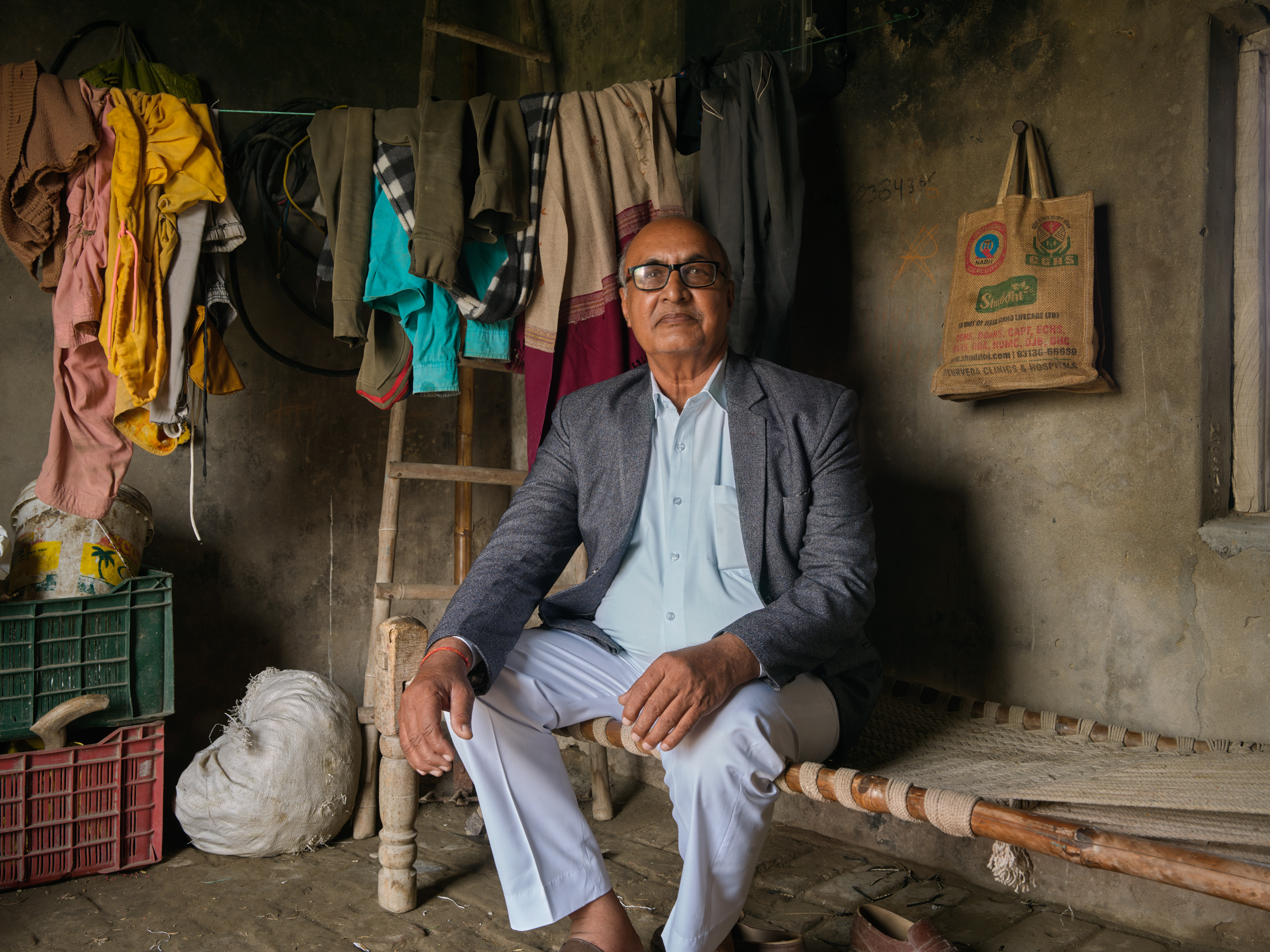
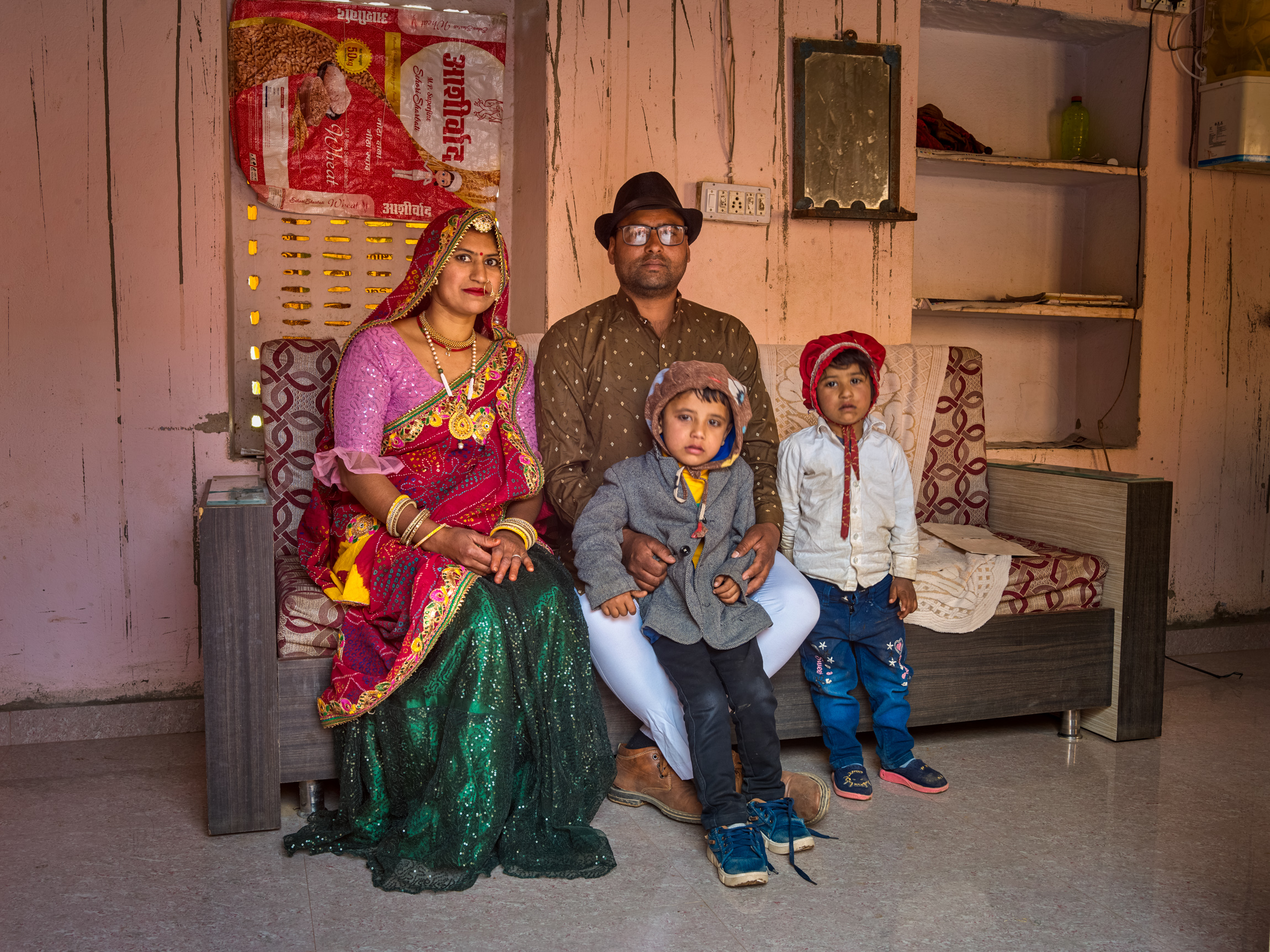
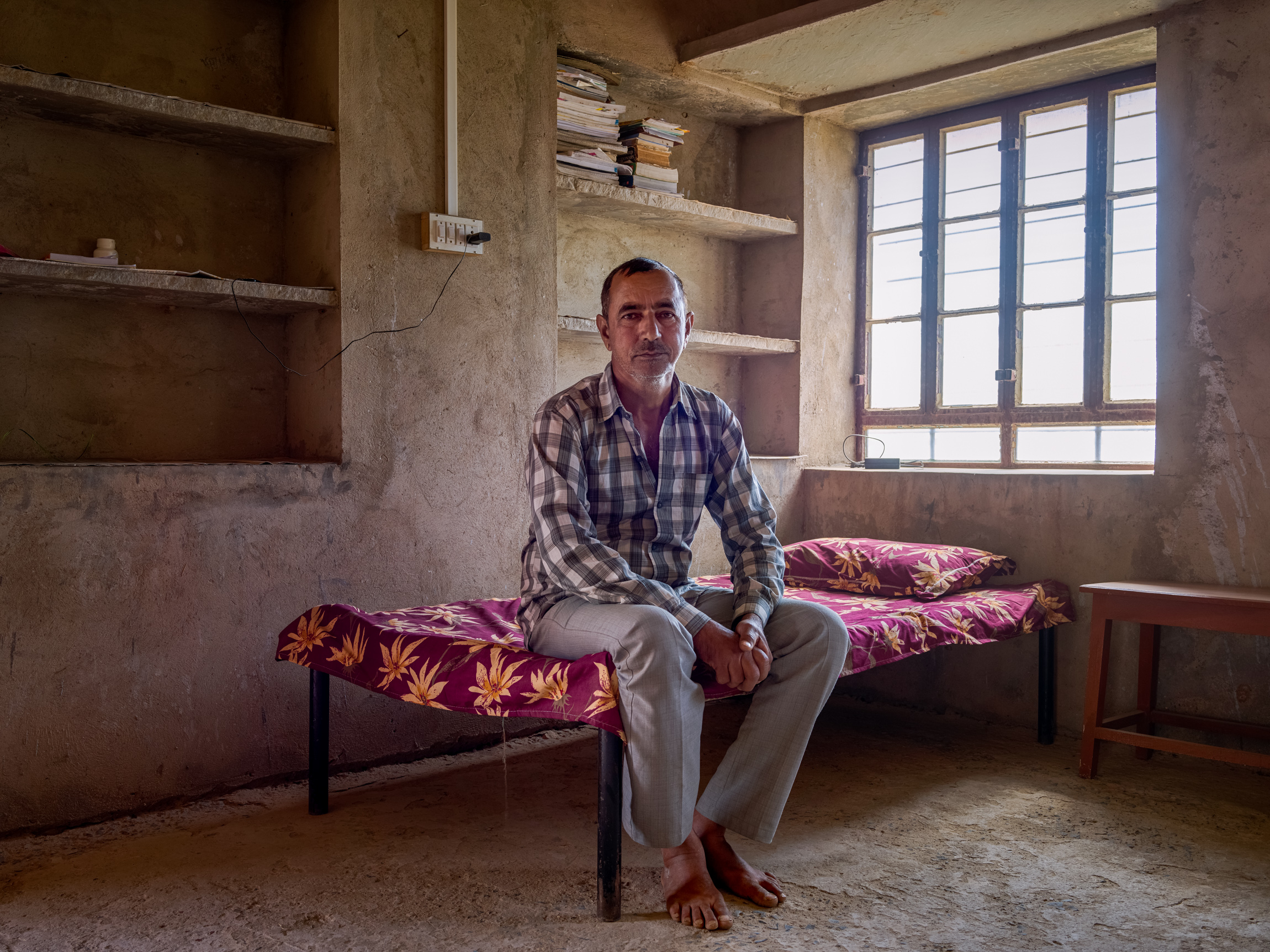
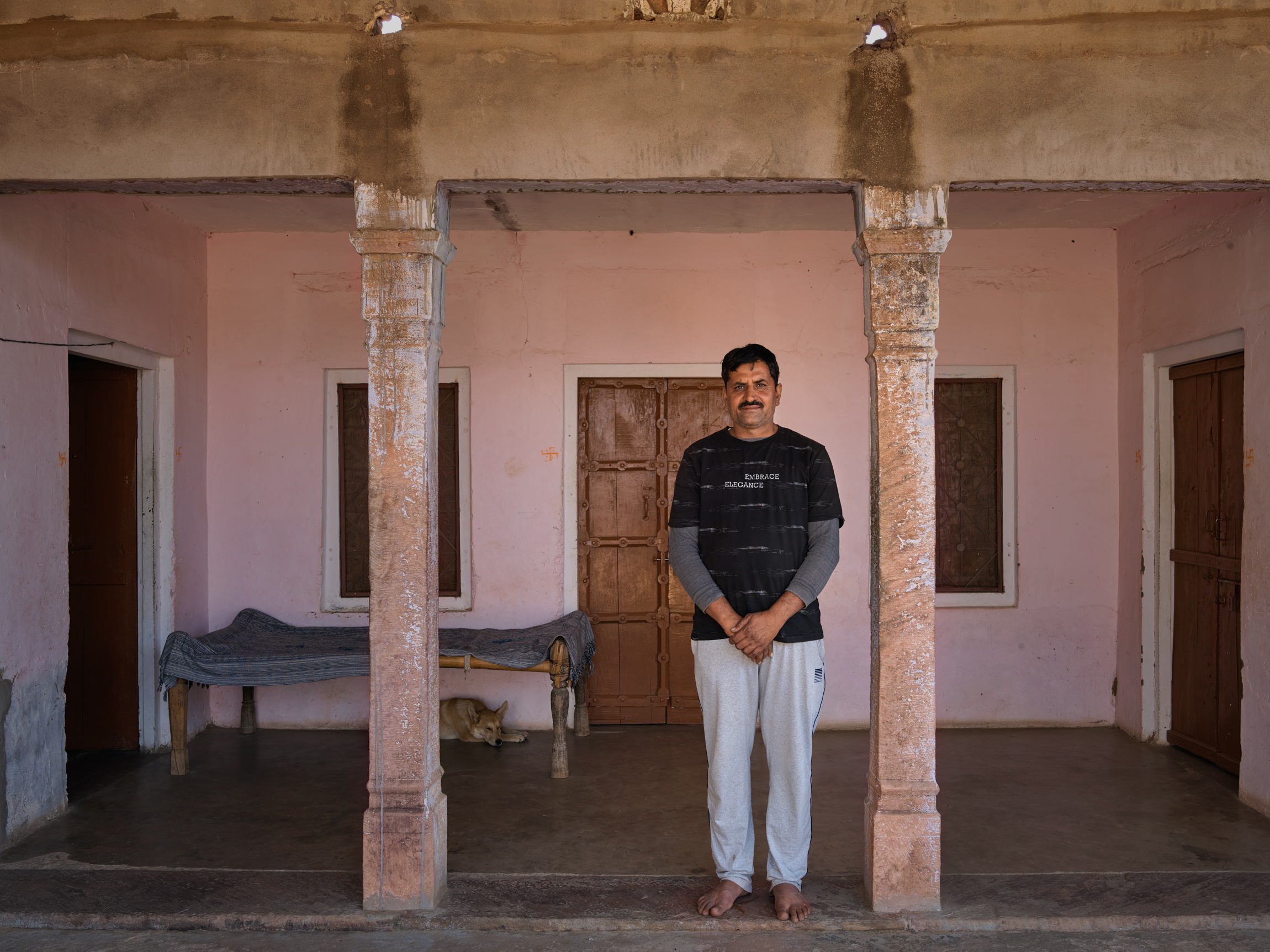
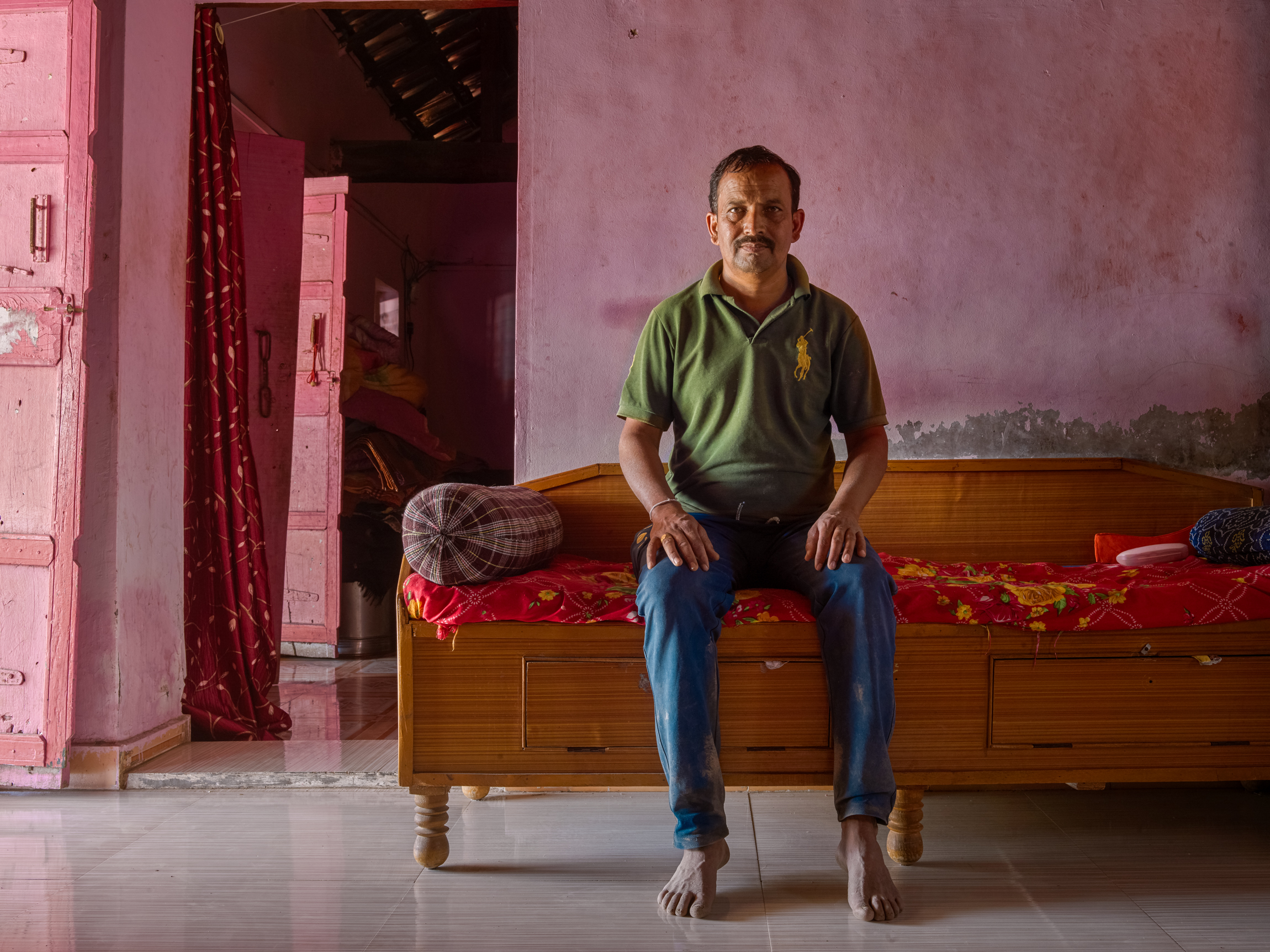
We photographed four of the farmers and their families in these huts and asked them about the impact of the switch from a type of farming that uses a lot of artificial fertilizers and other chemicals to a nature-inclusive way of producing food.
Satish and Darshan Kumar grow potatoes and different kinds of vegetables on five acres. In 2019 they were the first in this area to take their lead from Urban Farms Co. in switching to regenerative methods. We meet Satish and Darshan on their land, where the entire family and workers are harvesting the potatoes, digging them up, sorting and packaging them by hand. It is the hottest part of the day, the sun is directly overhead and the hut is the only place that offers relief from the burning sun. It’s crawling with children of all ages and the mood is cheerful, even joyful. Darshan smiles broadly as she tells us what she thinks of the transition. ‘Look around you and see how the land looks. Look at our potatoes, you should taste them.’ She holds out a bucket to us: ‘Here, taste them, taste them.’
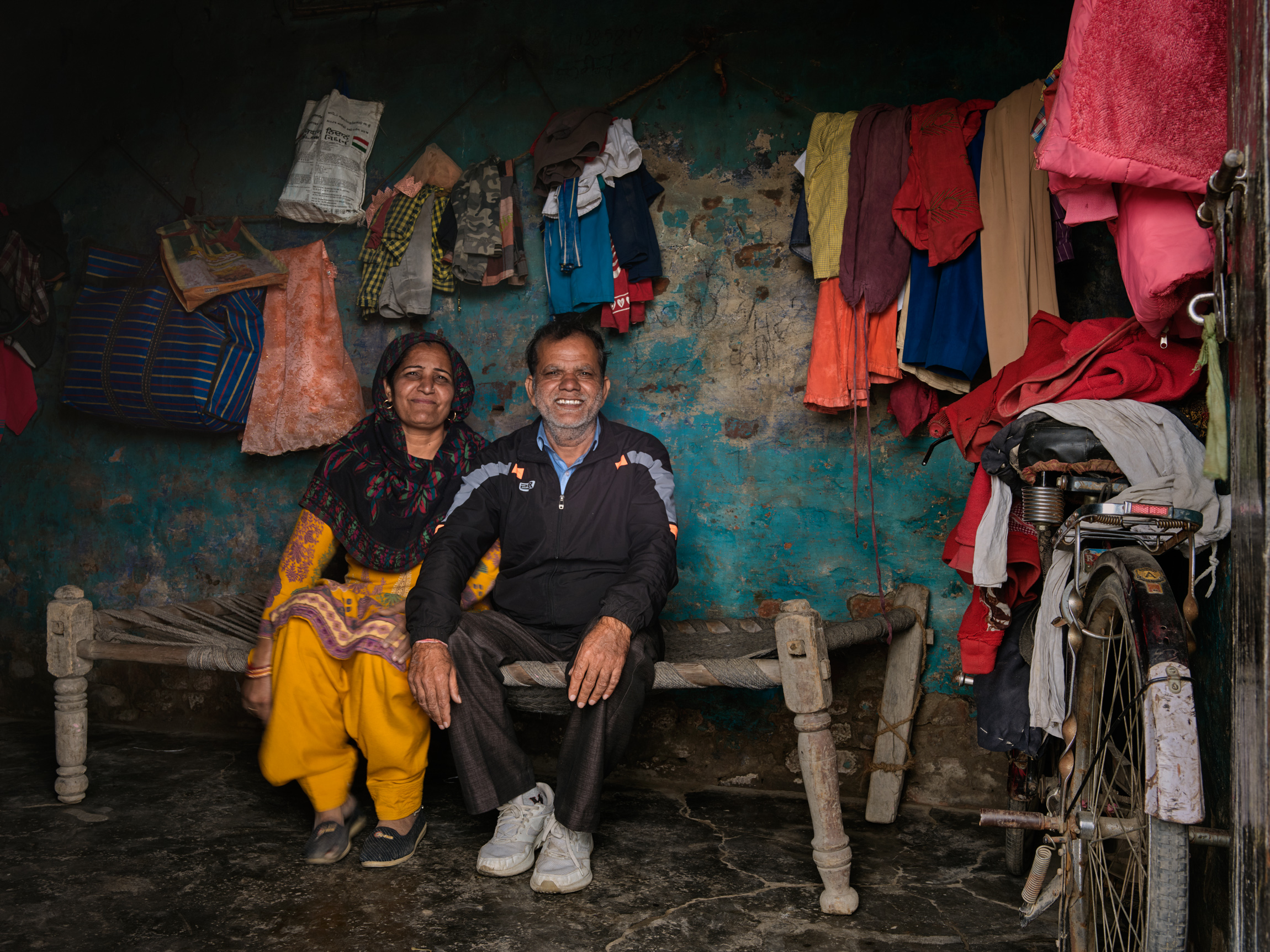 Satish and Darshan Kumar
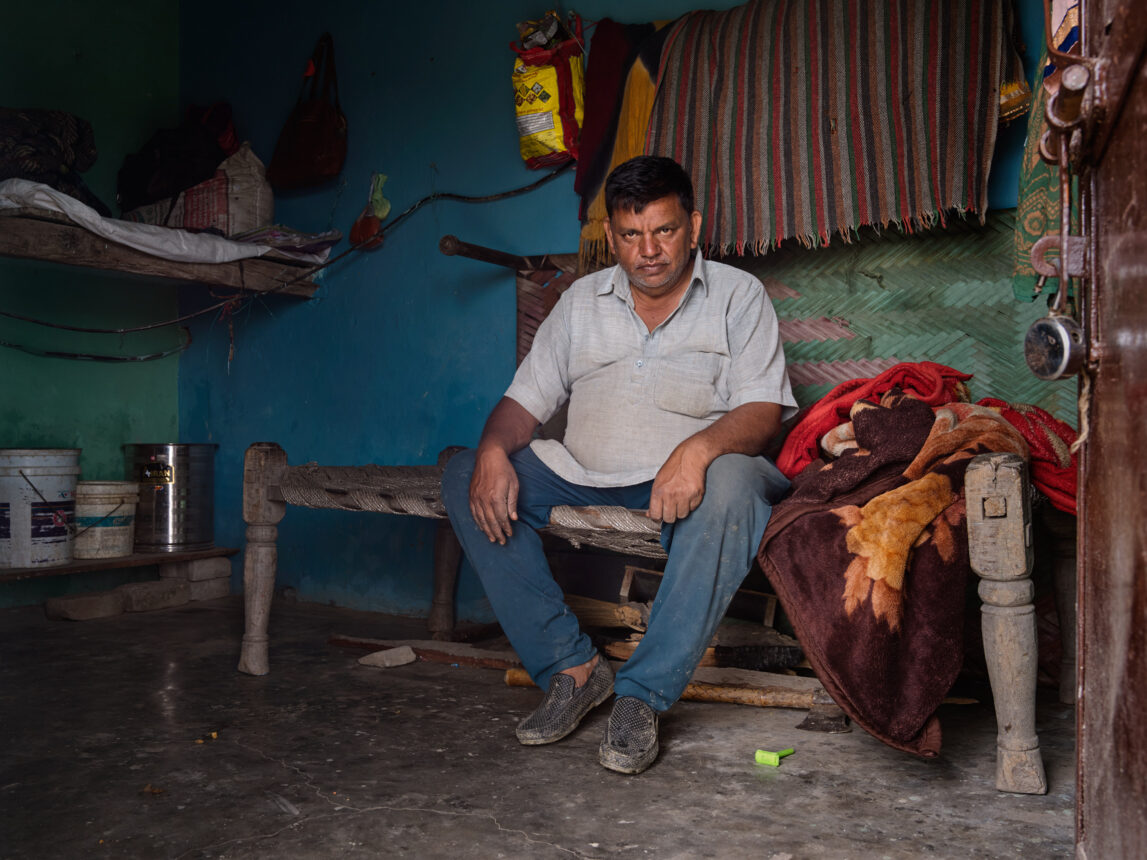 Tilak Raj
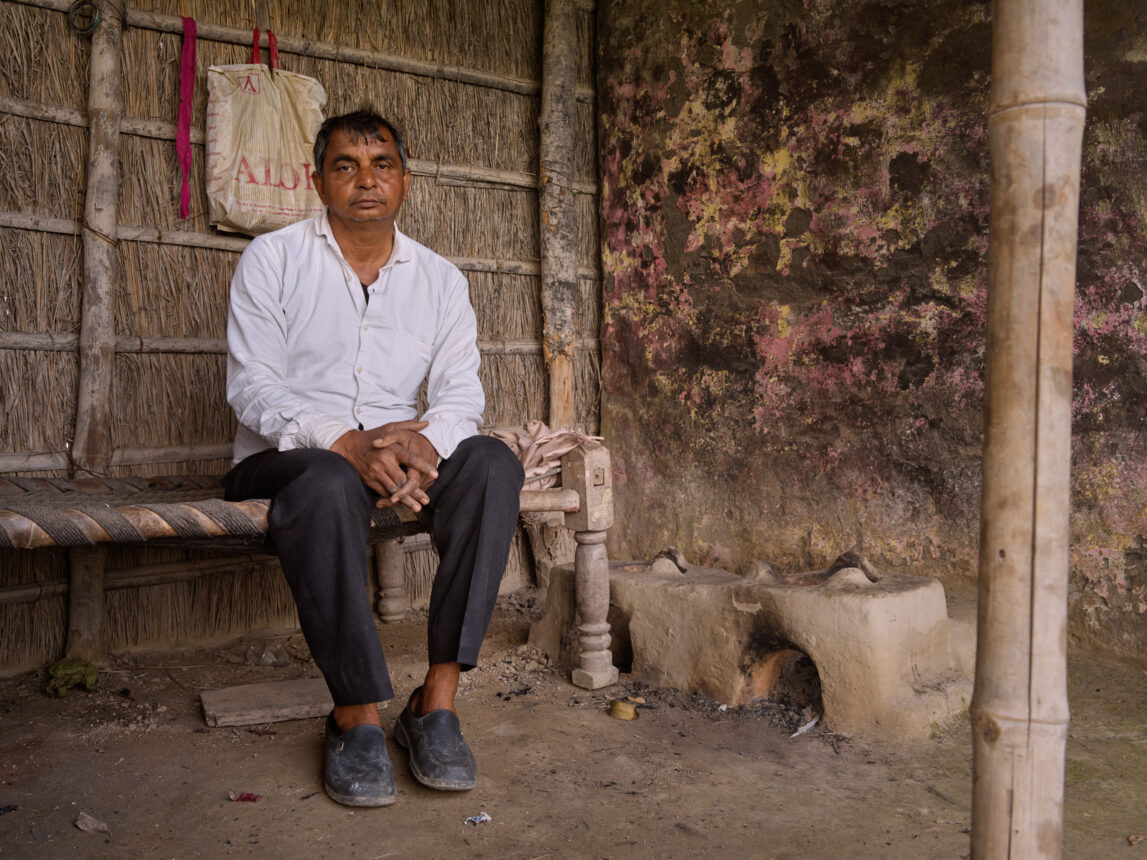 Surender
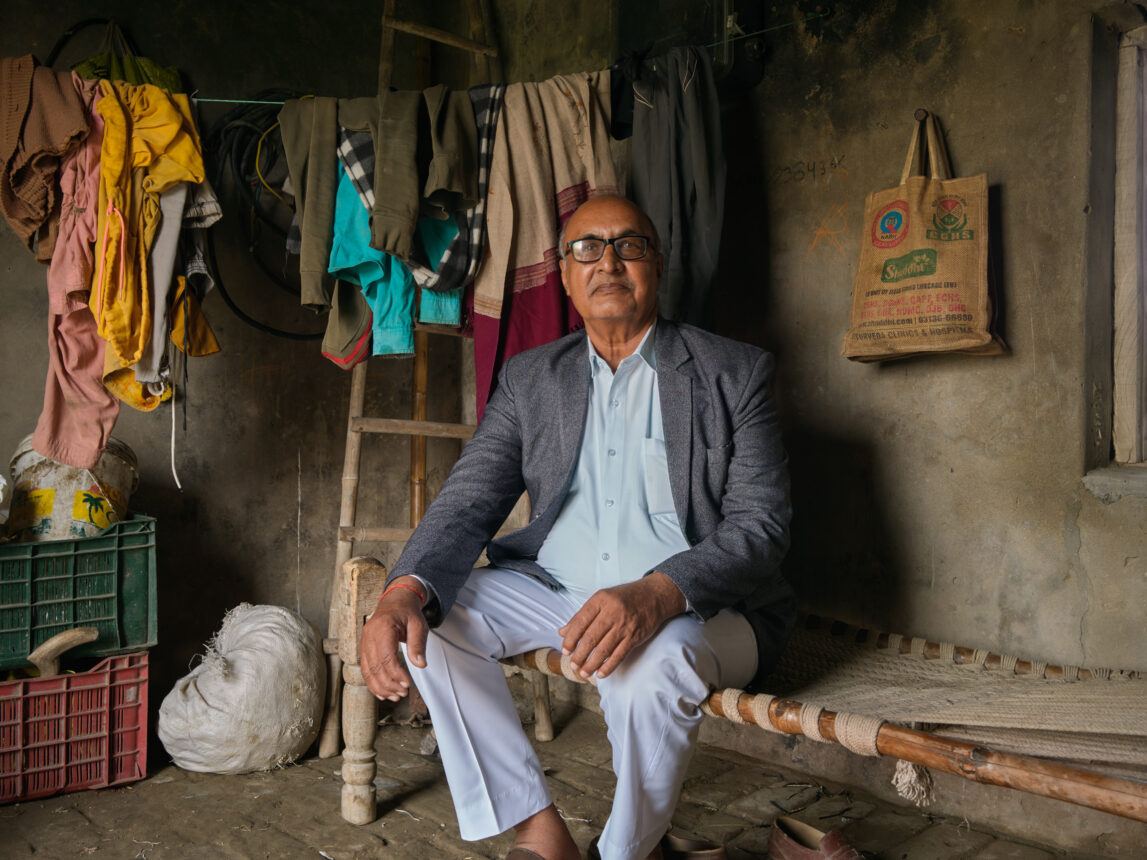 Kiran pal Sang
Tilak Raj
Surender
Kiran pal Sang
Tilak Raj
Surender
Kiran pal Sang
Kiran pal Sang
Tilak Raj
Surender
Kiran pal Sang
Tilak Raj
Surender
Kiran pal Sang
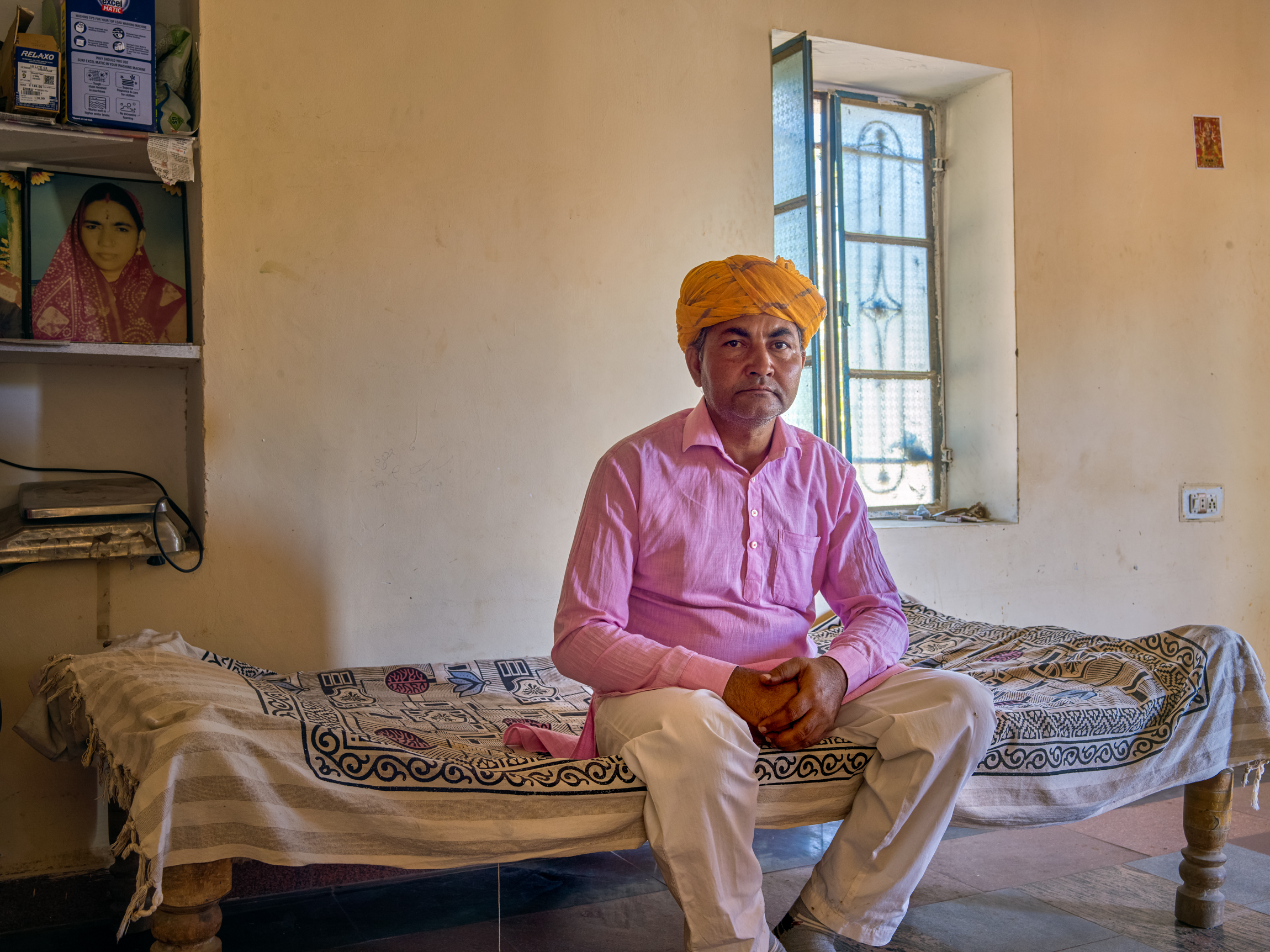 Ramprasad Swami
Ramprasad Swami and his family receive us hospitably with flowers and rituals in the house adjoining the land where they grow red beetroot and radish on a number of fields. It was a year and a half ago that he joined up with Urban Farms. What induced him to switch and what did it bring him? We ask this via our translator, who tells us, ‘He can’t explain it; he wants to show you something.’ We follow him to the land behind the house, where the beetroot is ready for harvest.
Ramprasad Swami crouches down and pulls a red beetroot out of the ground. Waving it in the air, he says, ‘Look at that root, at the length of it. Look at those root hairs too. This is a healthy beetroot and it’s been given to me by this healthy ground and I’m grateful for that.’ We hadn’t understood much of what he said, but we had got the gist and our translator told us we were indeed very close. Ramprasad Swami wanted to show us the evidence. We must taste it raw! He got out his knife and cut a small piece of beetroot for each of us. We sat there in the burning sun in the beet field eating red beetroot: the proof of the pudding is in the eating.
The farm is in a peri-urban area of Rajasthan where Urban Farms has another of its hubs. Here too, on Ramprasad Swami’s land, there is nothing in the landscape to indicate that we are in India; here too there are no mountains but instead a landscape we would expect to find in our own country. Rajasthan is one of the largest states in India, as big as Italy with roughly the same population of almost 70 million.
Anyone talking about the urban farmers of this part of India is talking about millions of farms, about families and their daily struggles to survive. Perhaps this is partly due to the name Urban Farms Co., but you tend to think of little bits of land in and around cities where agriculture is pursued on a limited scale, just enough to supply one restaurant, or on a flat roof somewhere on top of an empty warehouse in New York: praiseworthy initiatives but useless on the scale of a country like India.
In the peri-urban areas of India where Urban Farms Co. has its hubs, tens of millions of people need to be fed and hundreds of thousands of farmers and their families are building a future.
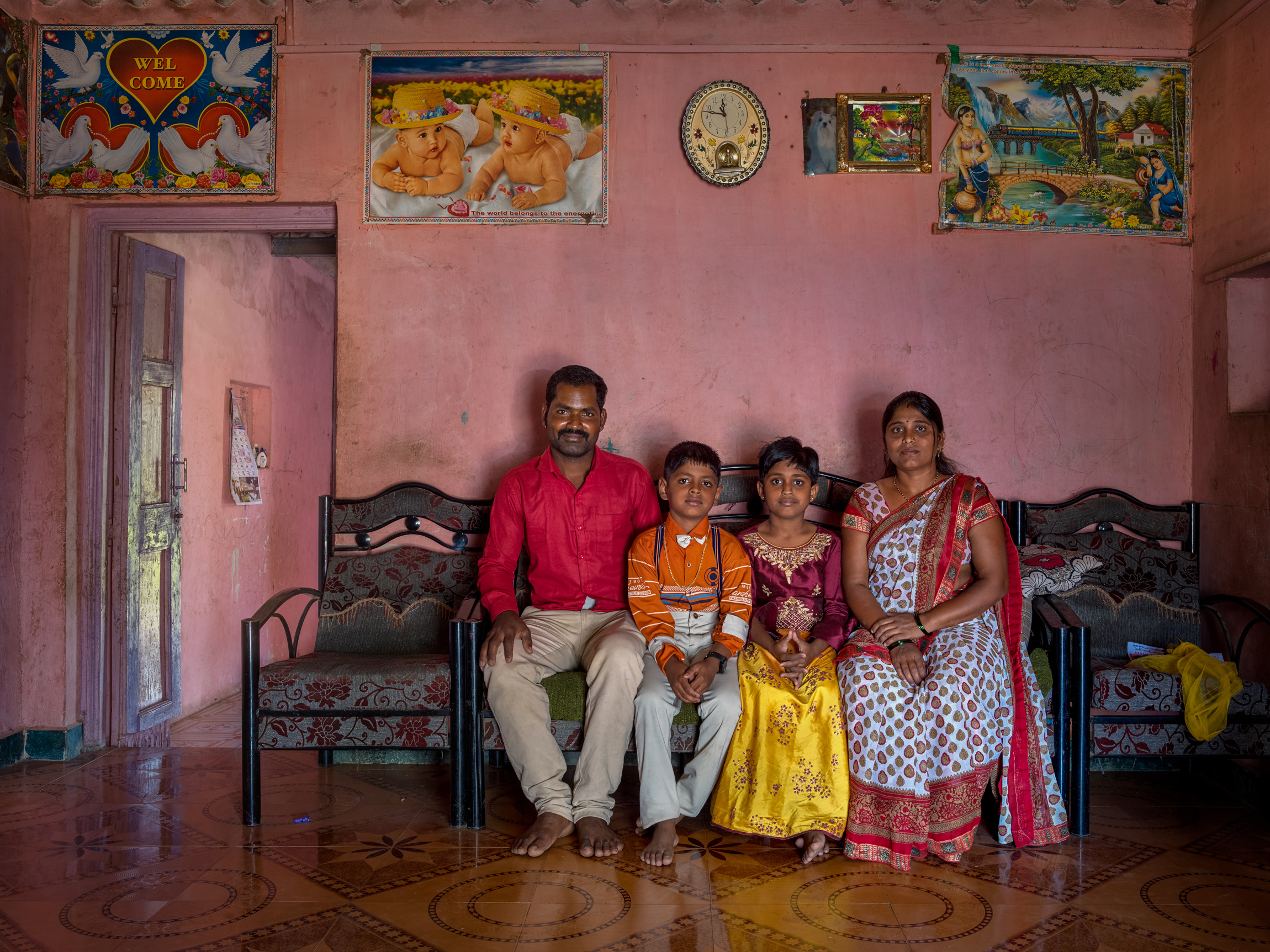
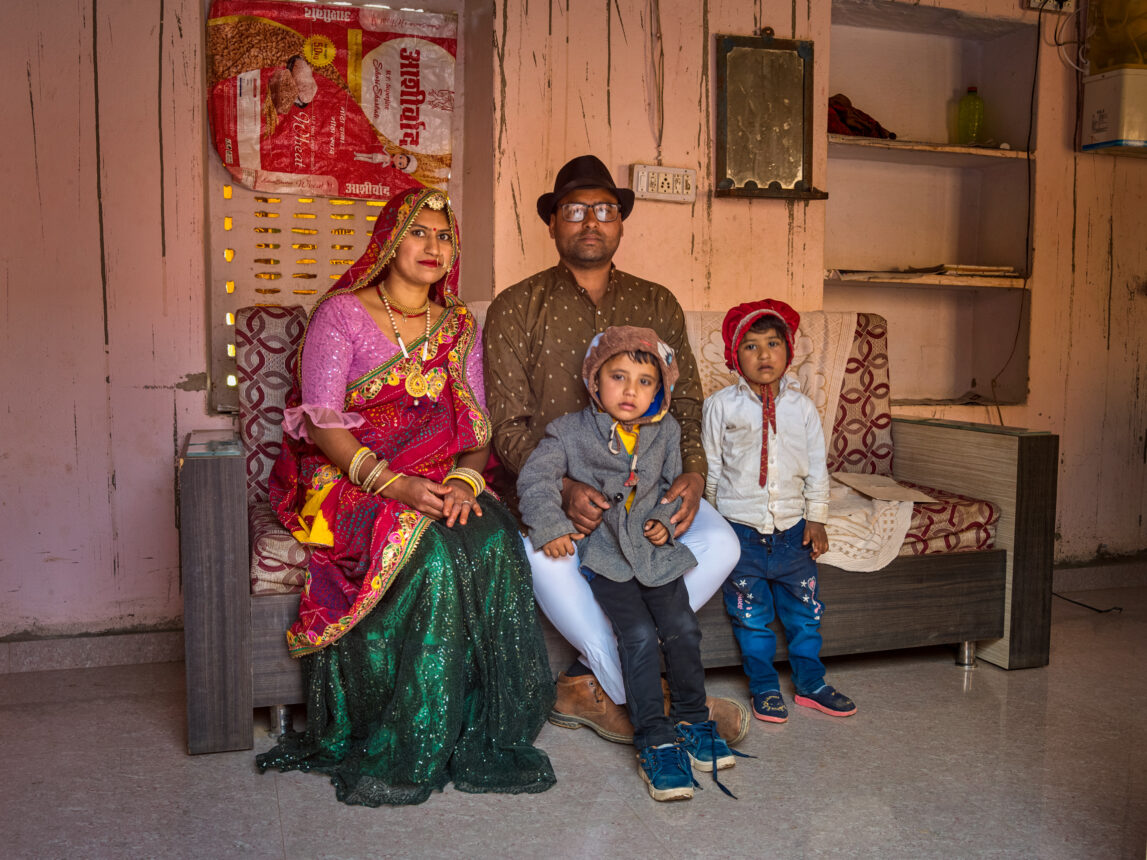 Ashok, Maya Saini and their children Naitik and Yakshita
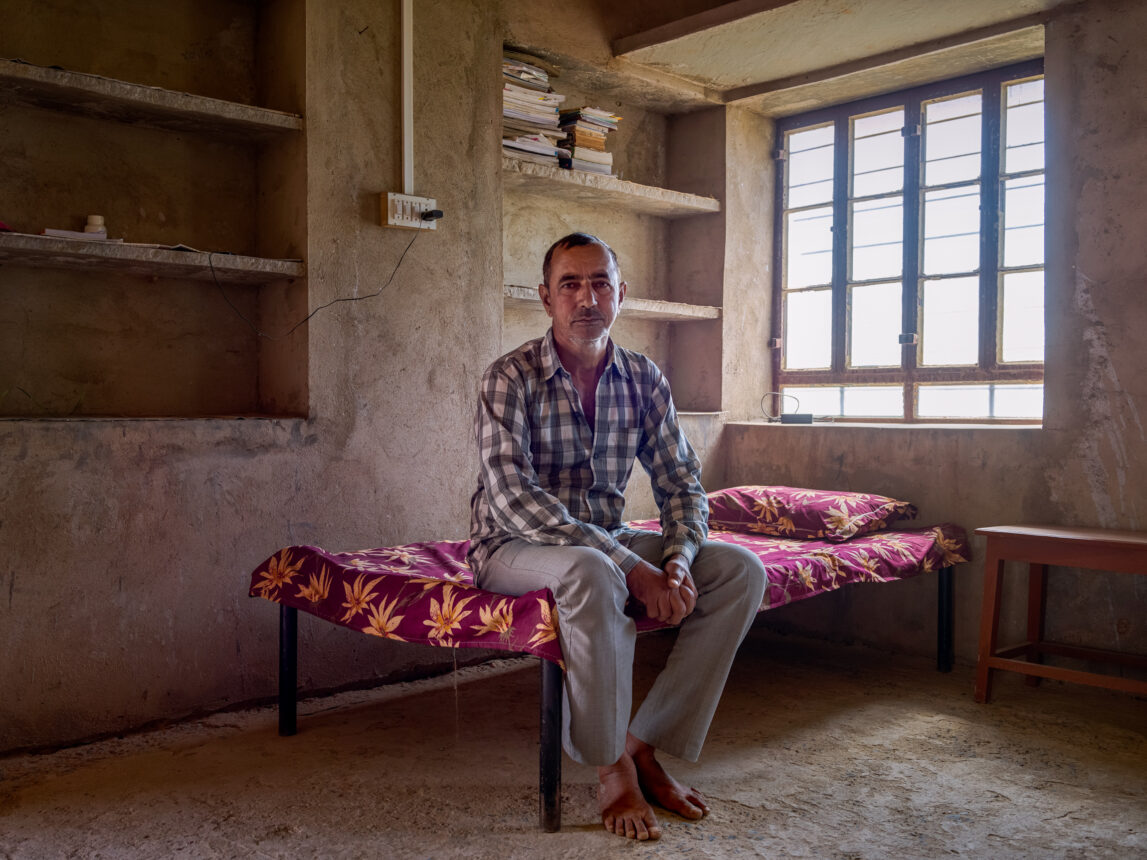 Ramkumar Boran
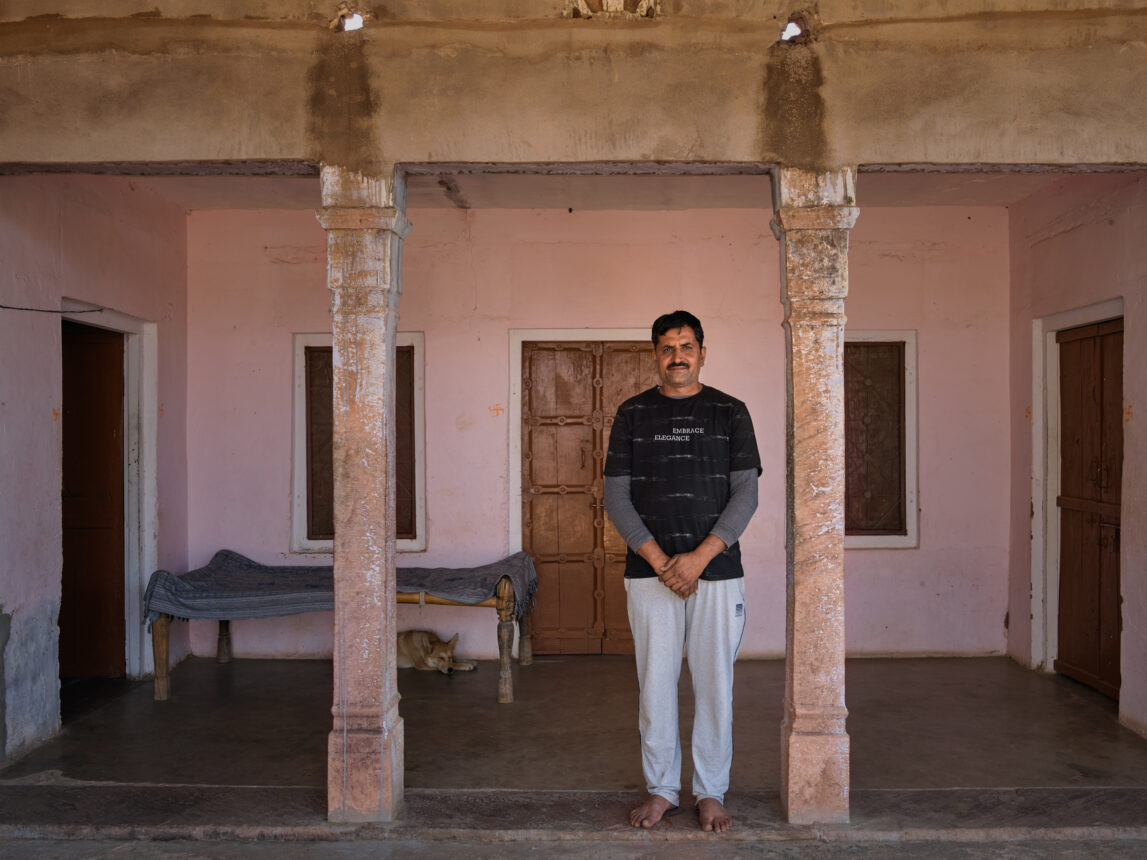 Vijay Kumar
Ashok, Maya Saini and their children Naitik and Yakshita
Ramkumar Boran
Vijay Kumar
Ashok, Maya Saini and their children Naitik and Yakshita
Ramkumar Boran
Vijay Kumar
Vijay Kumar
Ashok, Maya Saini and their children Naitik and Yakshita
Ramkumar Boran
Vijay Kumar
Ashok, Maya Saini and their children Naitik and Yakshita
Ramkumar Boran
Vijay Kumar
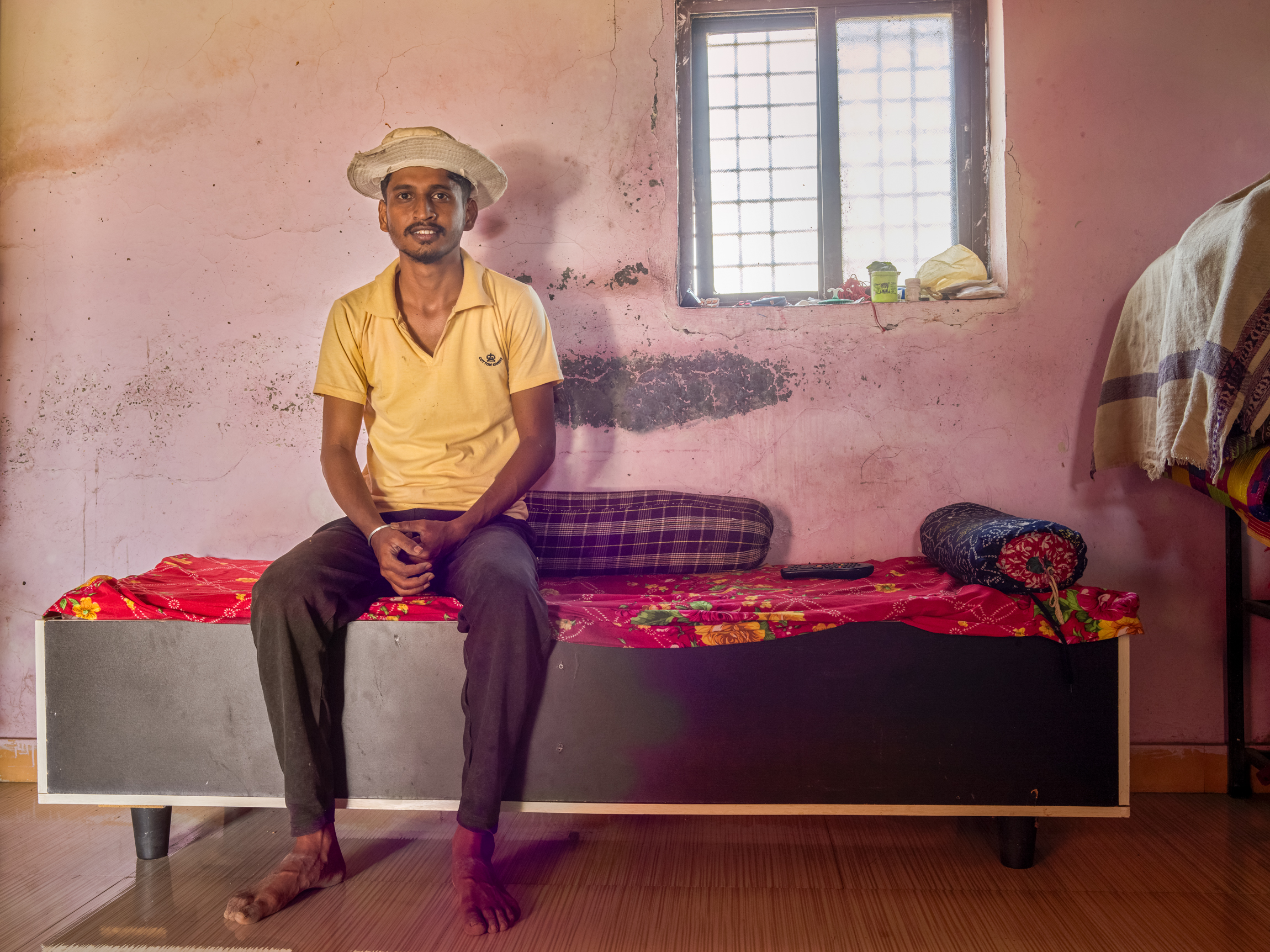
We travel to Narayangaon, where Urban Farms Co. has a third hub, which serves the 140 farmers here who have made the transition to the regenerative agricultural methods it recommends. Narayangaon is in the Pune district of the state of Maharashtra. Pune is the largest city in the state after Mumbai and an important place in terms of economic and industrial growth.
Rahaul Bhor is one of the 140 Urban Farms Co. farmers. Just six months ago he took that step on part of his ten acres and he has faith in it. For Rahaul it’s a process; it feels as if he’s in transition to something new, something good.
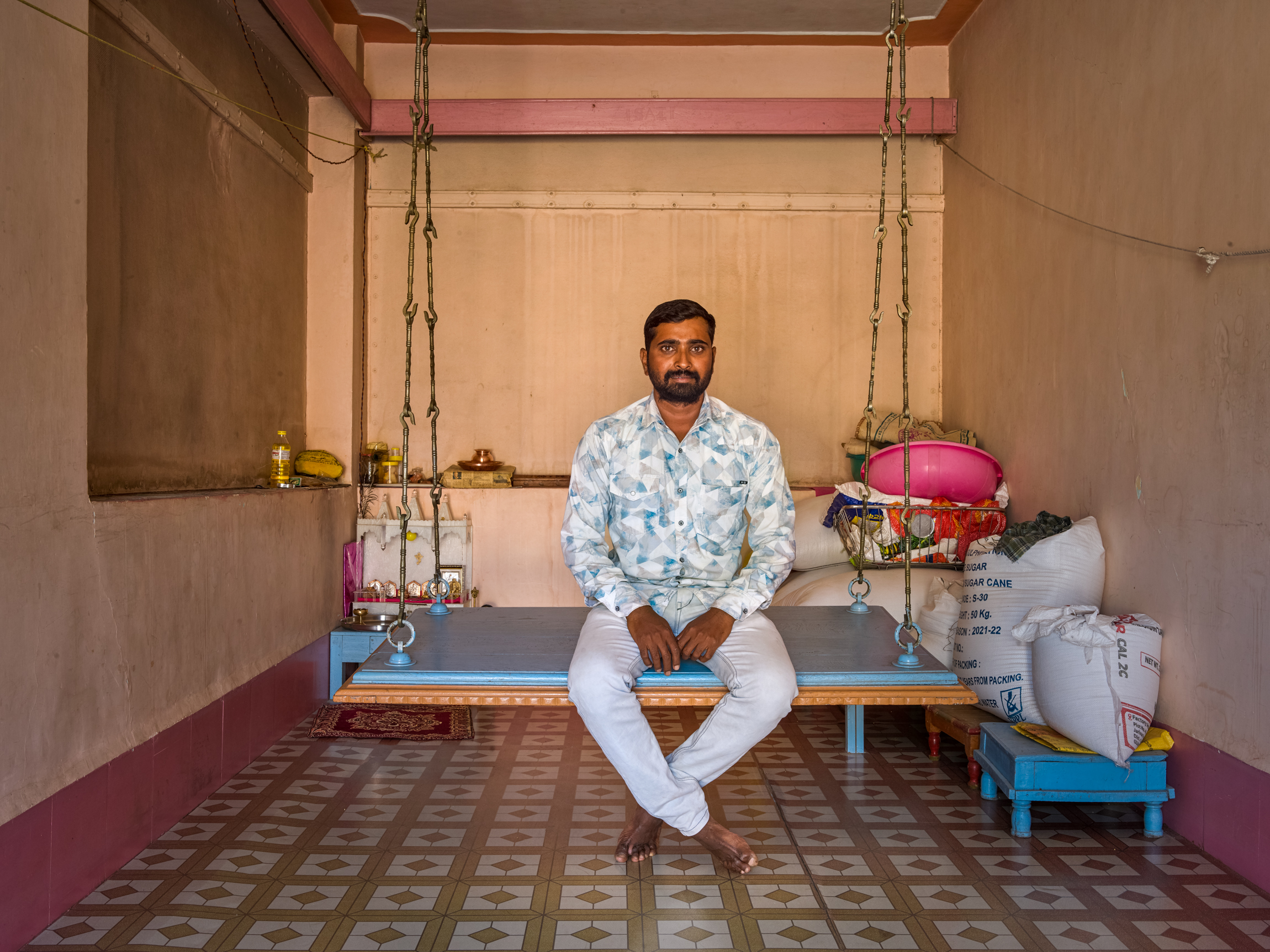 Rahaul Bhor
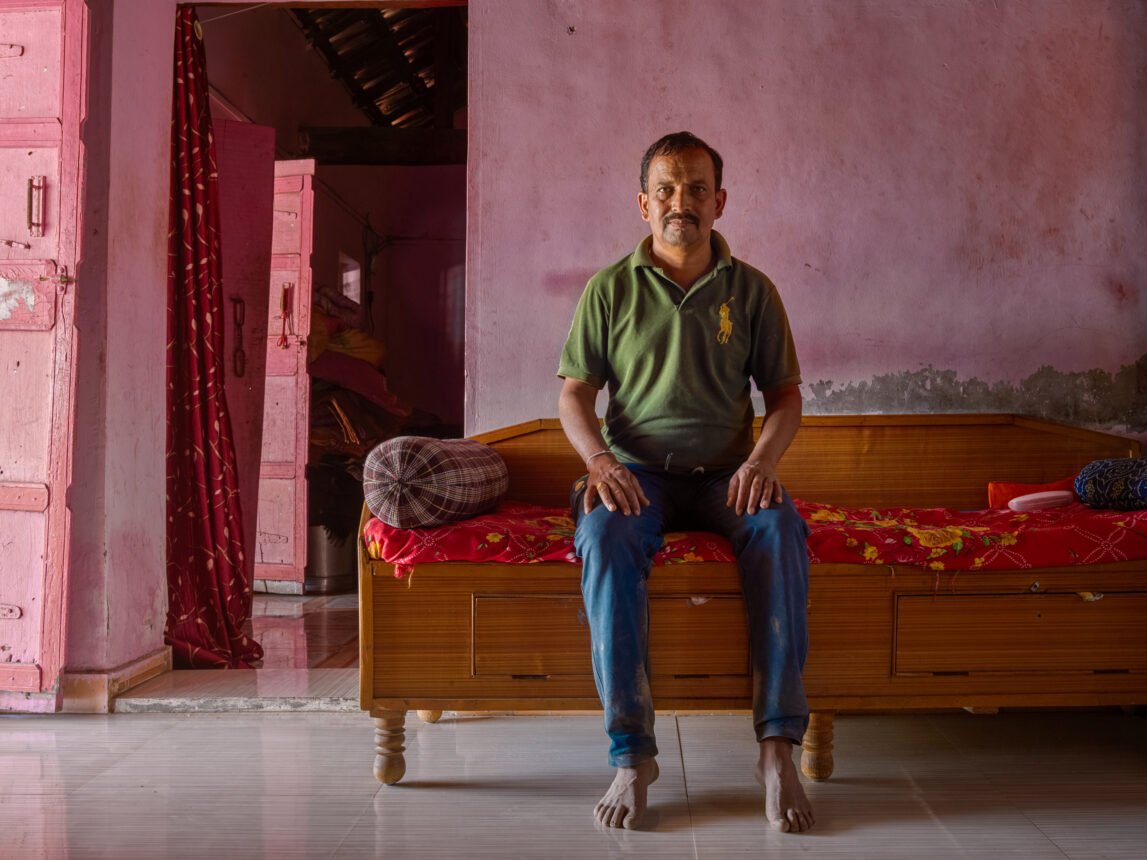 Anil Baban Wagh
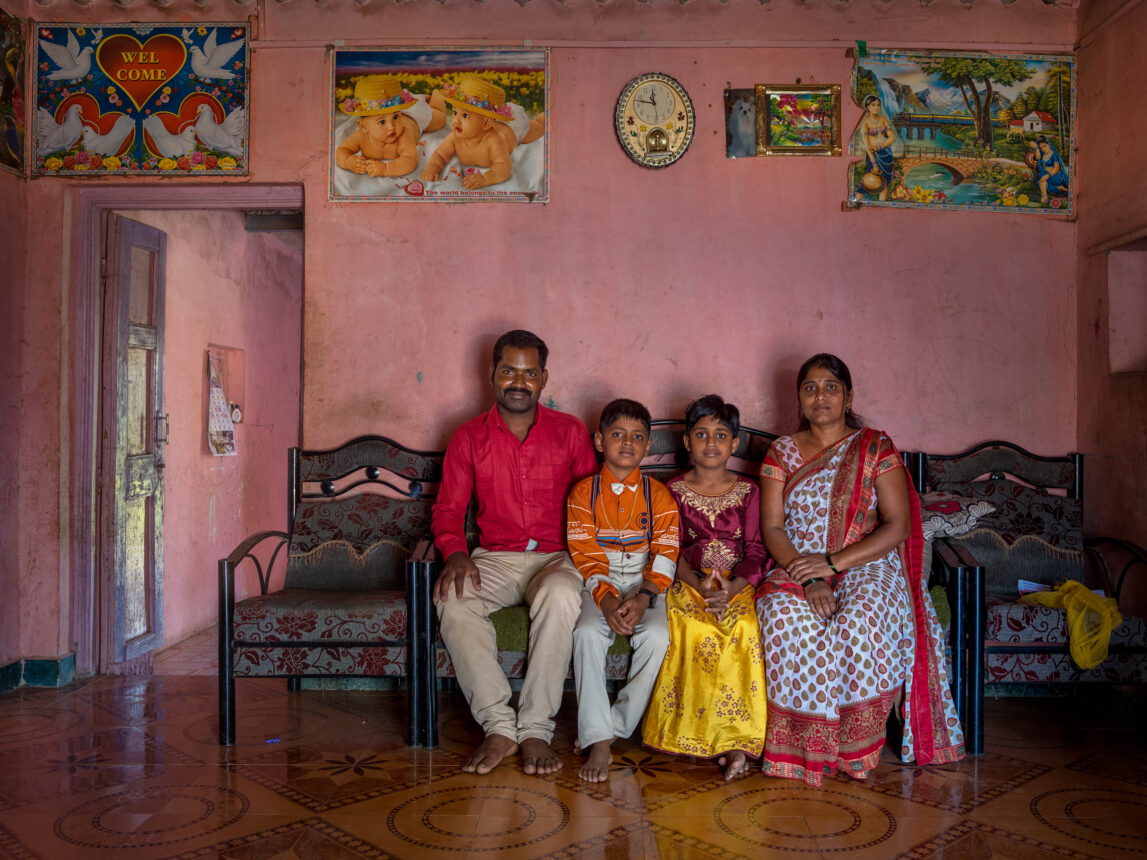 Nilesh Shankar Khoksale family
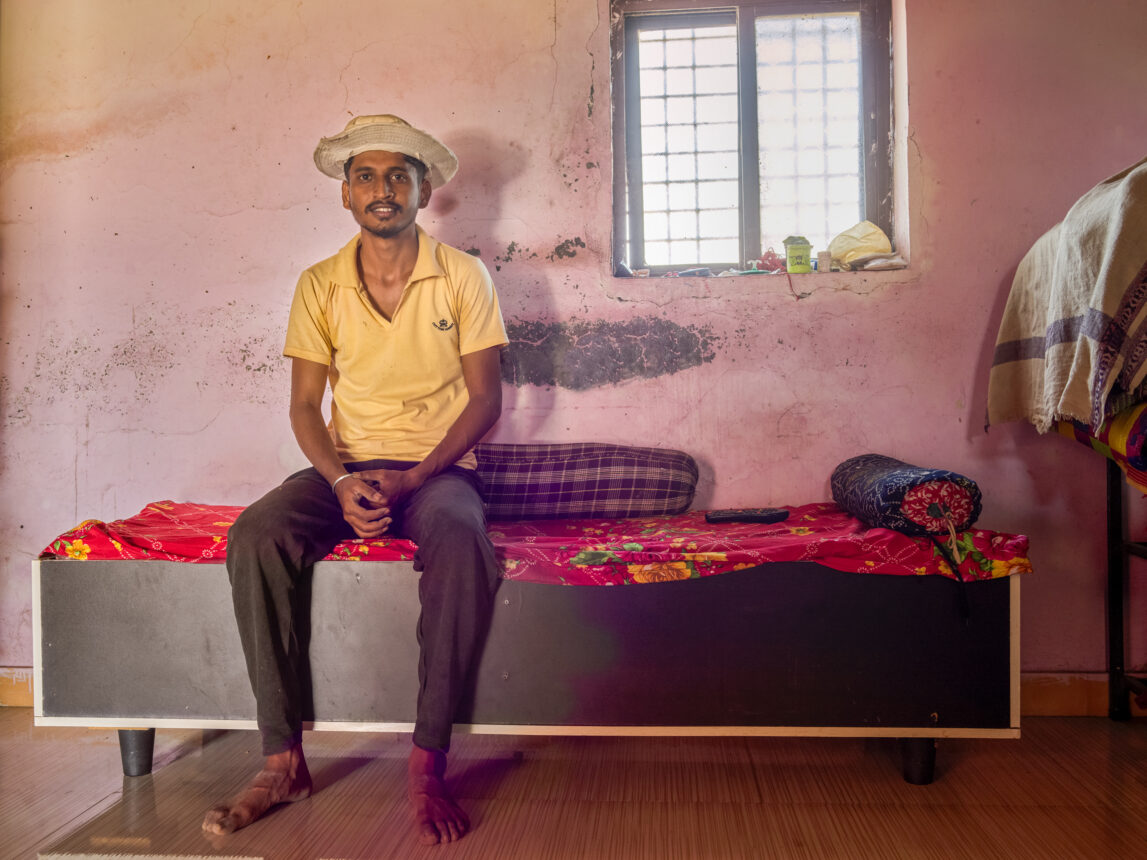 Deepak Baban Wagh
Anil Baban Wagh
Nilesh Shankar Khoksale family
Deepak Baban Wagh
Anil Baban Wagh
Nilesh Shankar Khoksale family
Deepak Baban Wagh
Deepak Baban Wagh
Anil Baban Wagh
Nilesh Shankar Khoksale family
Deepak Baban Wagh
Anil Baban Wagh
Nilesh Shankar Khoksale family
Deepak Baban Wagh
Urban Farms Co. is an initiative of the Naandi Foundation, set up 25 years ago by Manoj Kumar. It has grown to become perhaps the largest multi-sectoral, non-profit organization in India. Focused on tackling poverty by means of initiatives to strengthen girls, women and farmers, in those 25 years Naandi has influenced more than eight million lives.
Manoj led the transformation of more than 2,000 villages in the tribal region of Araku Valley in the Eastern Ghats, combatting poverty, the Naxal rebellion and ecological fragility.
Those efforts, over more than twenty years, resulted in the setting up of ARAKU Coffee, an organically grown and certified specialty coffee of exceptional quality that has freed 300,000 tribal lives from poverty and put India on the world map of outstanding coffee.
The regenerative farming framework – Arakunomics, named after the Araku region – has been extended into rural and urban India. In 2020 it won the World Food Vision Prize, launched by the Rockefeller Foundation in New York.
Sources: FAO, Food and Agriculture Organization of the United Nations, LNV, Dutch Ministry of Agriculture, Nature and Food Quality, WUR, Wageningen University & Research, Naandi Foundation
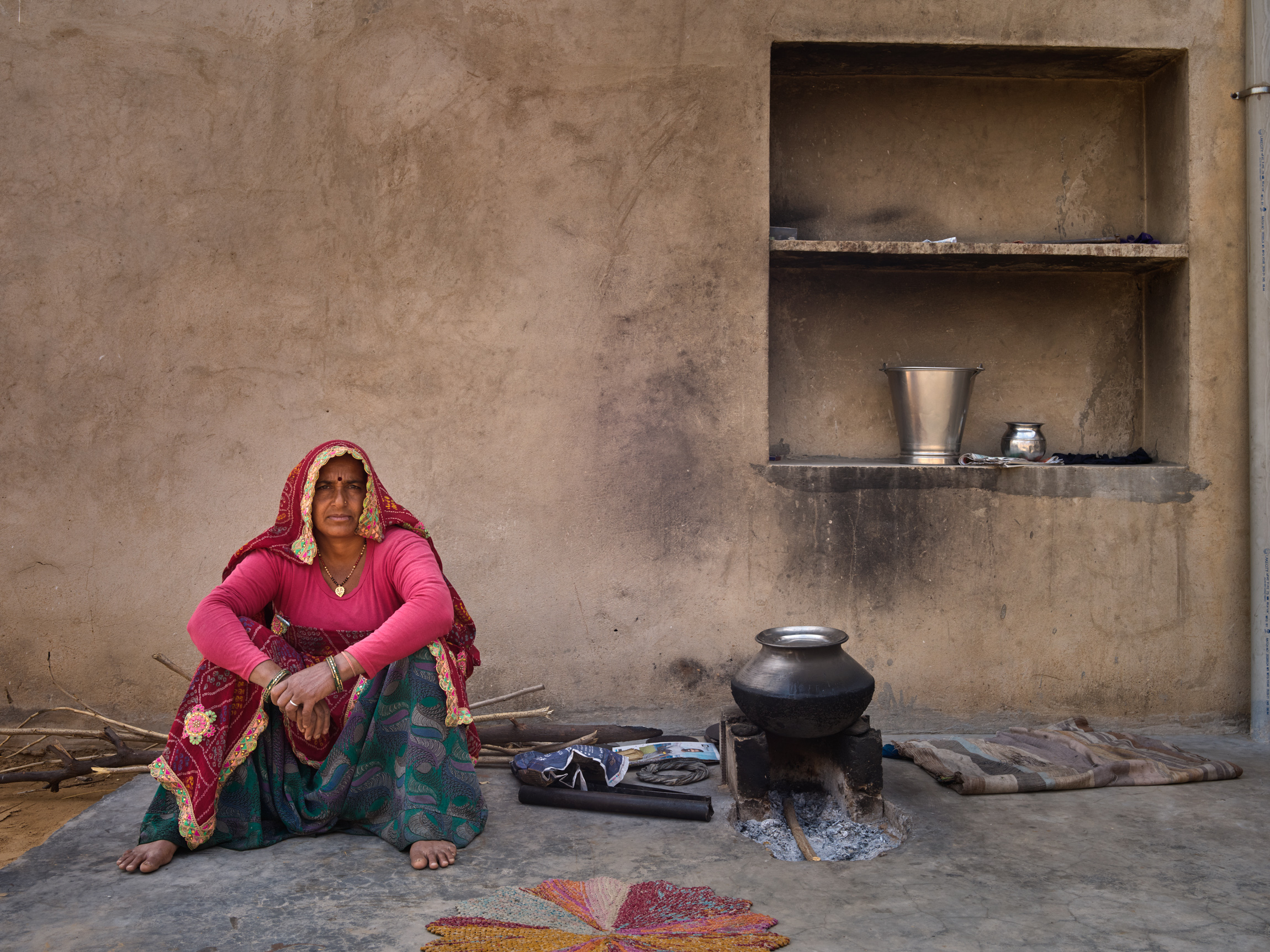
Family farms produce more than 80% of the world's food in terms of value, which confirms the central importance of family farming to global food security both today and for future generations.