‘Here in Africa, even the farmers know nothing about bees and flowers. They are not taught about pollination and its importance.’
Ernest SimeoniErnest Simeoni owns an eight-acre piece of land an hour’s drive from Nairobi, the city where he lives. It’s a semi-arid area and on a five-acre plot he grows vegetables, maize and many other crops. On the remaining three acres he has greenhouses, where he produces cherry tomatoes, peppers, berries and more, all grown organically and as sustainably as possible. Ernest has built himself a second house on the land, where he can enjoy the peace and the landscape. The growing of vegetables and fruit is of secondary importance. Ernest’s great passion are ‘the African bees’. He’s been engaged in beekeeping for twenty-eight years and there are a number of things he wants to tell us about, including climate change, pollination and its importance, and his own story, about ‘the long journey of keeping bees, managing bees and understanding bees.’
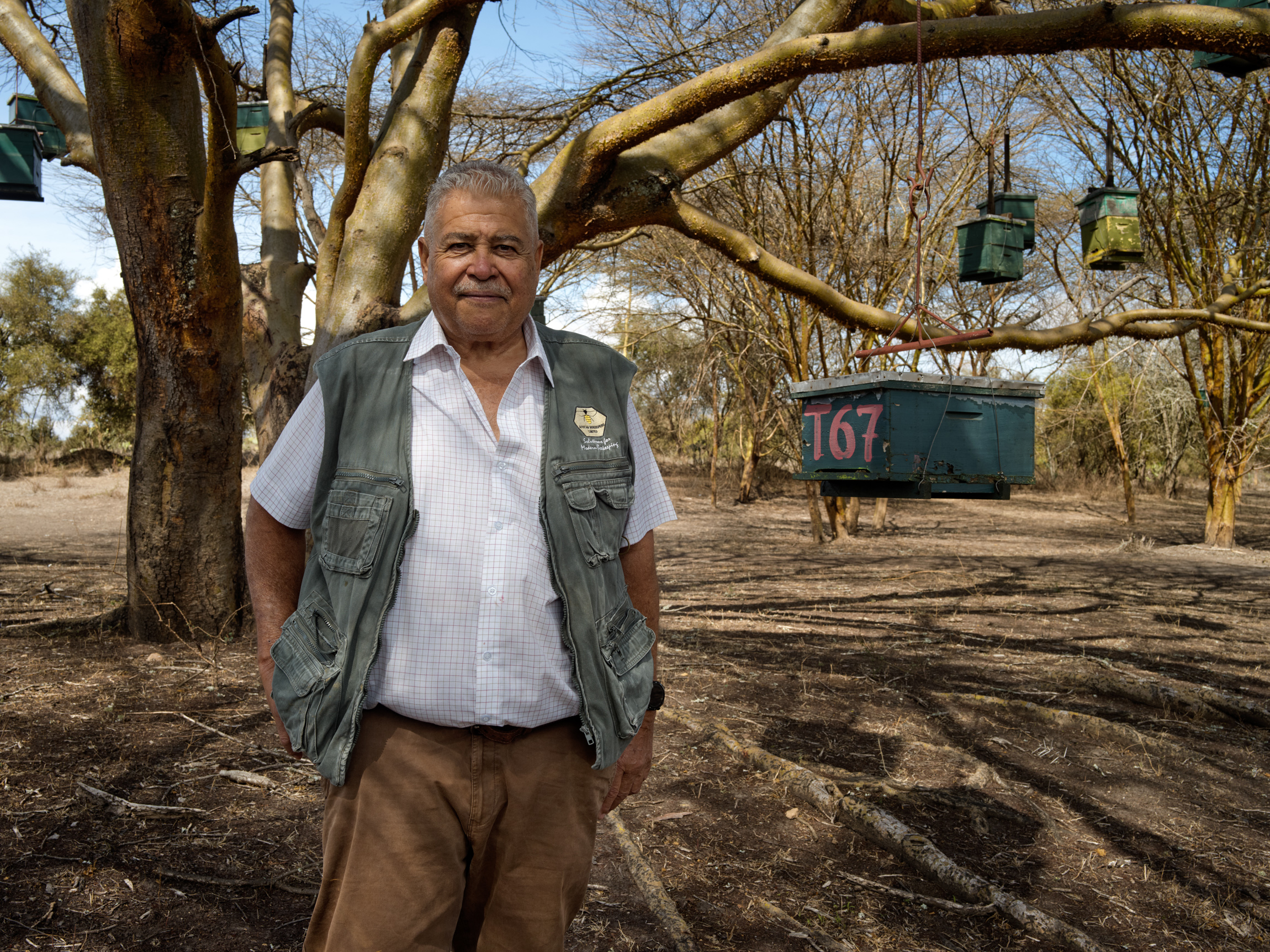 Ernest Simeoni African Beekeepers Limited
‘The African bee is not easy. It’s a fairly aggressive species and difficult to work with, but after twenty-eight years I’m beginning to understand them and I have the feeling they’re starting to get used to us.
‘Here in Africa we don’t have canola and sunflowers like they do in Europe. Here we’re very much dependent on wild bushes for the production of honey. But climate change is a major threat. More and more areas that were lush and good for honey production are disappearing because of drought.
‘And that’s without even mentioning the fact that in many of these areas trees are being cut down for the firewood and charcoal used in cooking food.’
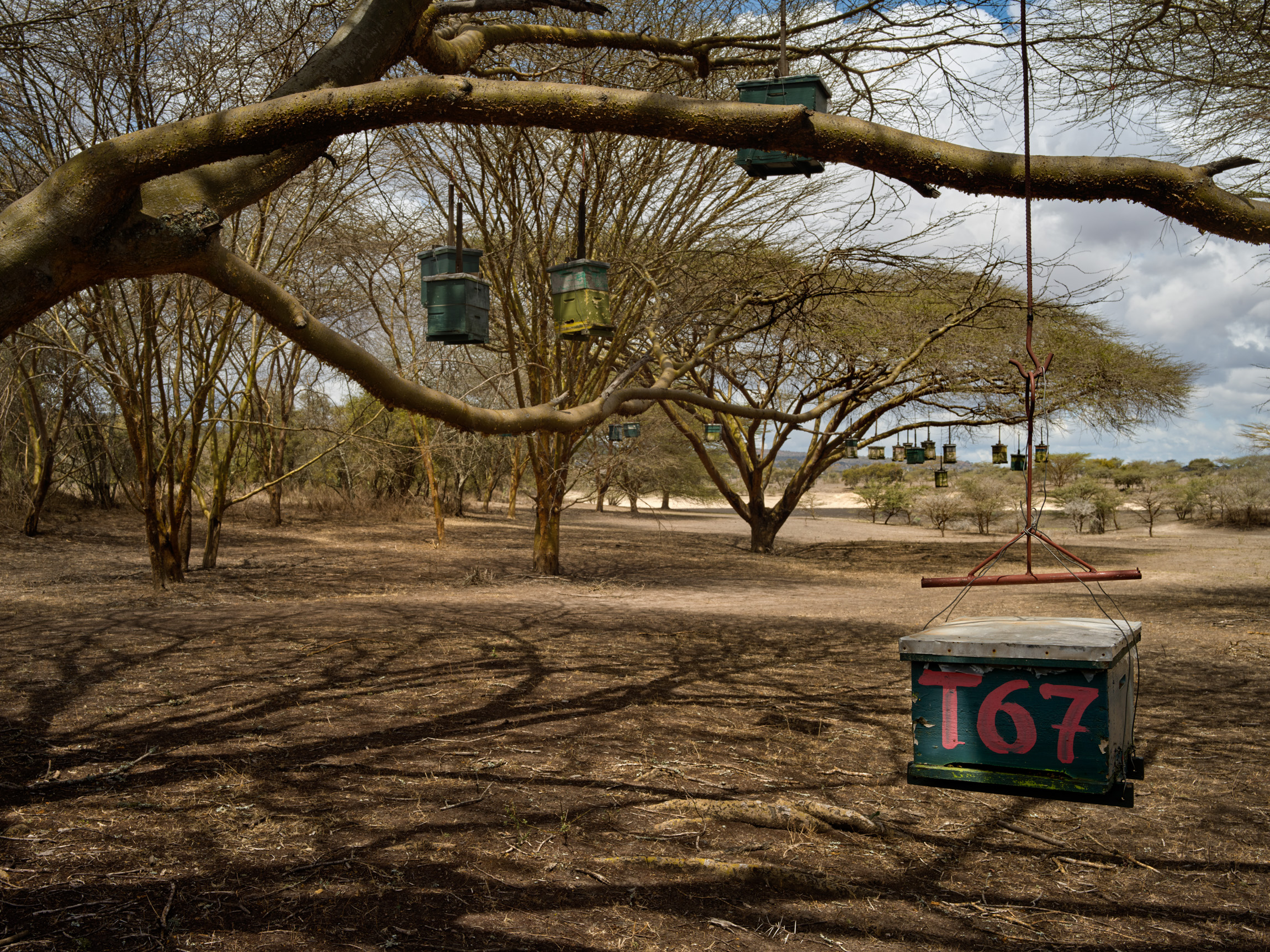
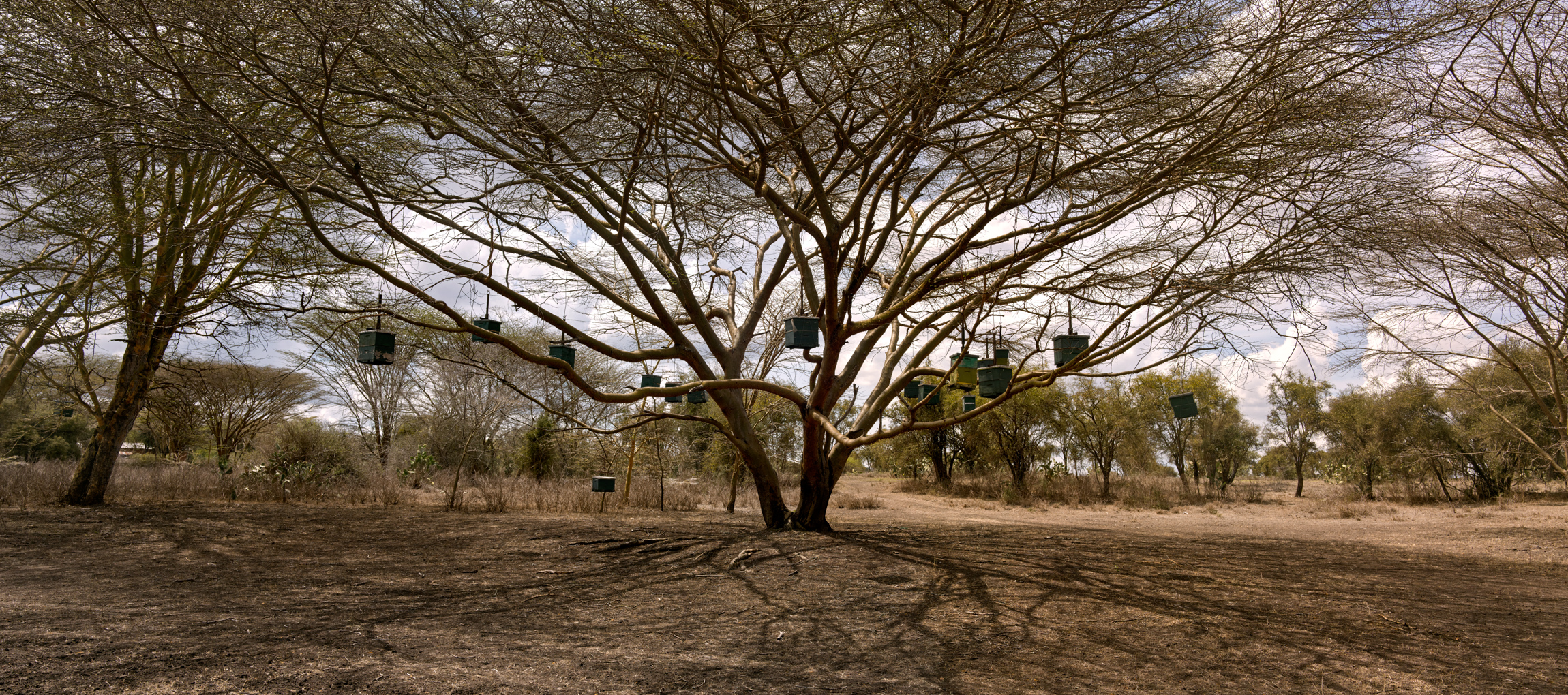
‘Our beehives hang in the trees for a reason.’
‘We have developed a system of hanging beehives in trees, so now we have trees that grow money: “money from honey”. If we go on cutting down trees for charcoal, then we’ll burn all the trees and none will replace them, so it’ll be end of story.’
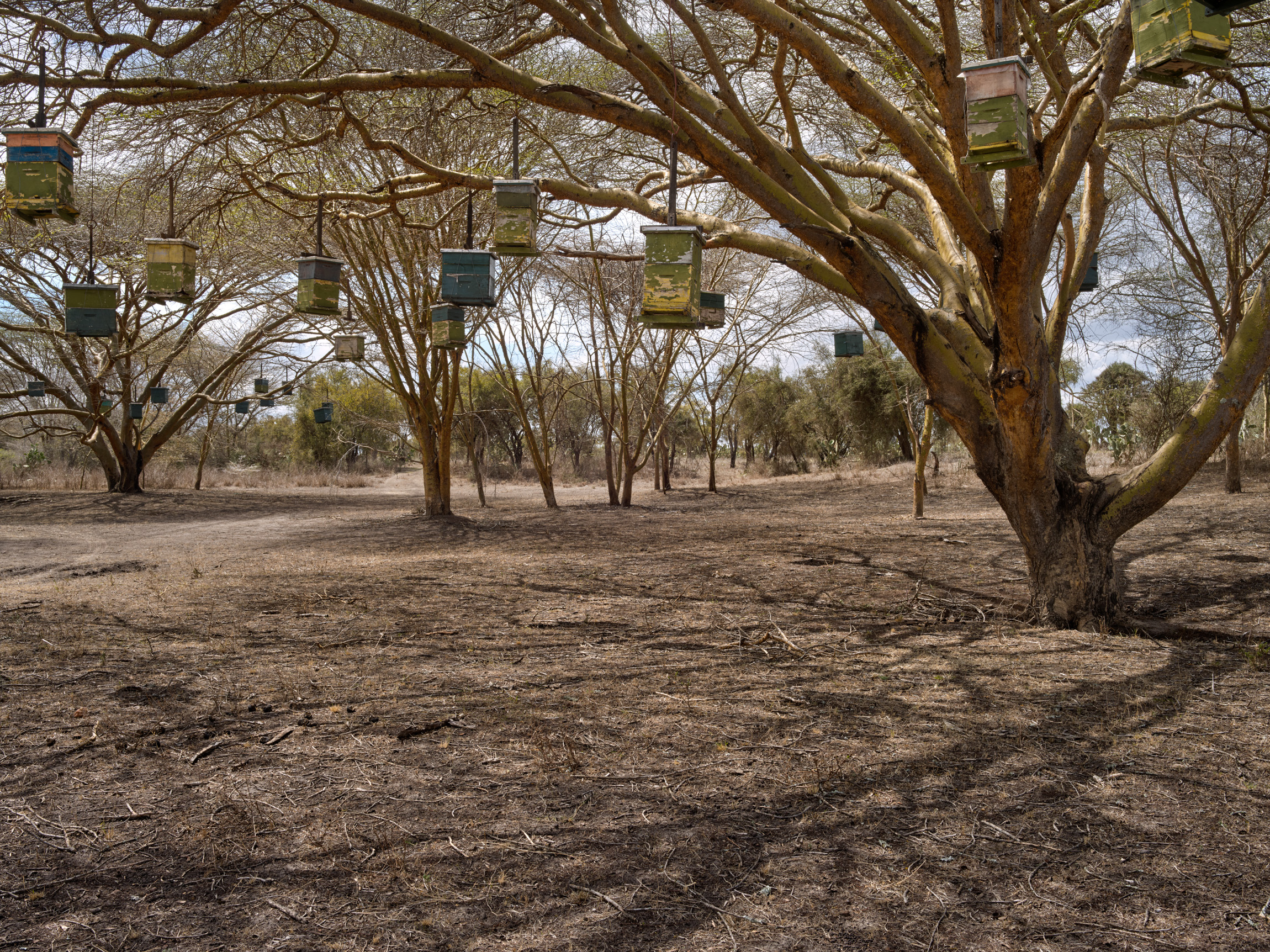
‘Here in Africa it’s very hard to persuade farmers that we need bees for pollination, for food production. Kenya is now big in avocado production, but pollinators are needed for that. Many farmers think there are enough bees because they have bushes scattered all over their land, but most avocado farmers don’t know about pollination and the need for sufficient bees.’
‘It turns out to be very hard to change the mindset of these farmers. So we’re trying a different approach and focusing on the new generation, on the young. We’ve developed school programmes to teach them about bees and it turns out to be simple to “flip the ideas” of children. They are so involved and eager to learn that we hope this may be one way to change the mindset.’
As well as the production of honey, Ernest regards education as the most important means of changing the way farmers think, of stopping them felling trees, of getting them to deal with climate change and arrive at higher yields in food production.