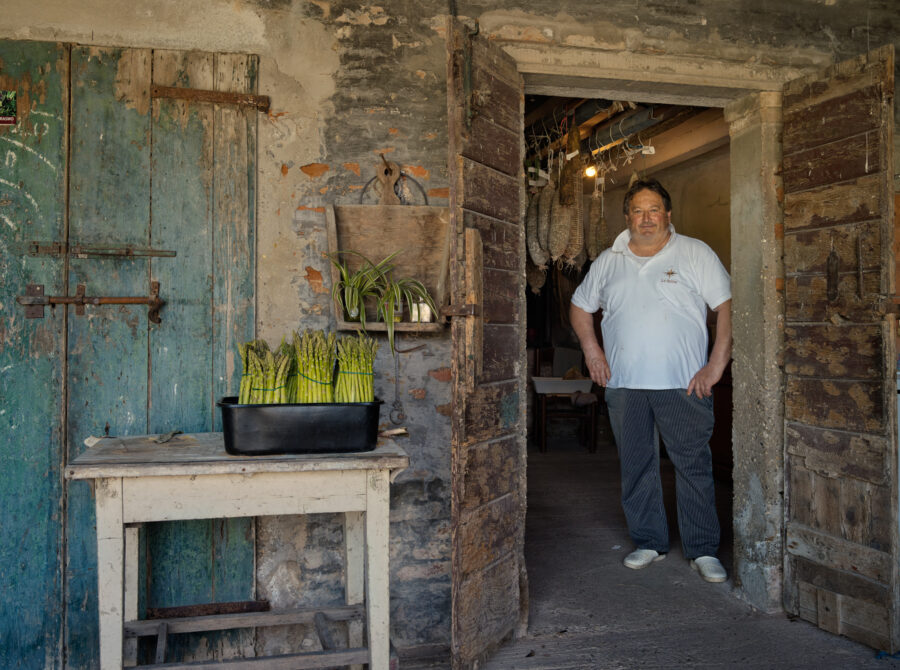
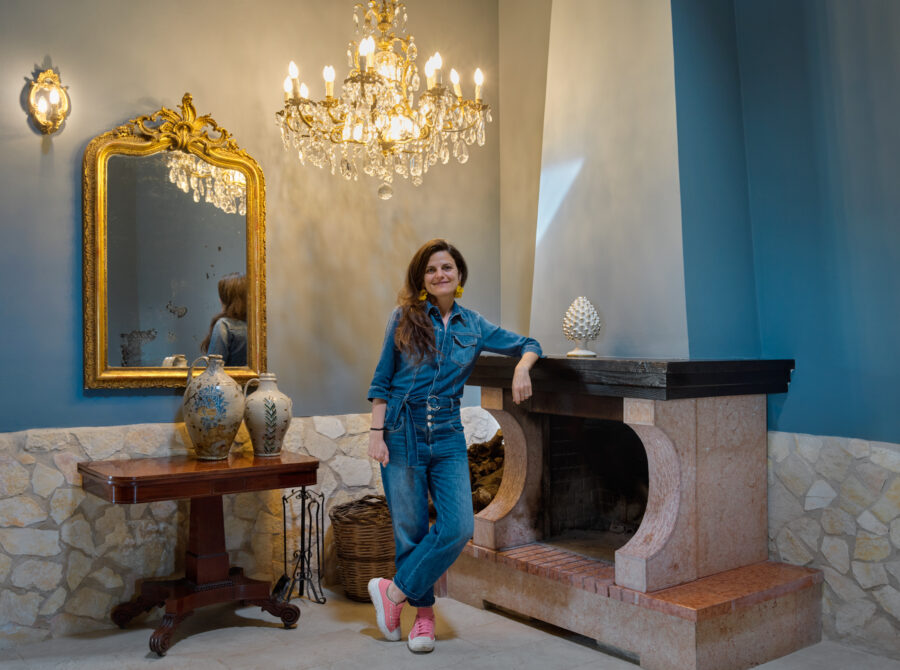
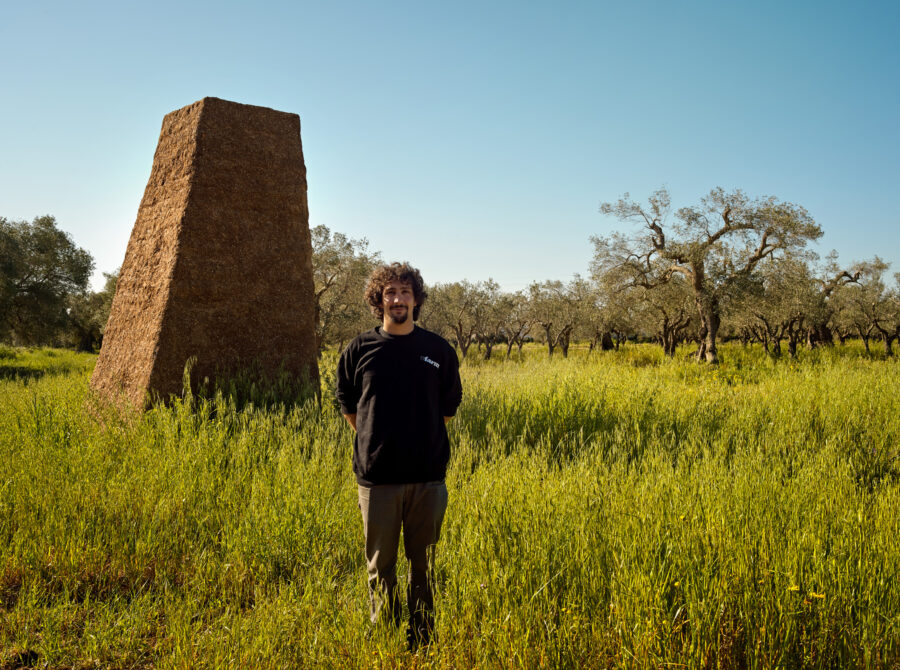
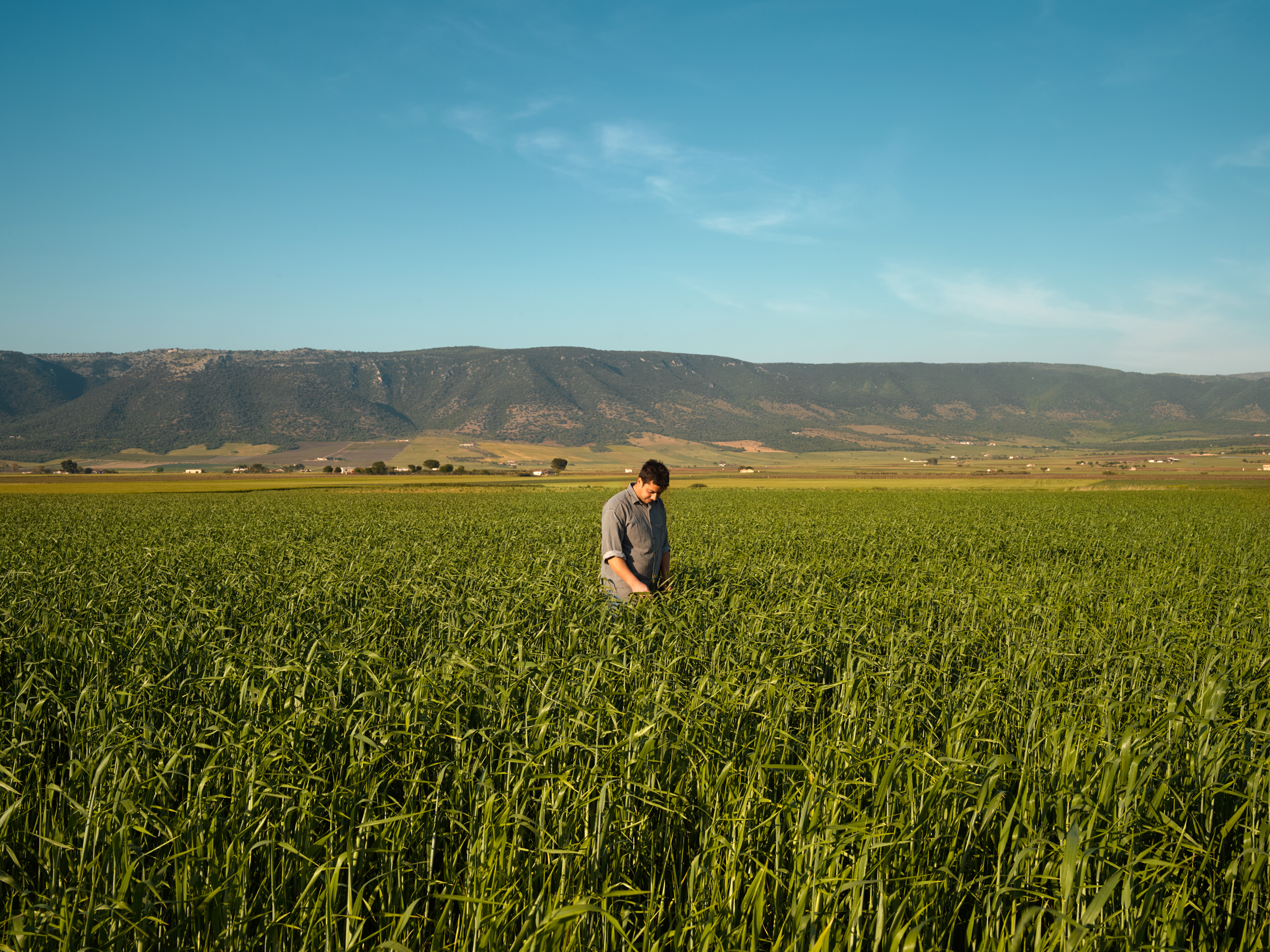
In the south of Italy, close to little Gargano in the ‘Tavalero de la Puglia’ region, once known as ‘Granaio d’Italia’ (the granary of Italy), stands the farm that has been in the possession of the Petruccelli family for four generations.
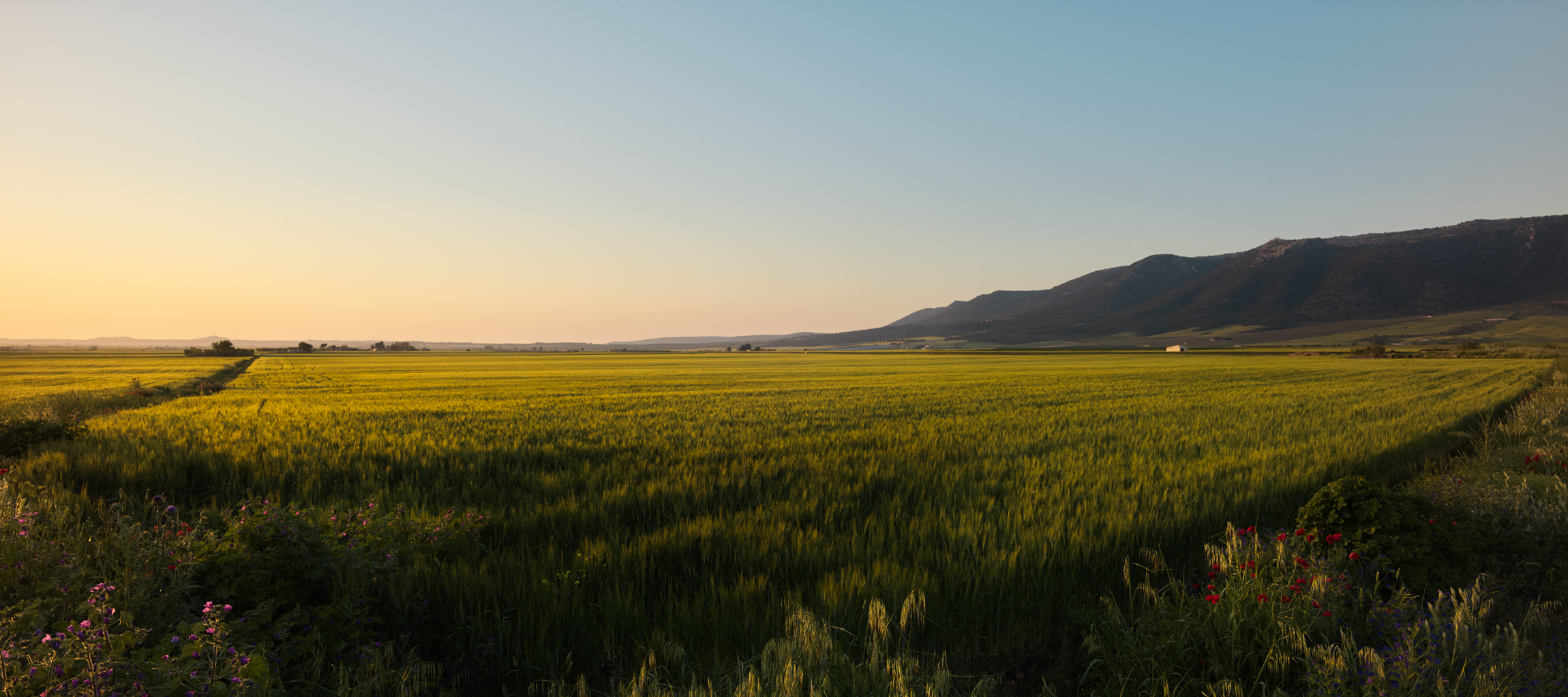
Leonardo studied agricultural sciences at the University of Foggia, took part in an Erasmus exchange to Lithuania and Poland and then returned to farm the land of his forefathers. On 30 hectares he grows old varieties of grain. He also produces vegetables and keeps a few pigs, chickens and cows, mainly for the circularity of nutrients and for self-sufficiency.
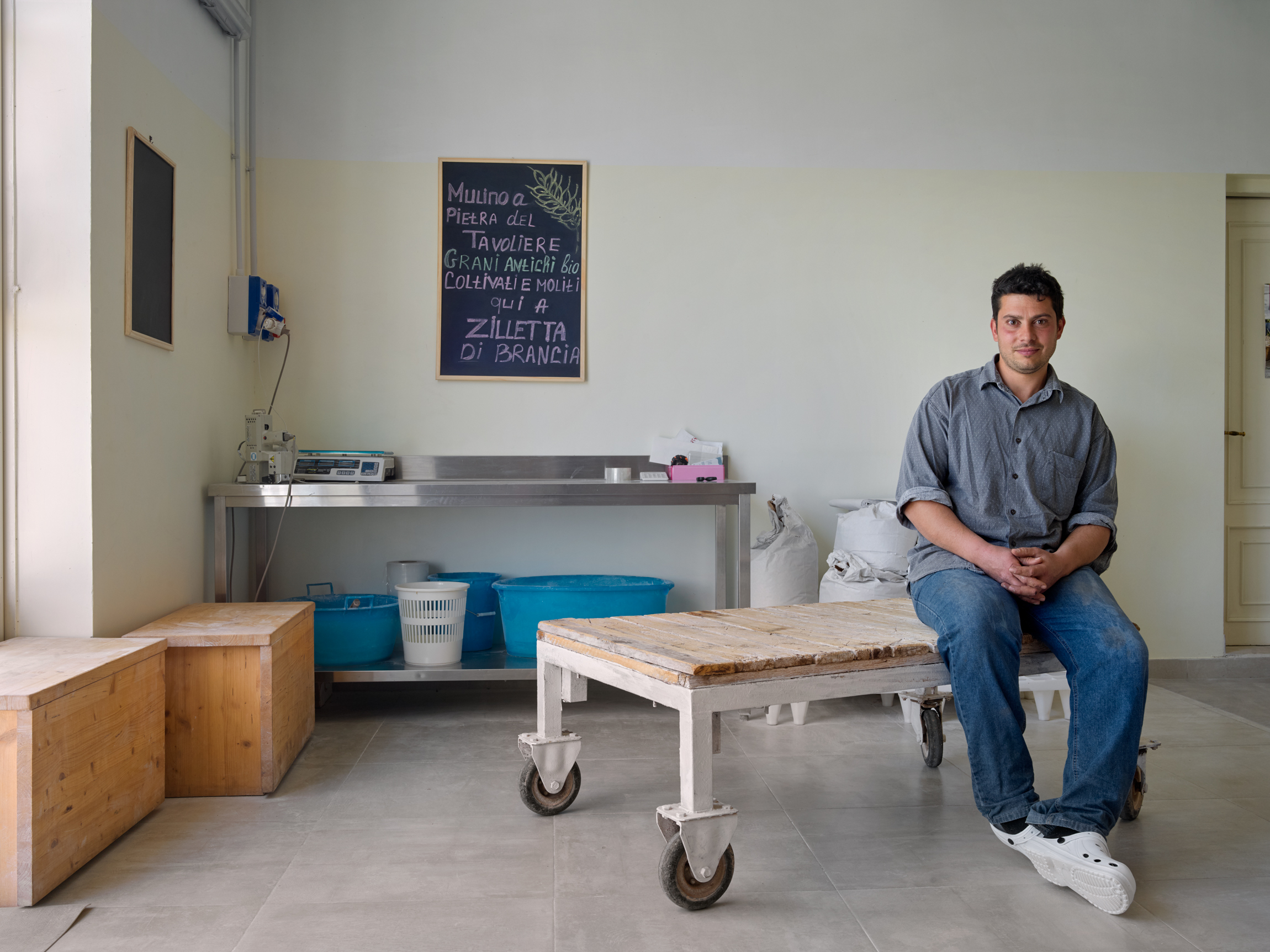 Leonardo Petruccelli
Europe is facing the problem of marginalization and unsustainability in agricultural regions. A trend among a new generation of farmers who are returning to the land provides hope of a new way of farming that will counteract these processes.
Wageningen University’s Development and Rural Innovation department is investigating new forms of social agriculture. Siw Fasting, who carried out some research on the subject in Puglia, put us in touch with several young entrepreneurs, which rendered up a number of encouraging stories about new forms of agriculture.
‘When you dream alone it’s a dream; when you dream together the reality begins.’
The quote from Che Guevara sums up Leonardo’s entire philosophy and that of his farm. It is based on exchange and sharing, on social relationships and the transfer of know-how
Leonardo prefers to talk about ethical agriculture, which has respect for nature and for people too. His crops are healthy for humans as well as for the earth. It’s a holistic worldview characteristic of social agriculture as practiced by Leonardo. This particular form of social agriculture is of great significance both in stemming the rural exodus taking place in many parts of Europe and in helping to create a new way of farming that’s based on working with nature instead of depleting it. By combining and mixing a diversity of knowledge from various sources, hybrid agricultural practices are created that bring together nature and culture. In their production methods young entrepreneurs like Leonardo combine contemporary farming techniques and technology with centuries-old farming knowledge and savoir faire. They have a global focus and large networks that are often international. With their hybrid agricultural practices, entrepreneurs like Leonardo create parallel and co-existent alternative possibilities for new farming methods that can increase sustainability and counteract marginalization in rural areas.
Leonardo, who is unmarried and doesn’t employ any staff, runs the 30-hectare farm on his own. He is helped by his WWOOFers, an ever-changing group of young people.So for Leonardo our arrival and the presence of Angela from Germany, Florette from France and Elena from Belarus were reason enough for a pasto festivo.
Worldwide Opportunities on Organic Farms (WWOOF), a worldwide movement that aims to link young people (WWOOFers) with organic farmers, promote cultural and educational exchange, and build a global community.
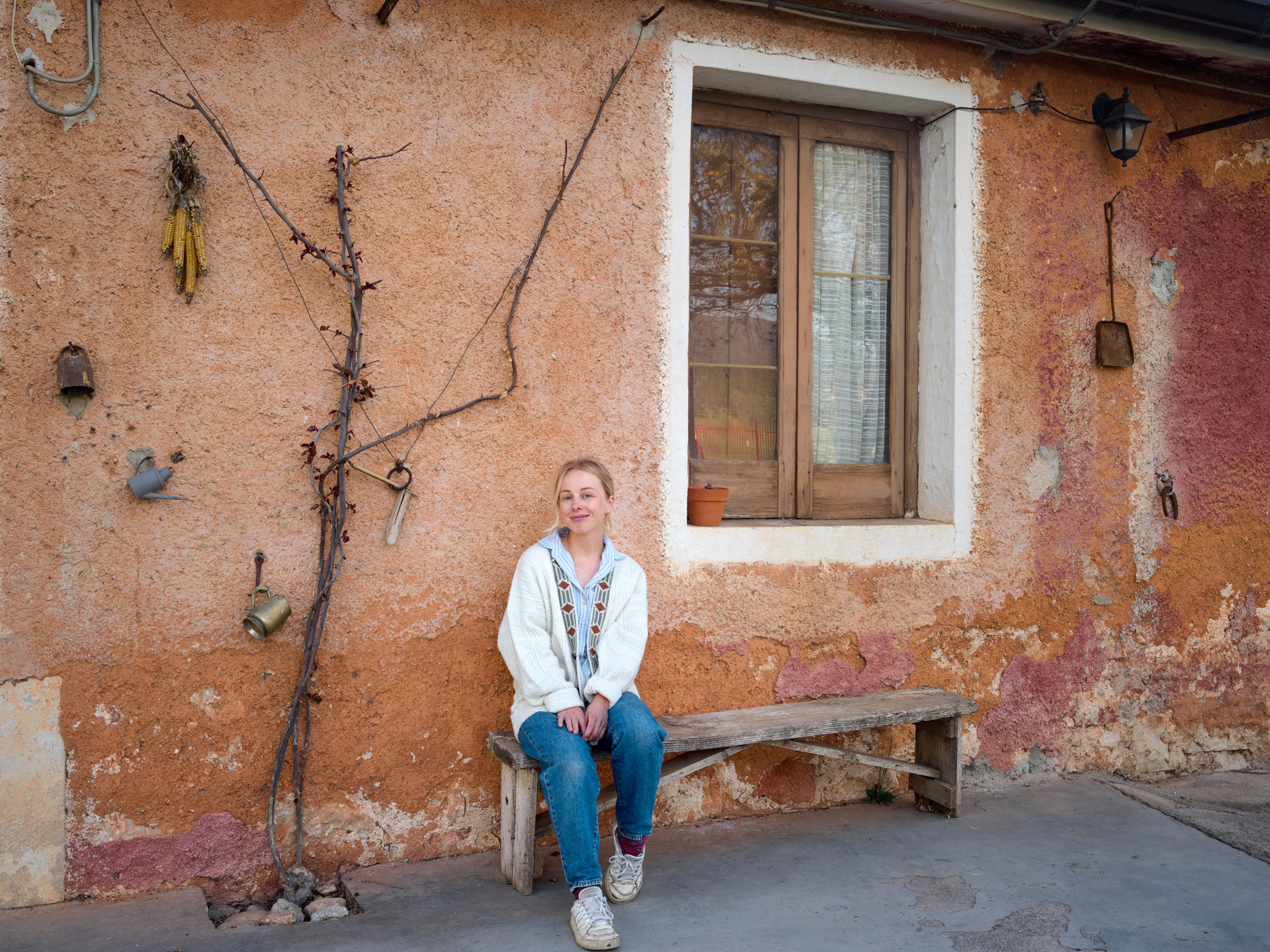
"I like to share my lifestyle, that’s not just work and agriculture but also travel, parties, friendships and fun.’
Elena Kiselewa, Belarus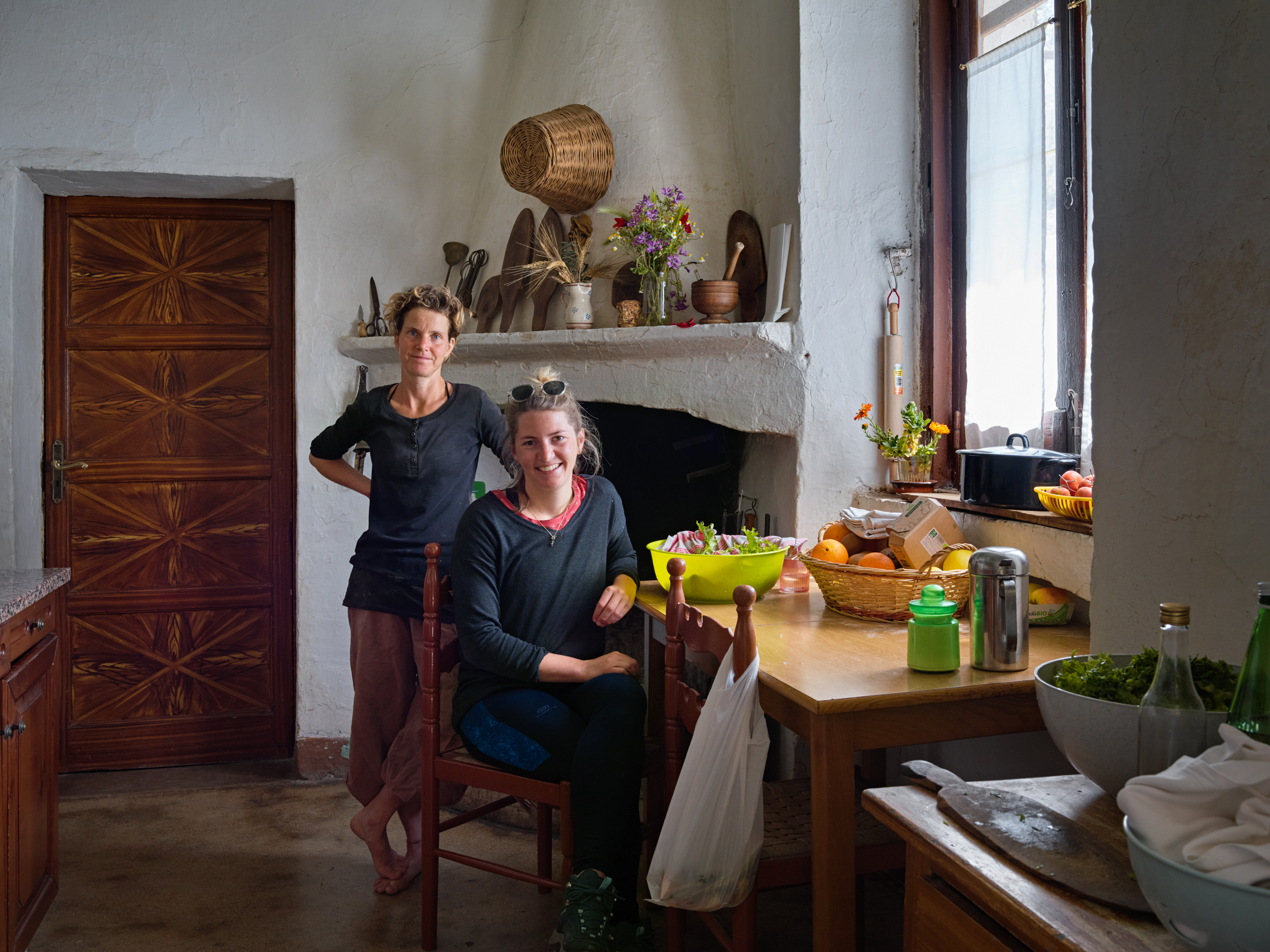 Angela Zimman, Switzerland and Florette Dufour, France
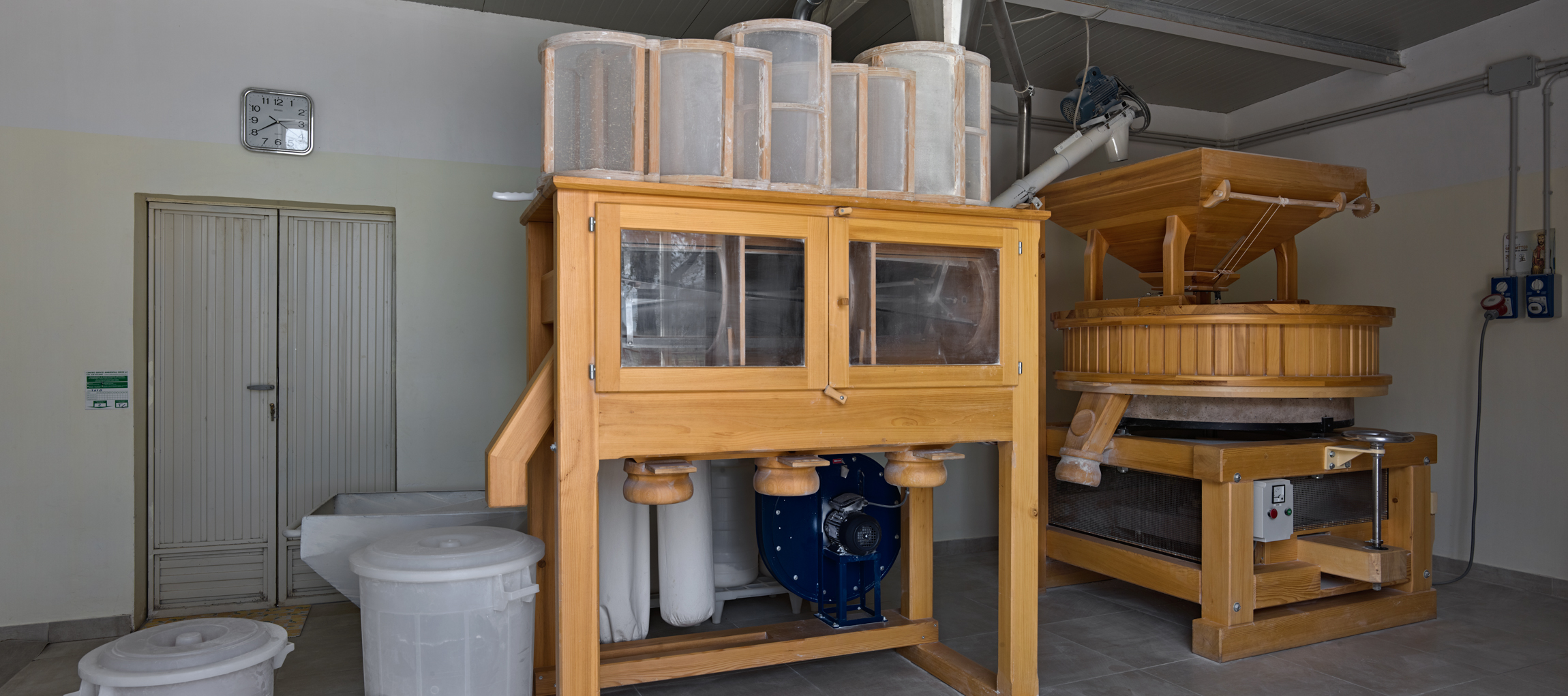
Leonardo has his own stone mill. Not to grind his grains but to transform them into flour for pizza, pasta and bread. This flour is respectful not only of nature but of people.
‘People don’t buy just the flour, they buy the organic way I produced it.’
Evolutionary populations of wheat
Agriculture, the first actor in the agri-food system, is currently facing two interconnected crises: climate change and biodiversity loss. These challenges are jeopardizing our ability to provide food manufacturers with high-quality raw materials without affecting price or yield. In conventional agriculture, cereal crops are cultivated repeatedly as monocultures or in rotations of just two species, relying on external inputs such as chemical fertilizers and pesticides. Ecological principles are followed when considering cereal cultivation in marginal areas, such as mountains and high hills, or in organic farming. Among these approaches, the use of a higher inter- and intra-specific diversity, and the selection of naturally evolved varieties adapted to the pedoclimatic context over many years, are most efficient at ensuring cereal yield and quality. For that reason, evolutionary populations (EPs) have been introduced with the aim of increasing cultivated biodiversity while ensuring adaptation to the specific pedoclimatic conditions and the effects of climate change.
Source: Department of Food and Drug, University of Parma