California’s agriculture sector is a major player in the state’s economy – and in the US economy in general – with more than 76,400 ranches generating as much as $ 100 billion in agriculture-related activities each year. California produces more than 400 animal and vegetable products, more than any other state, including milk, almonds, grapes and beef. In addition, two-thirds of the country’s fruit and nuts, and more than one-third of its vegetables, are produced by farms in California alone.
As you would expect in California, strawberry farming is a high-tech business. Varieties are chosen that can tolerate the dry climate.
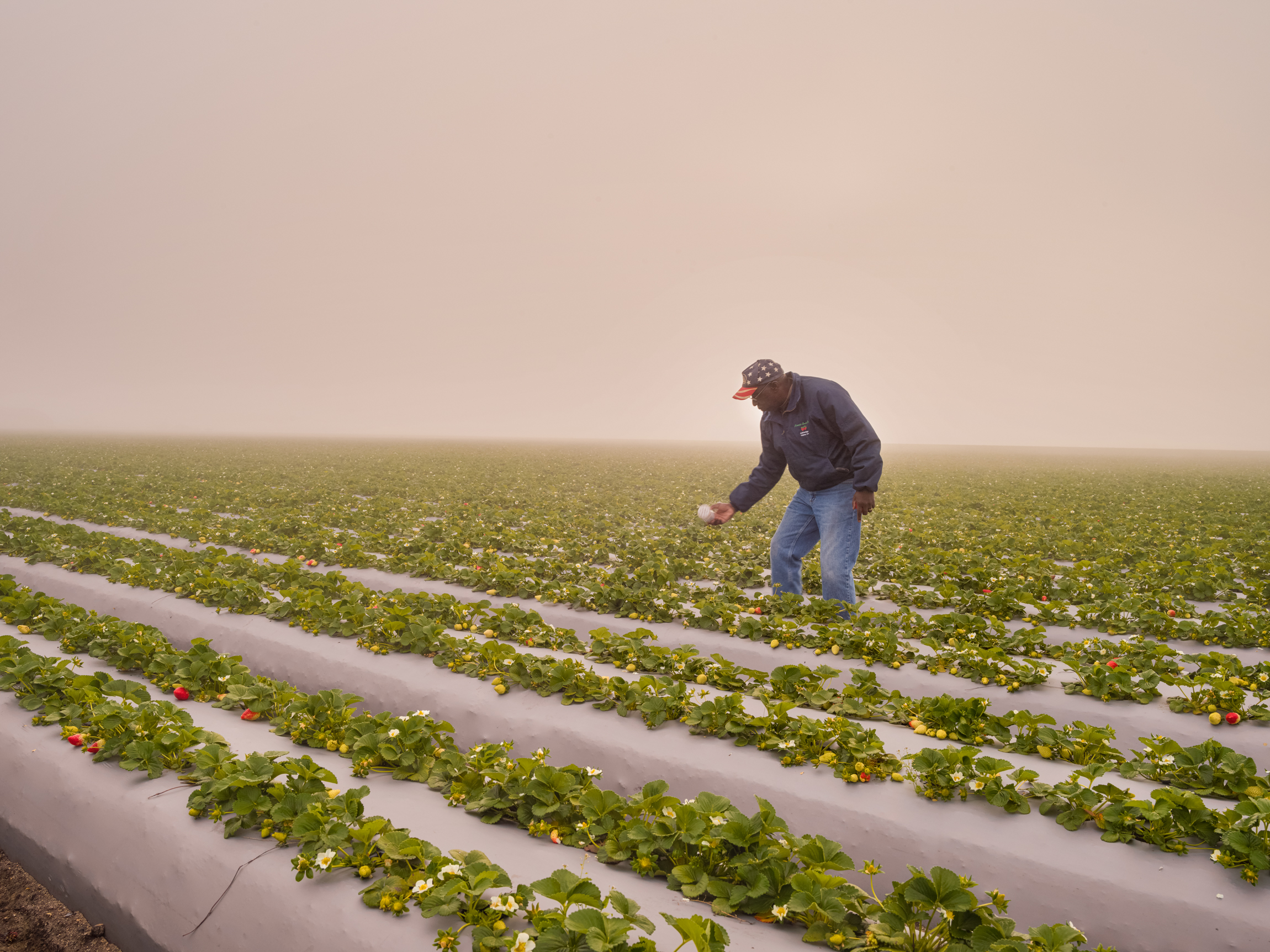 Laurence London pest control adviser Sugarloaf Ranch
Flooded by the magical morning light were endless rows of strawberries that you could pick and eat without needing to rinse them under the tap – strawberries without poison. They were grown on coconut scrap, across thousands of hectares.
We were waiting for Laurence London, pest control manager at Sugarloaf Farm. A thick mist rolled over the strawberry fields and out of nowhere Laurence appeared, a big Black American. Before greeting us, he pulled a tube out of his coat pocket and bent down to scatter its contents over the strawberries as if adding icing sugar. He started to talk and gave us a biology lesson. Like a passionate teacher, he explained to us the principle of biological pest control in the way you might explain it to a child: ‘Suppose you have trouble with mice in your house, you can set a trap, you can scatter poison, or you can get a cat.’ What he was scattering over the strawberries was Phytoselius persimillis, a predatory mite that kills pests in strawberries. A beautiful and clean idea. You cultivate insects that live from the insects that are causing you difficulties. Once you’ve scattered them you needn’t do anything else. There’s no residue and you don’t have to worry about the consequences for your health, for the harvest or for the environment.
Here at the Sugarloaf Ranch, predatory mites are used against spider mites. Laurence London, pest control adviser at Fernandez Brothers, demonstrates how the predatory mites are distributed on the strawberry plants. This method is now outdated, since drones are used instead.
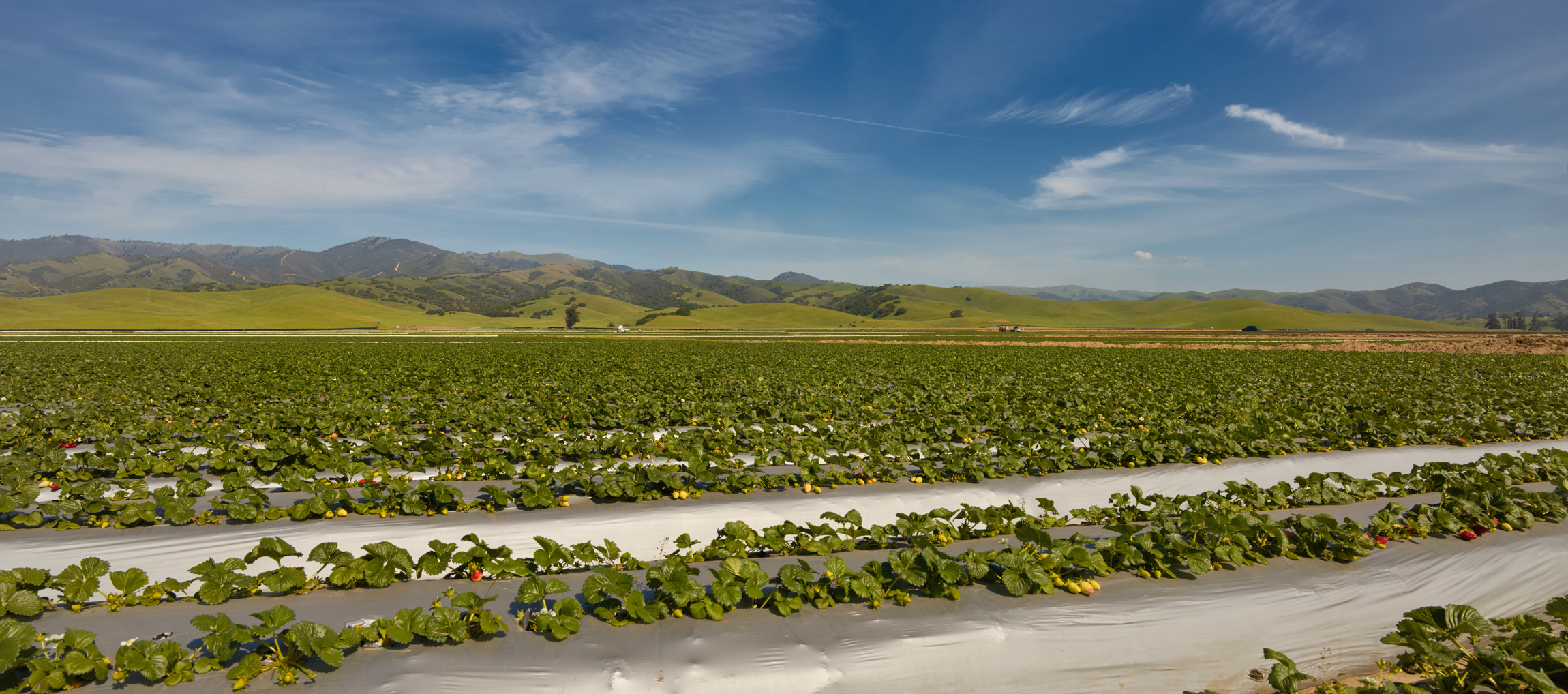
Much of the growing takes place not in the ground but in troughs of coconut coir, which retains water but cannot withstand fungal infections and other diseases, so many growers still resort to pesticides and fungicides. With their extensive strawberry fields backed by foggy hills and mountains, these Californian valleys are the source of the legendary big, bright-red fruit that everyone in America regards as the exemplary strawberry. Many people looking at images of these dead-straight rows of plants will hear a song playing in the back of their minds.