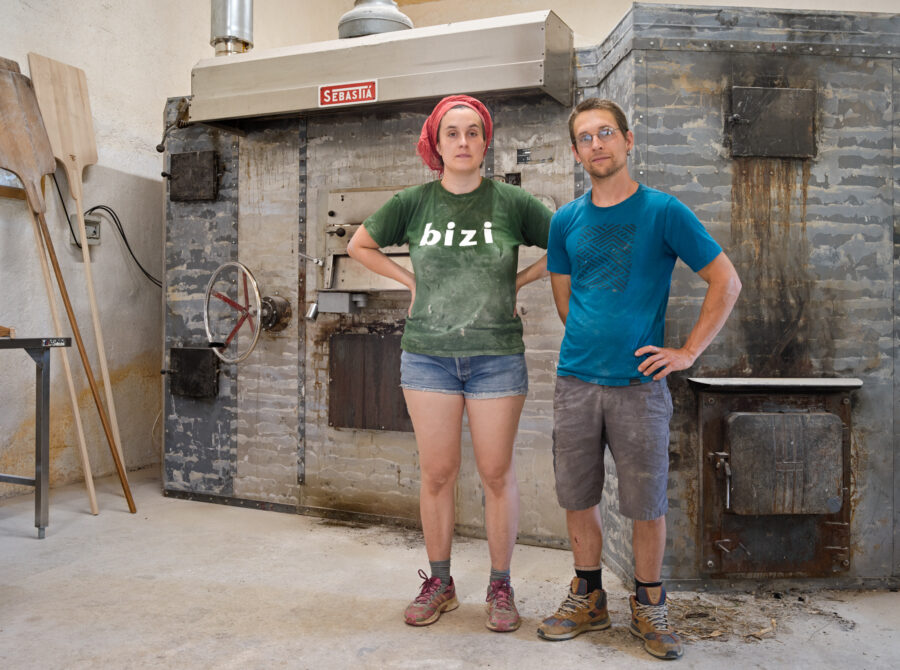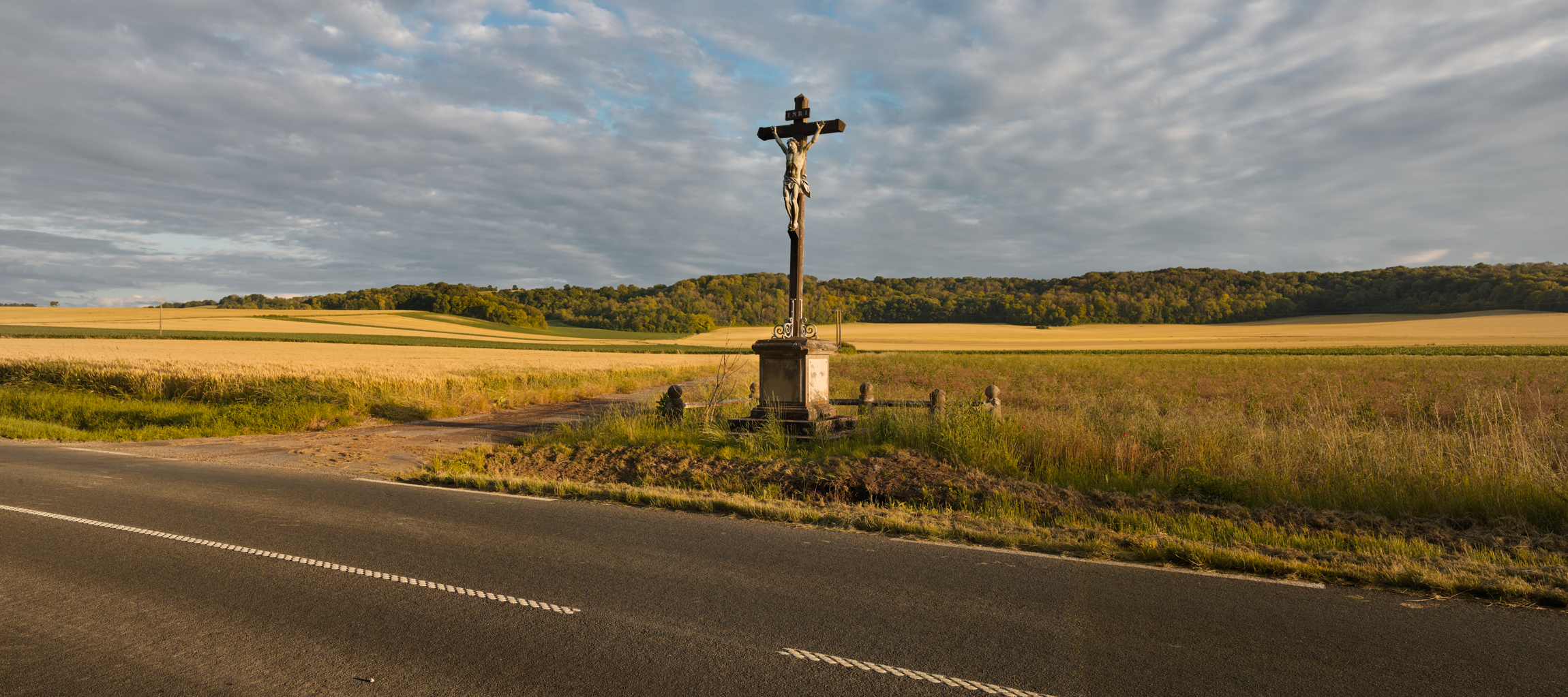
The route to Maison Delamarre Ferme was clear, from the village you pass the church and continue along the road to the statue of Jesus, turn left there and follow the dirt road until you see a sign ‘Maison Delamarre Ferme Bio’. There we met the brothers Benjamin and Julien, who run their father’s farm together.
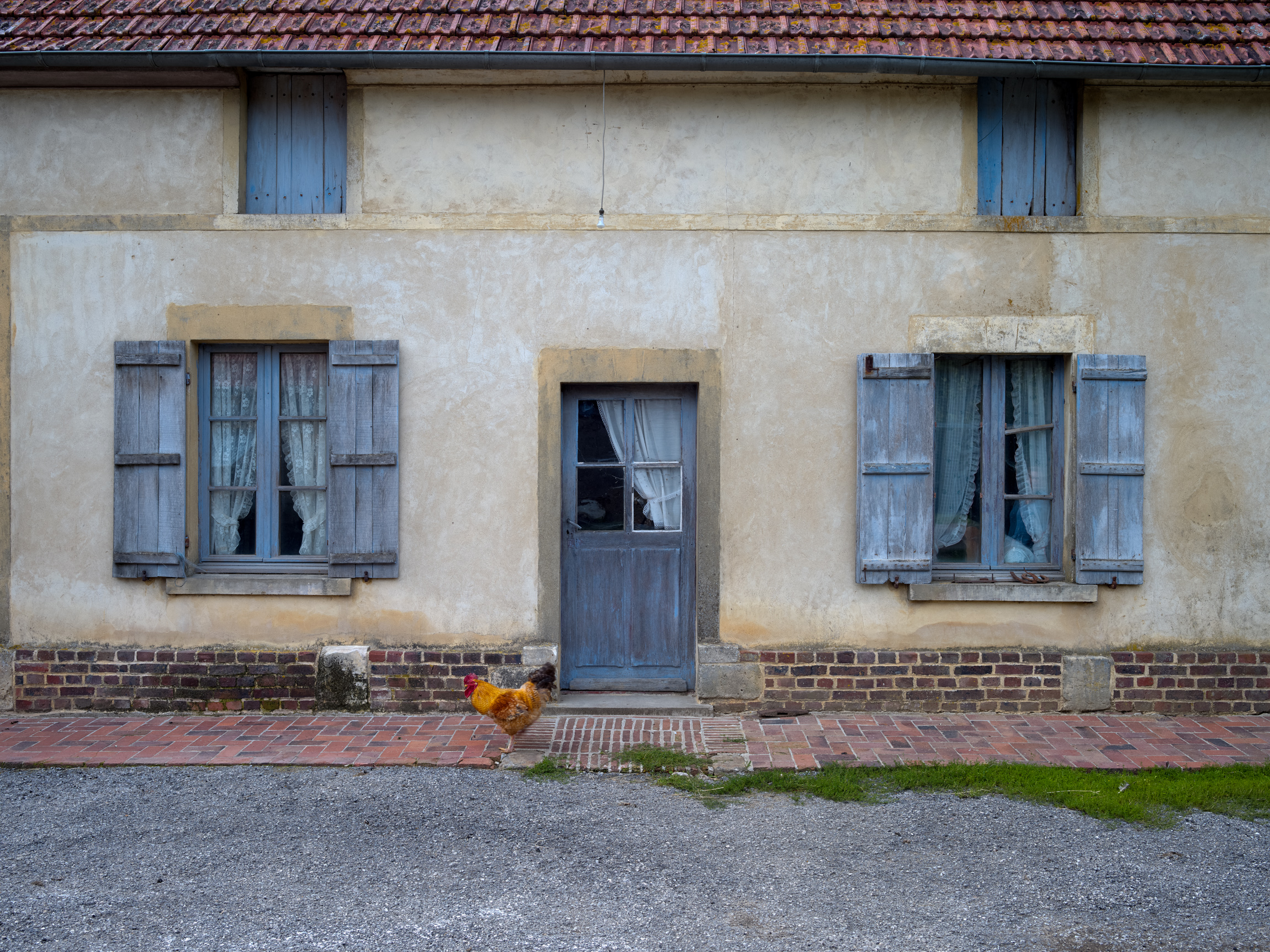
It’s the kind of farm that makes you think of pictures in a children’s book: cows grazing in the meadow, chickens scratching around in the farmyard, a cat purring on a windowsill and geese cackling loudly to announce our arrival. The farm is in a place called Malassise, a hamlet of barely seventy residents less than an hour’s drive from Paris. It has been a family farm for generations, and for the past 32 years it’s been fully organic.
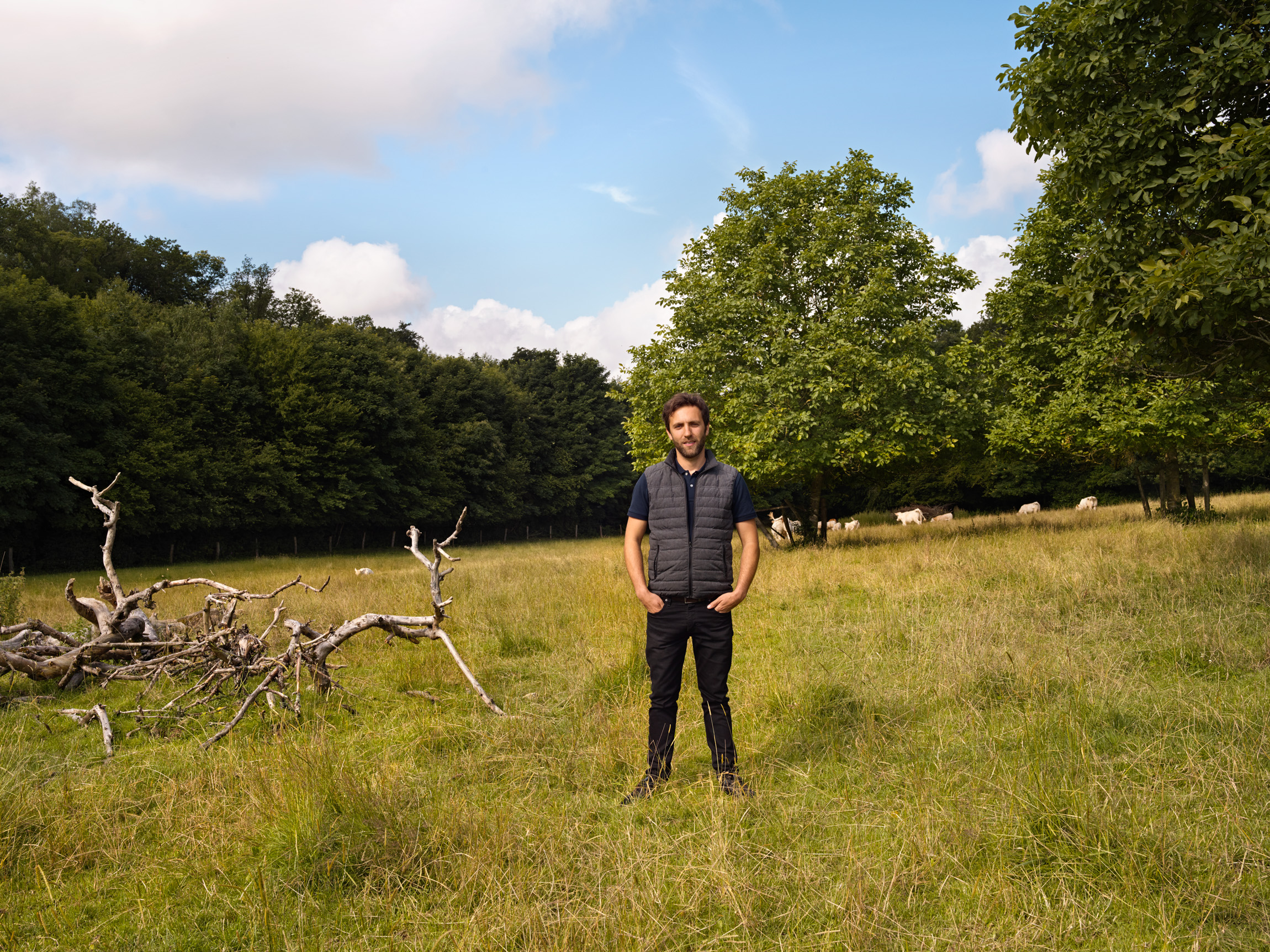
‘The land feeds the animals, the animals feed the land’
Benjamin Delamarre explains what he understands by organic farming, animal welfare and respect for the land.
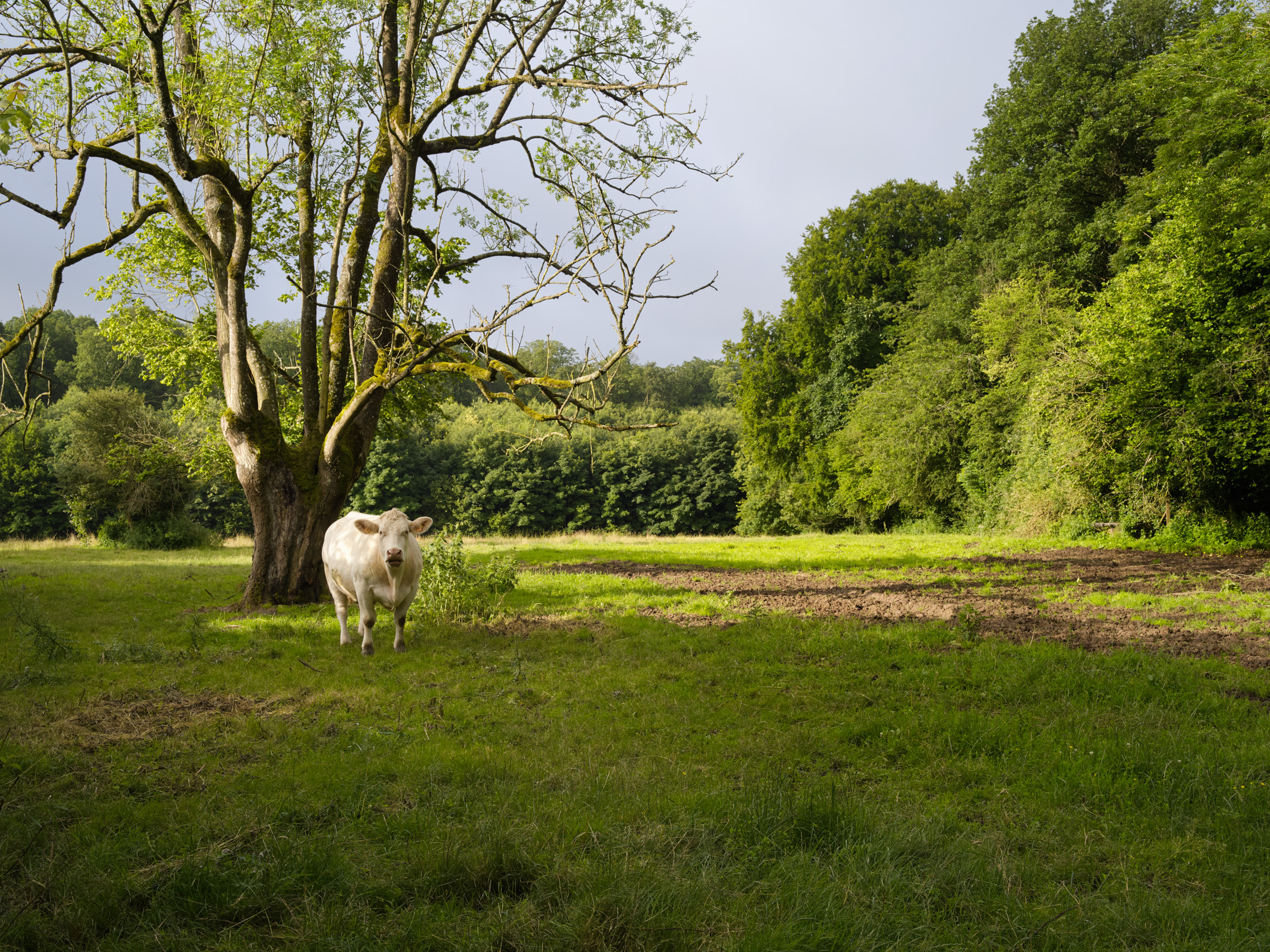
The cattle feed is 100 per cent organic and 100 per cent produced on the farm. The animals are out in the meadow for two thirds of the year (and the meadow is given no artificial fertilizer). During the winter they are housed in sheds at the farm, where they are fed on untreated hay, organic lucerne hay and organic grains, all produced on the farm.
In contrast to other farms, especially non-organic farms, the animals are not fed on soya (mainly from America and often genetically modified), nor on silage made from maize, nor on dried beet pulp, which is cheap and nutritious but causes health problems for the animals and increases the acidity of the meat. The animals benefit from their high-quality diet, and they also receive an optimal quantity of the food they need, depending on their stage of growth, their age, and whether they are suckling calves. During drought or a shortage of grass in the meadows, we give them supplementary feed while they are outside.
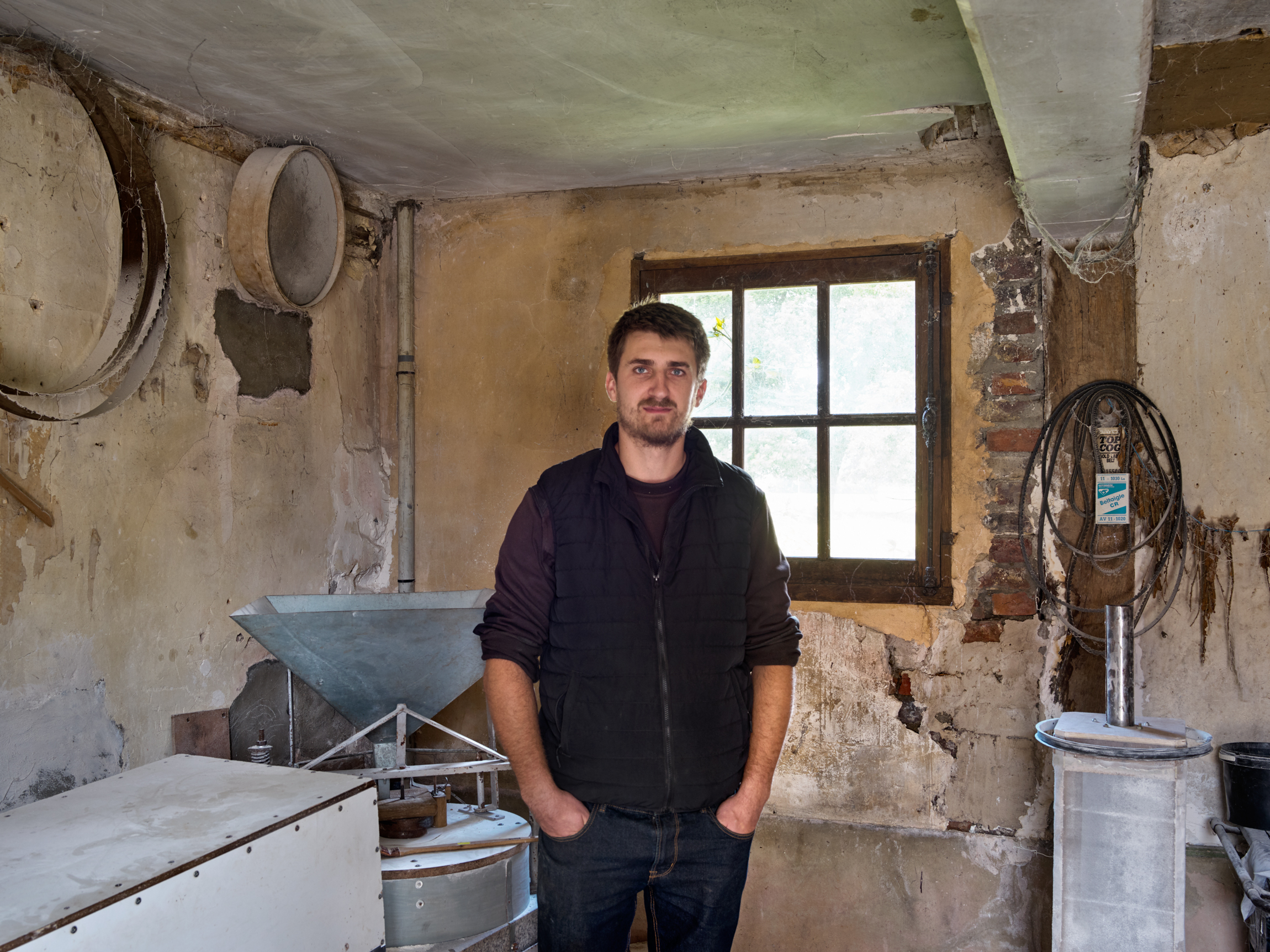
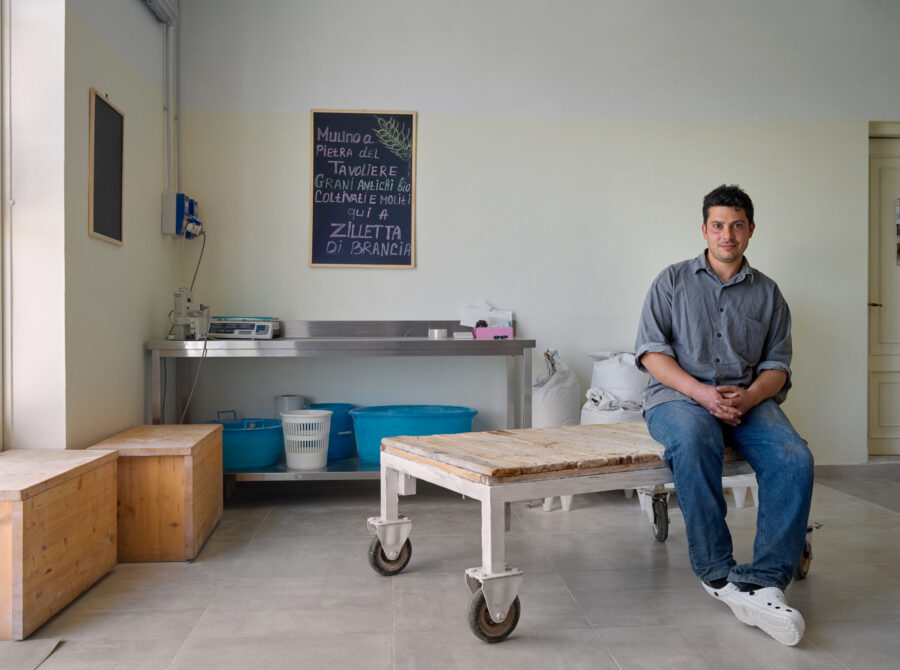
‘To make flour on the farm we use a millstone that grinds slowly and preserves the whole grain.’
Julien DelamarreThe products of the Delamarre farm are grown and treated to achieve the best quality in terms of taste and nutritional value. That doesn’t apply only to the meat, but also to the oil, the juice, the fruit jams, the lentils and the flour. Benjamin explains the way they produce flour.
‘The wheat grain is not crushed by the weight of the millstone but slowly and finely ground. That way we preserve the wheatgerm and the kernel, to produce flour of very high quality that is more easily digestible and more nutritious. Tarts, pancakes or bread all have a more subtle flavour and are easier to digest than when made with conventional flour. Our organic wheat strains are naturally low in gluten compared to certain conventional strains, which are selected precisely for their high gluten content. But the amount of gluten in your pizzas and tarts may also be a result of the ‘cracking’ method, used by food producers to separate flour into its component parts, which splits each grain of wheat into thirteen elements. The gluten is isolated and then injected into the flour in large quantities so that the dough can be made to rise all the more quickly.’