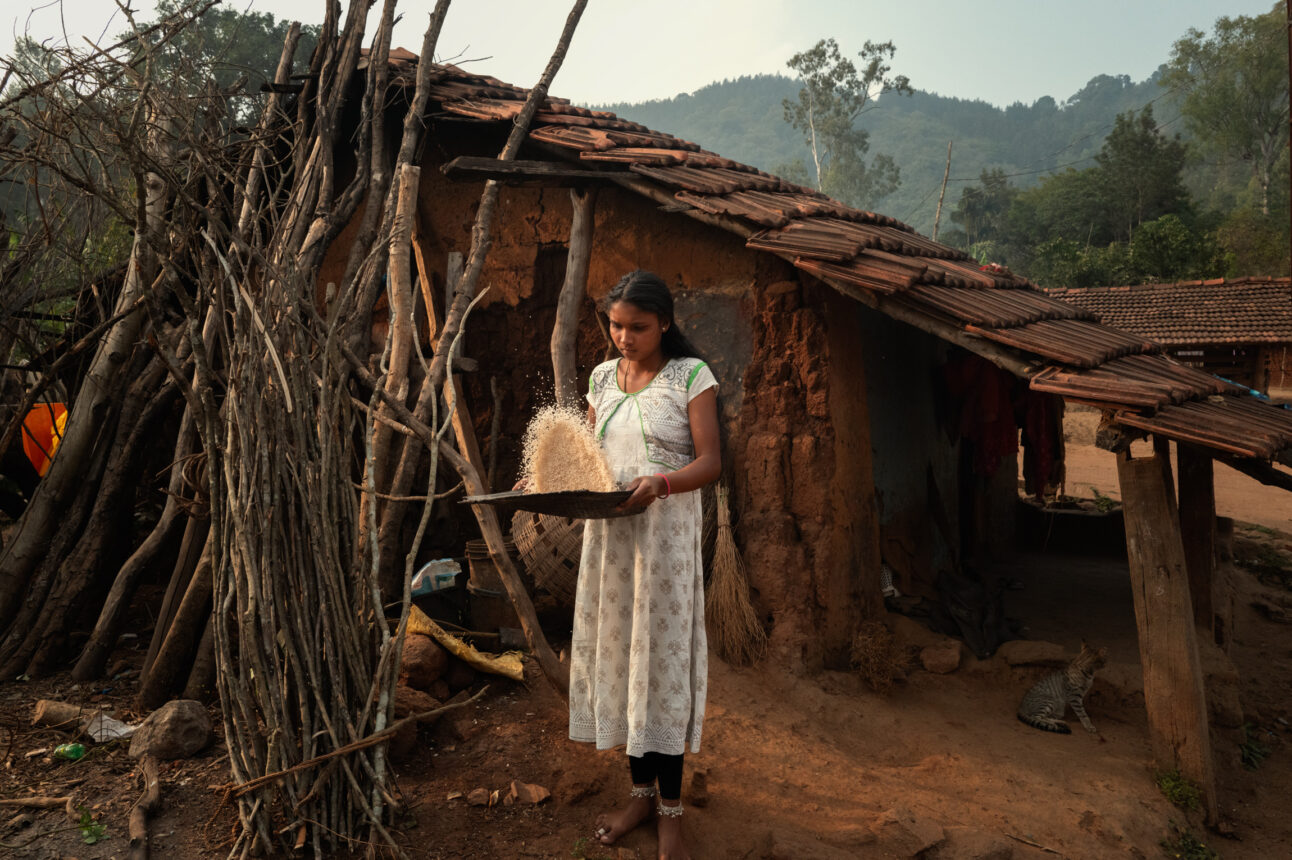
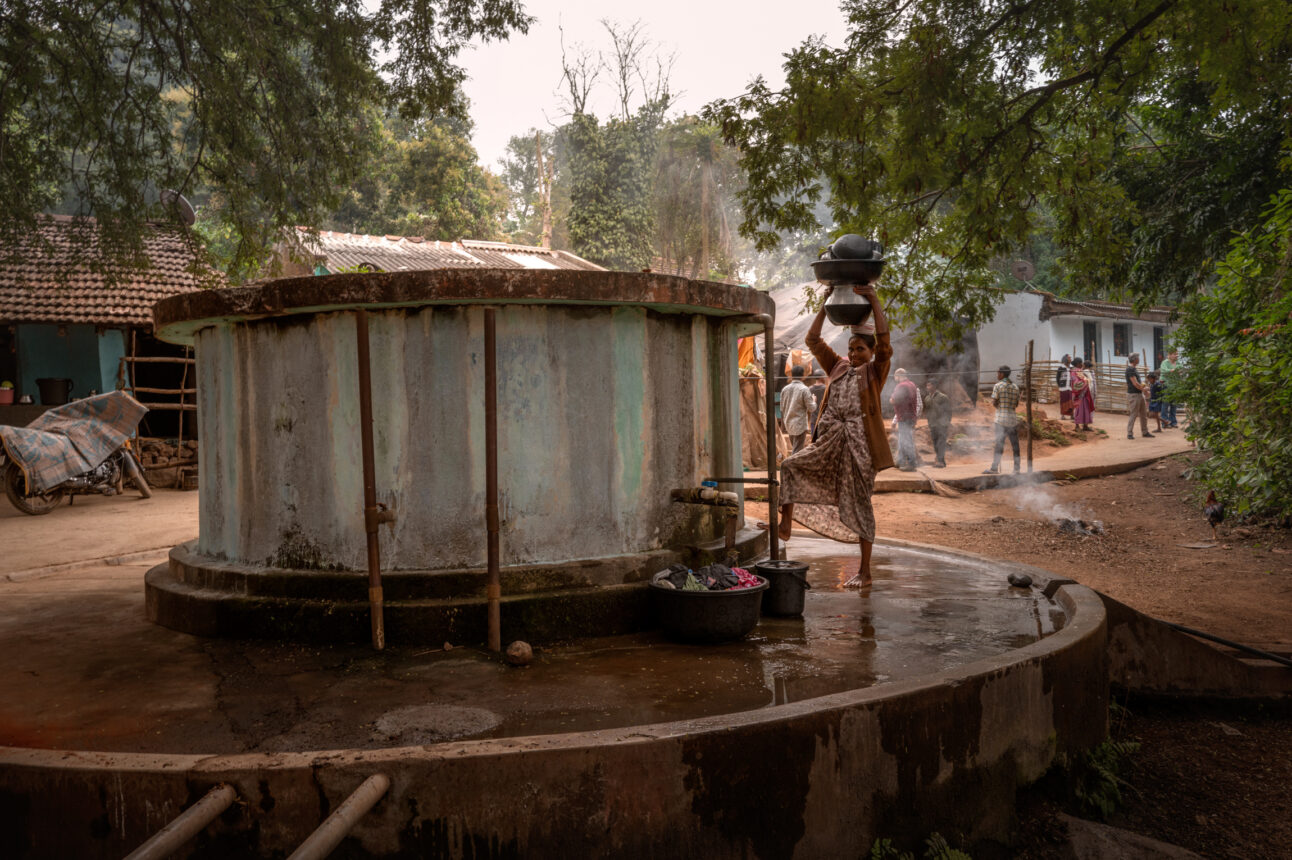
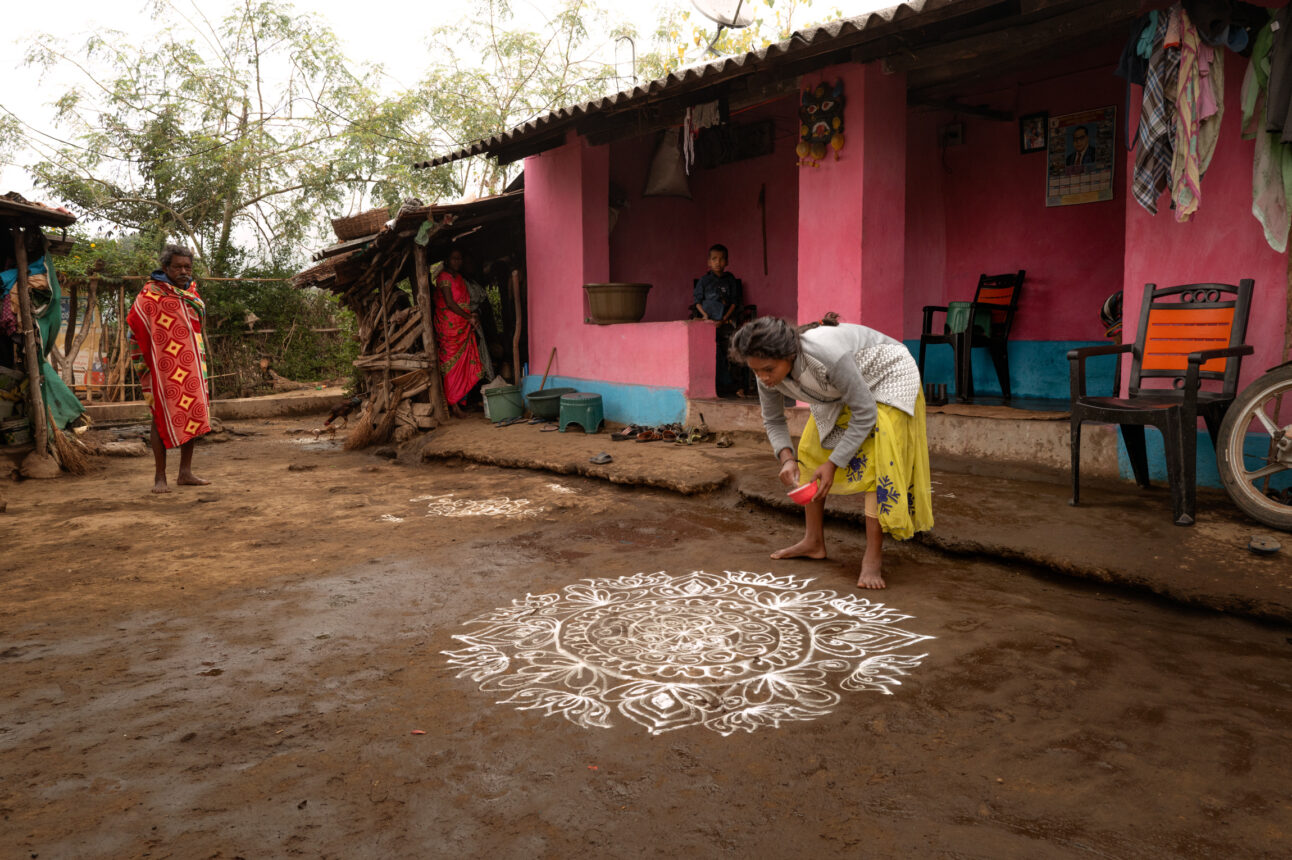
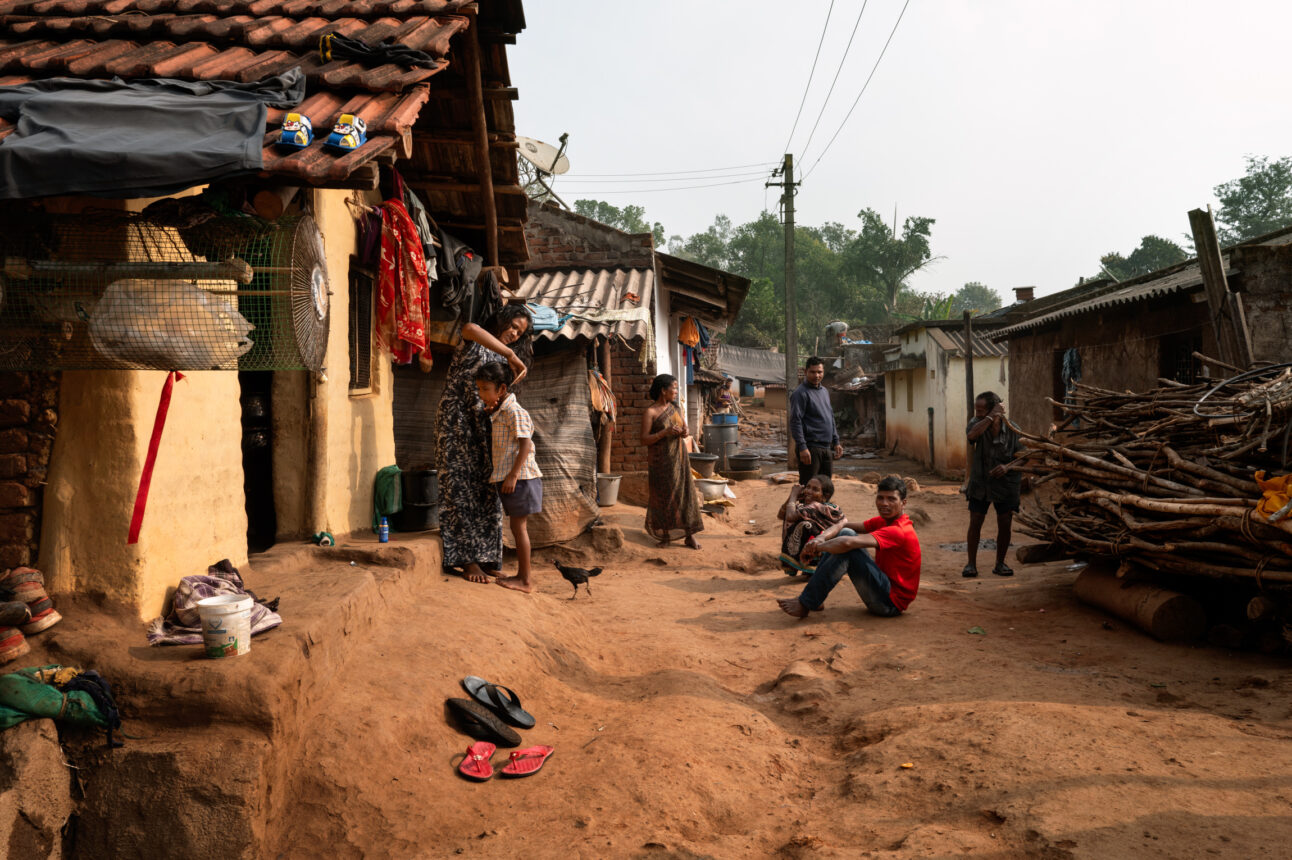
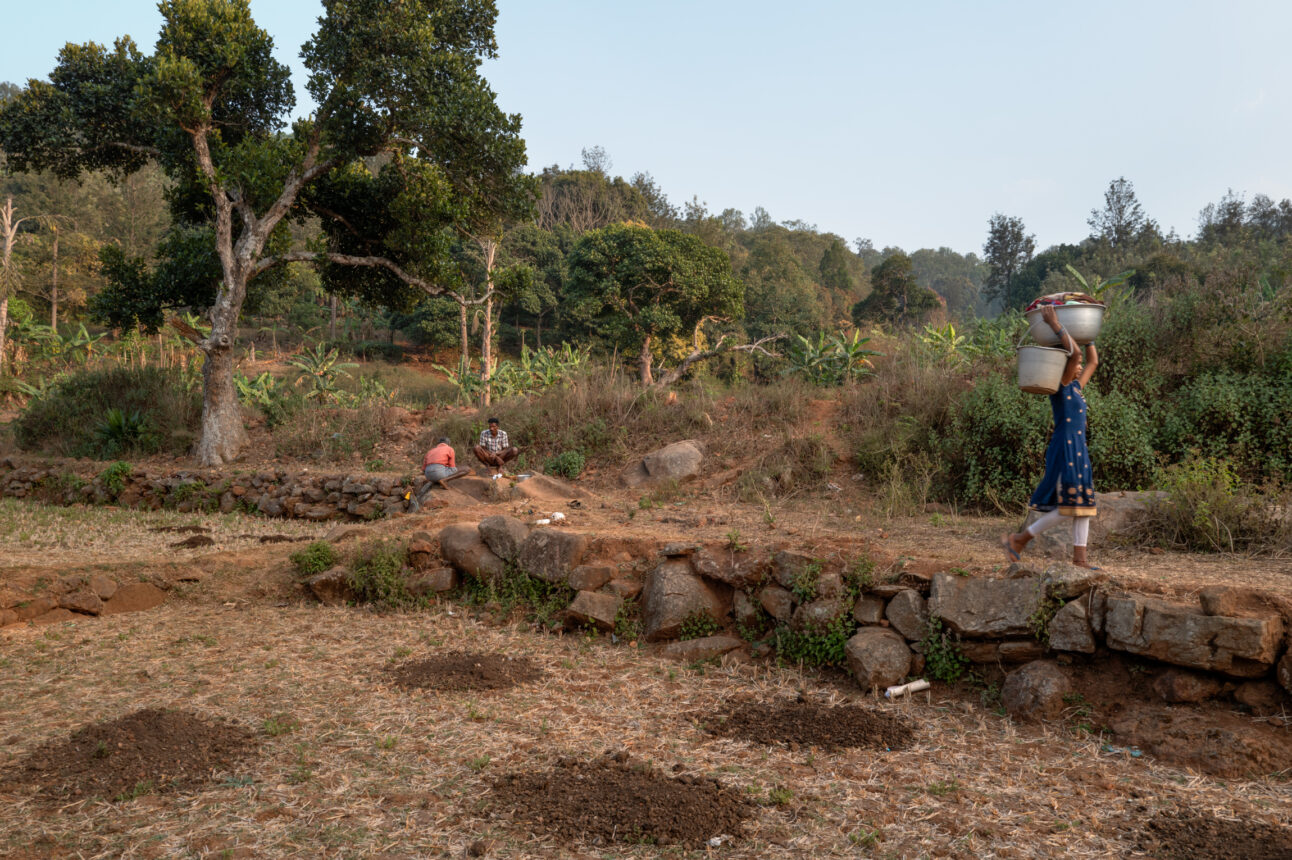
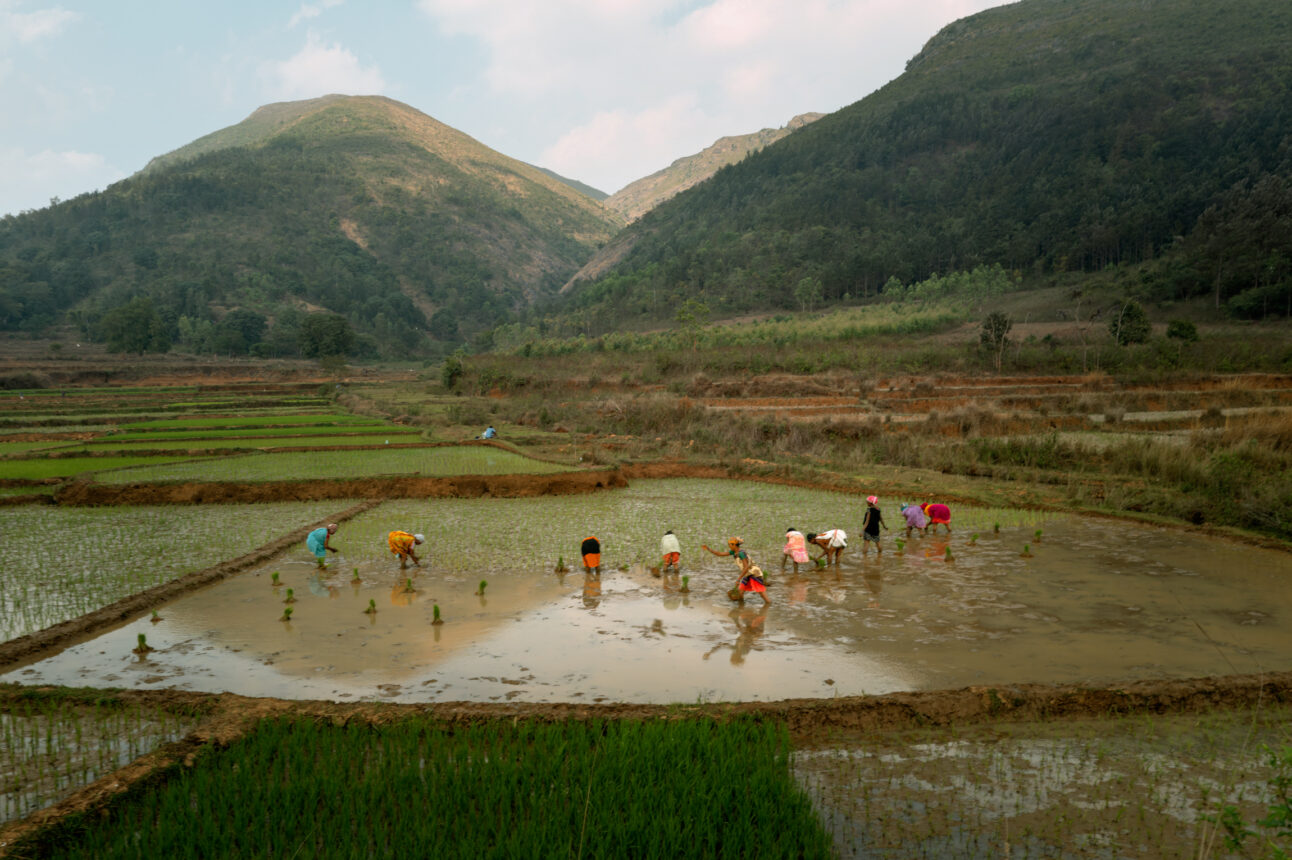
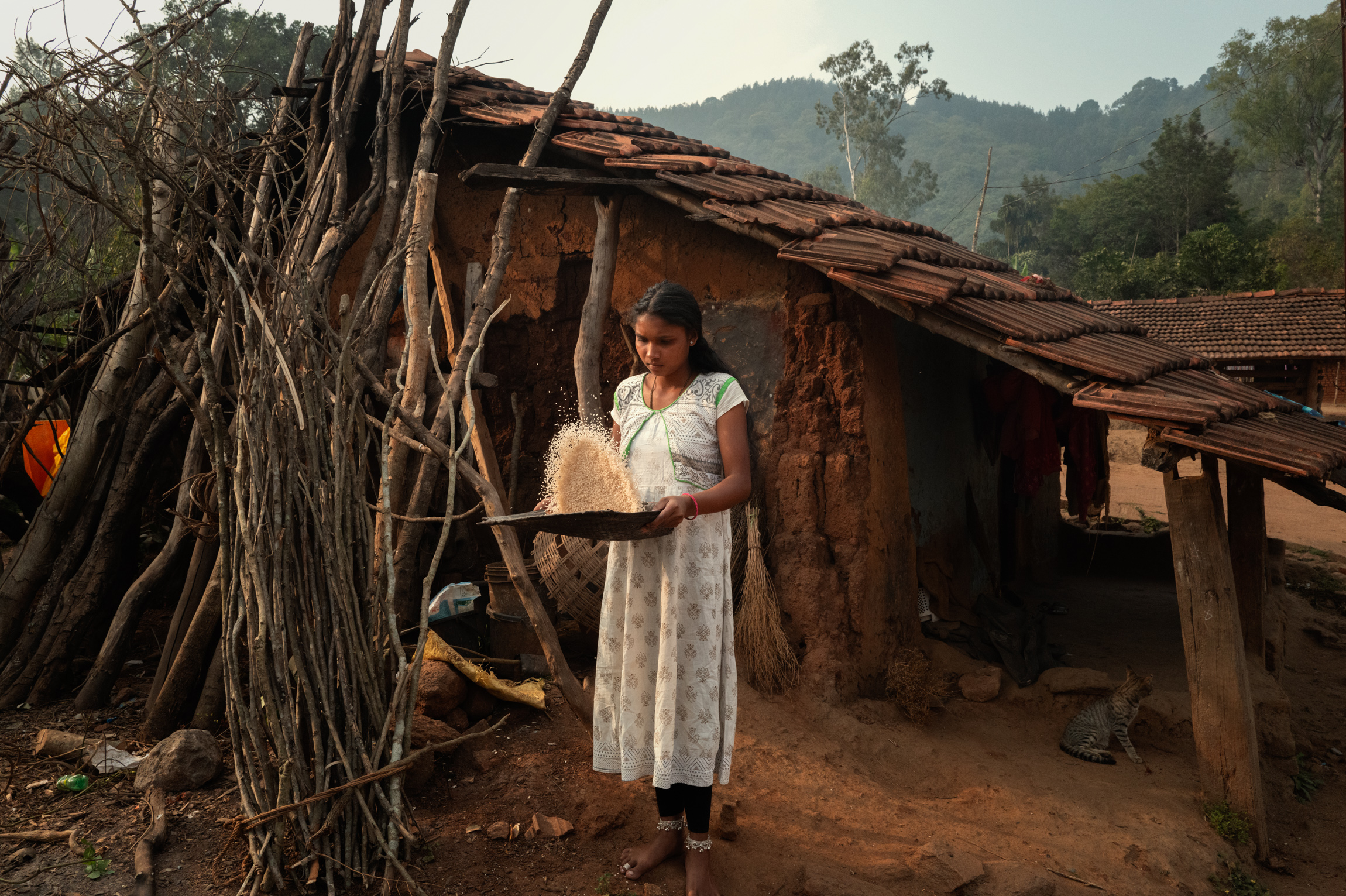
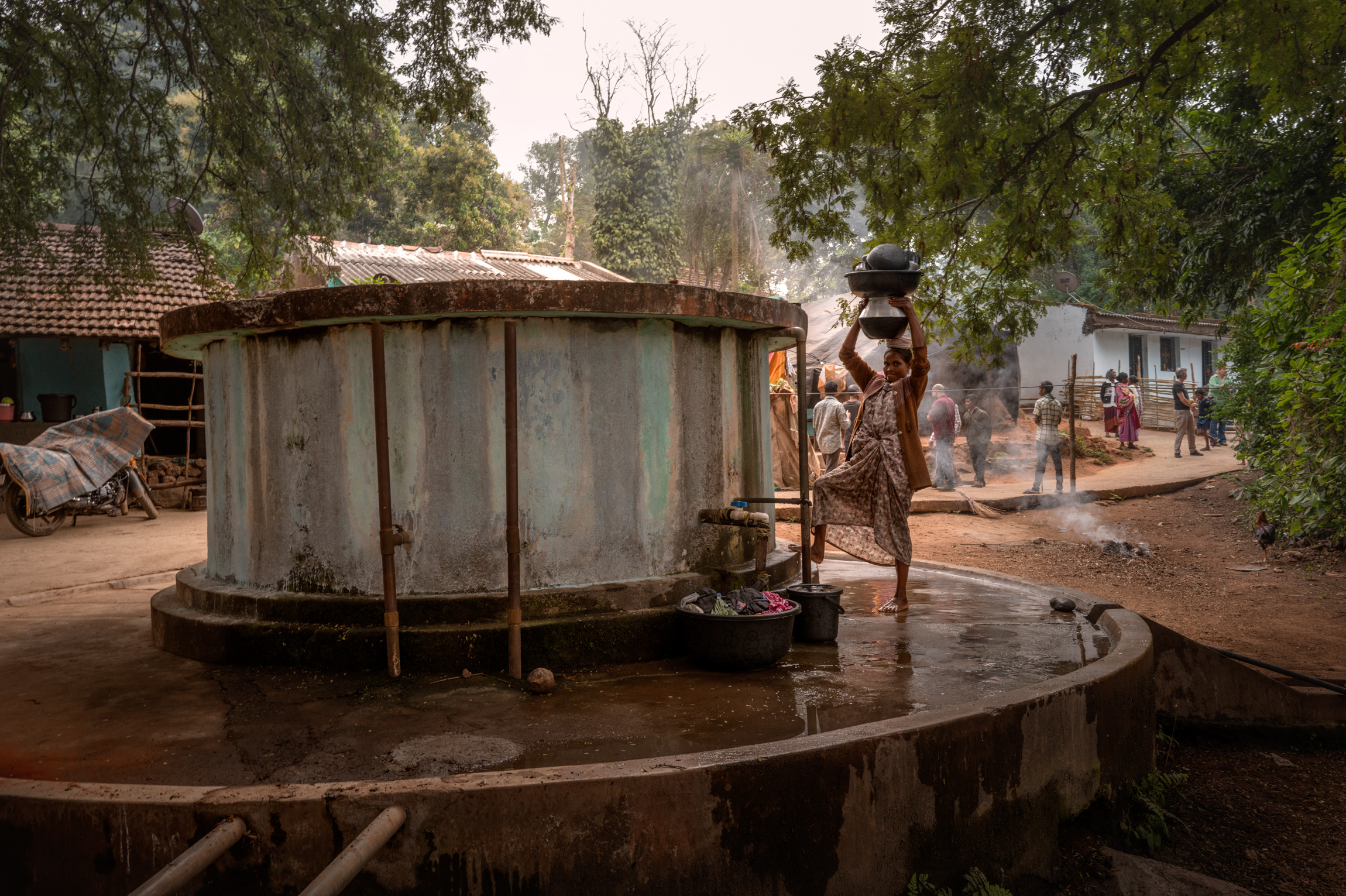
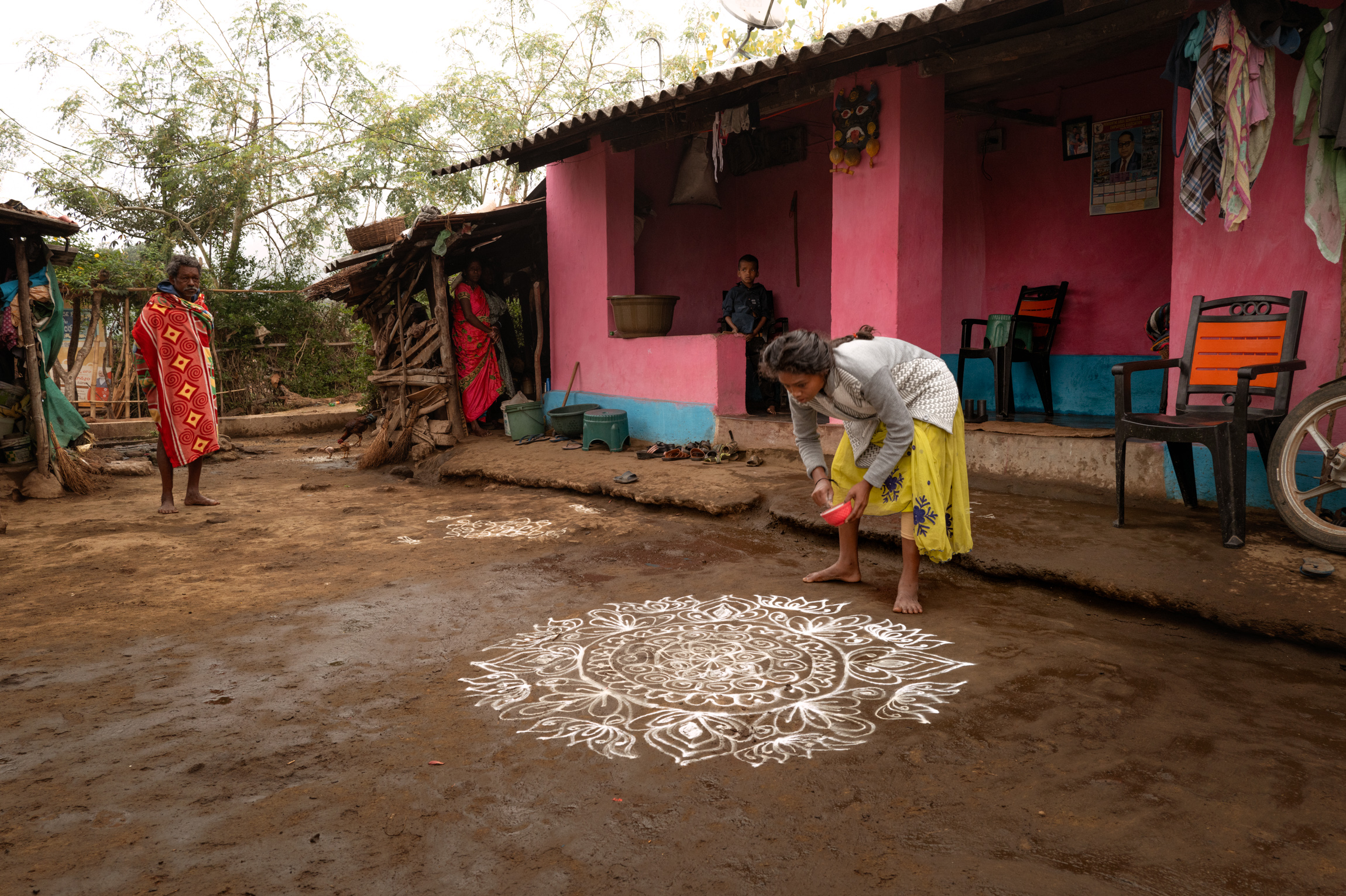
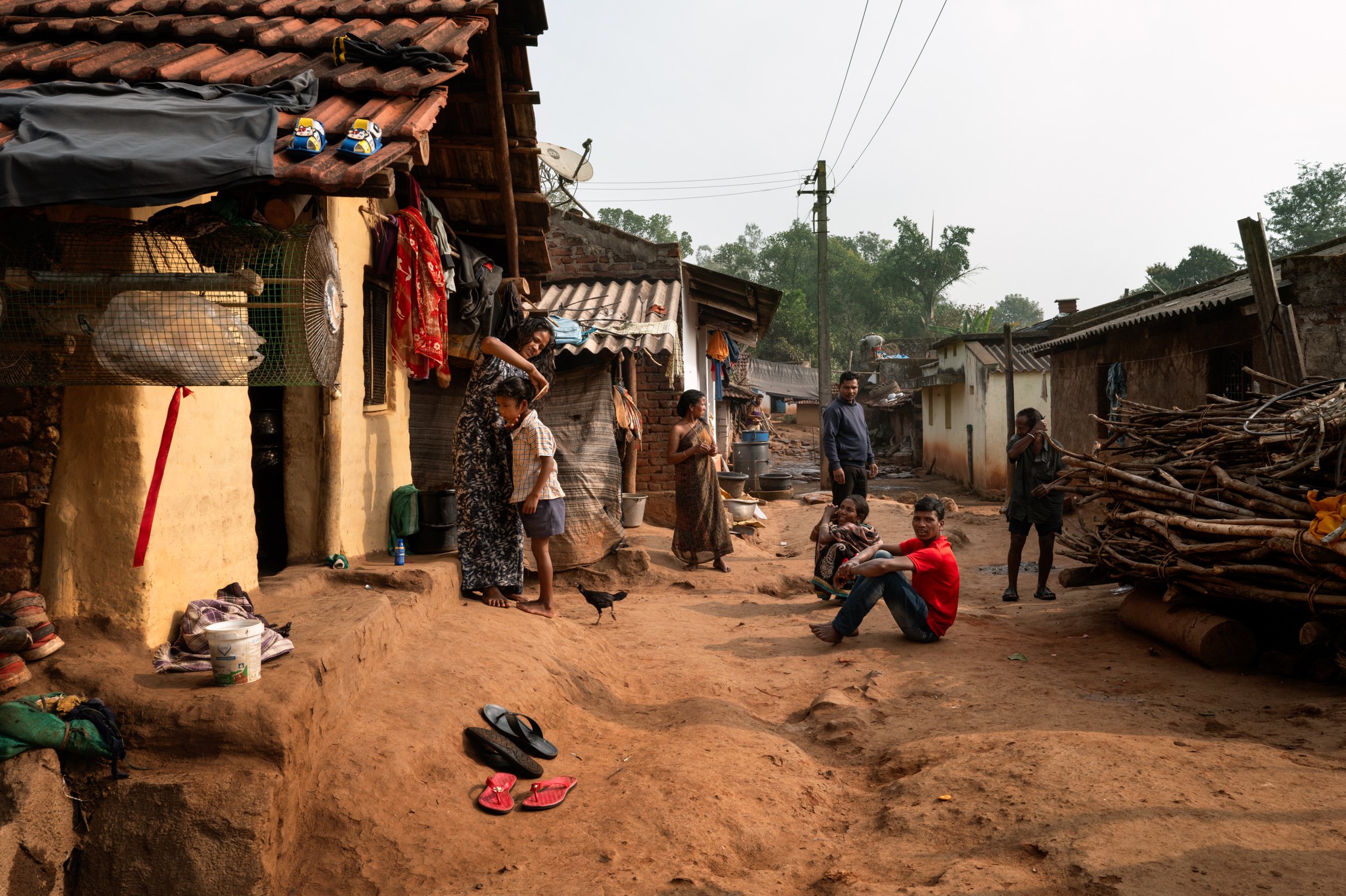
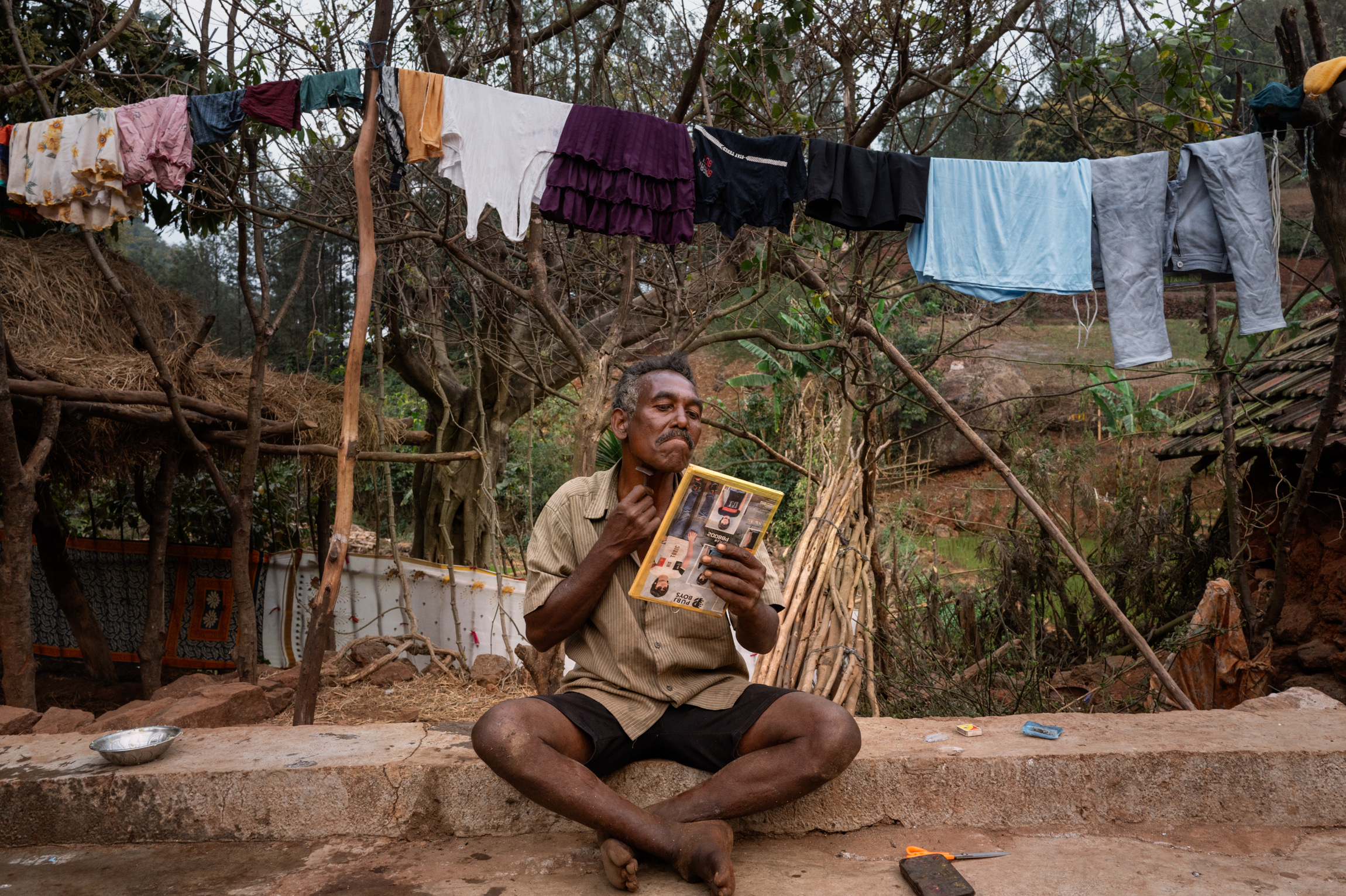
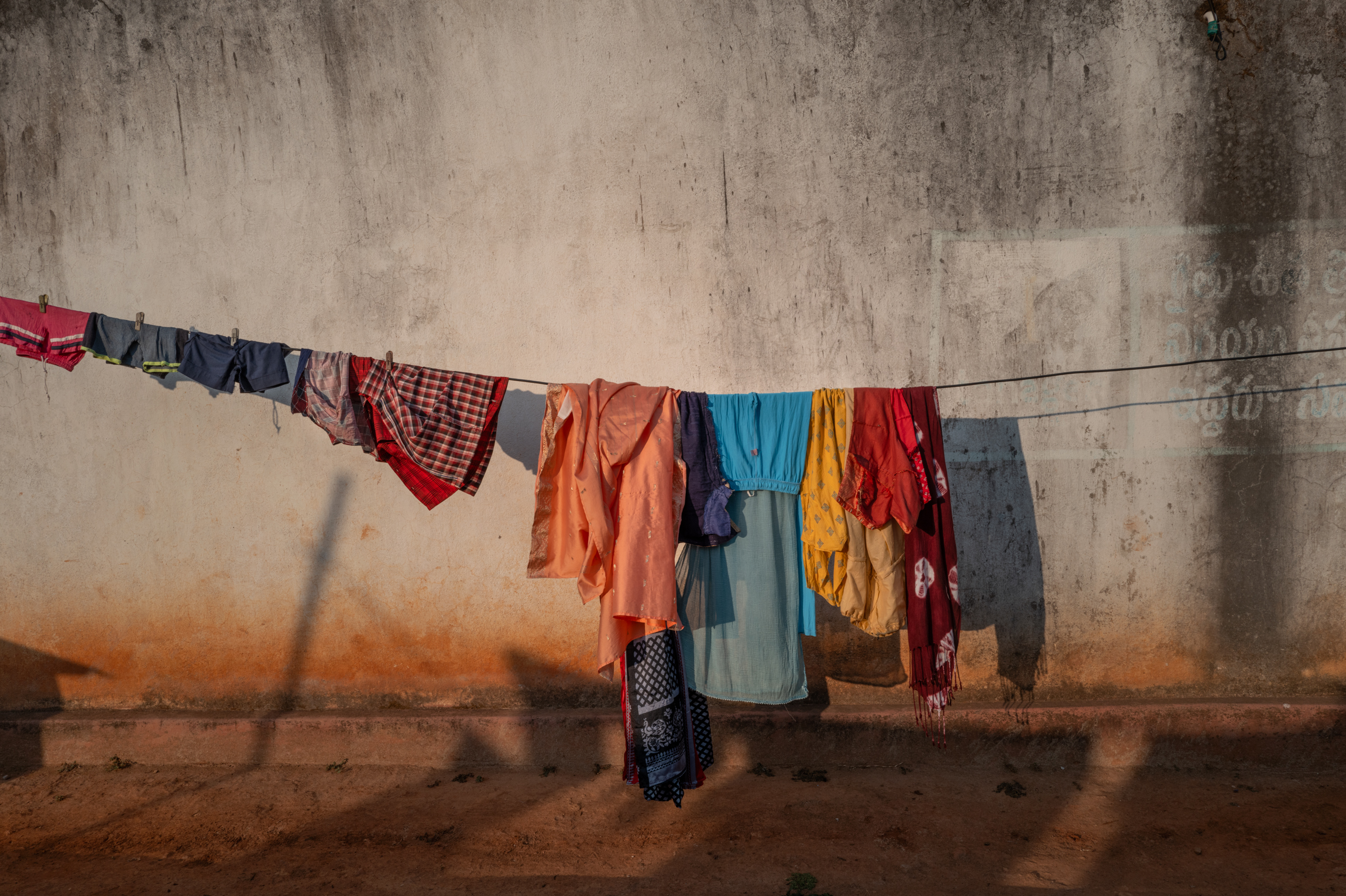
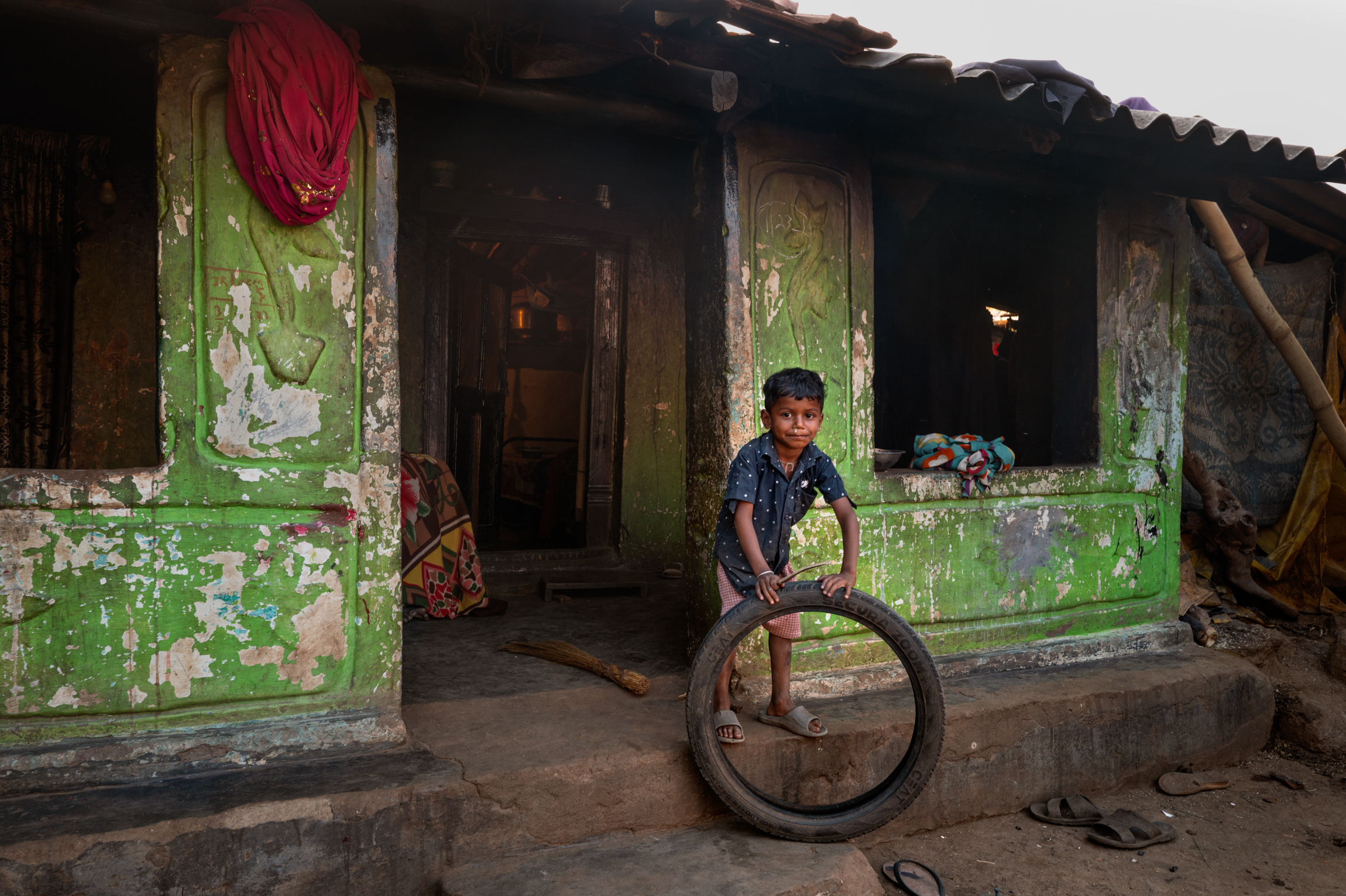
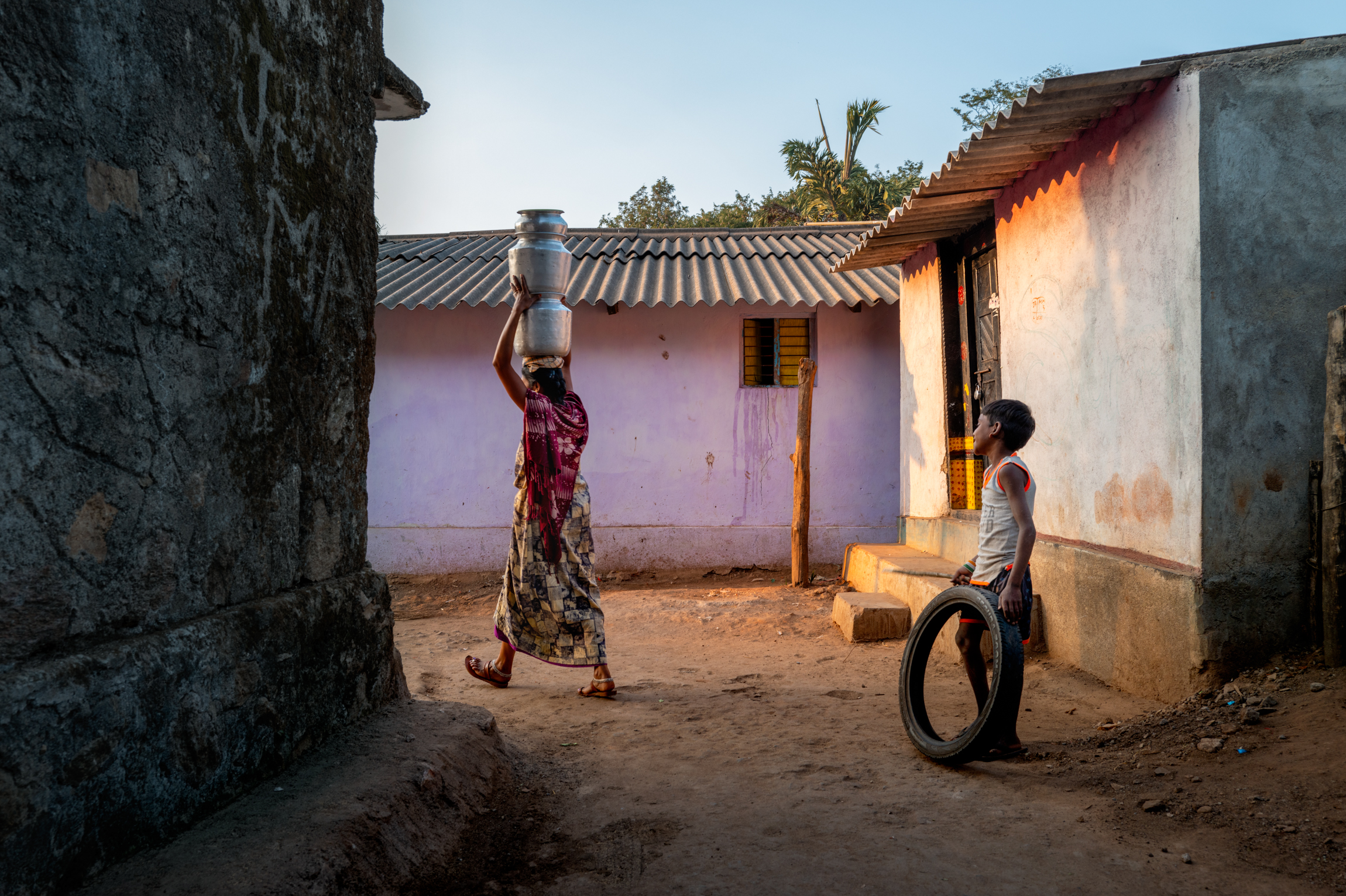
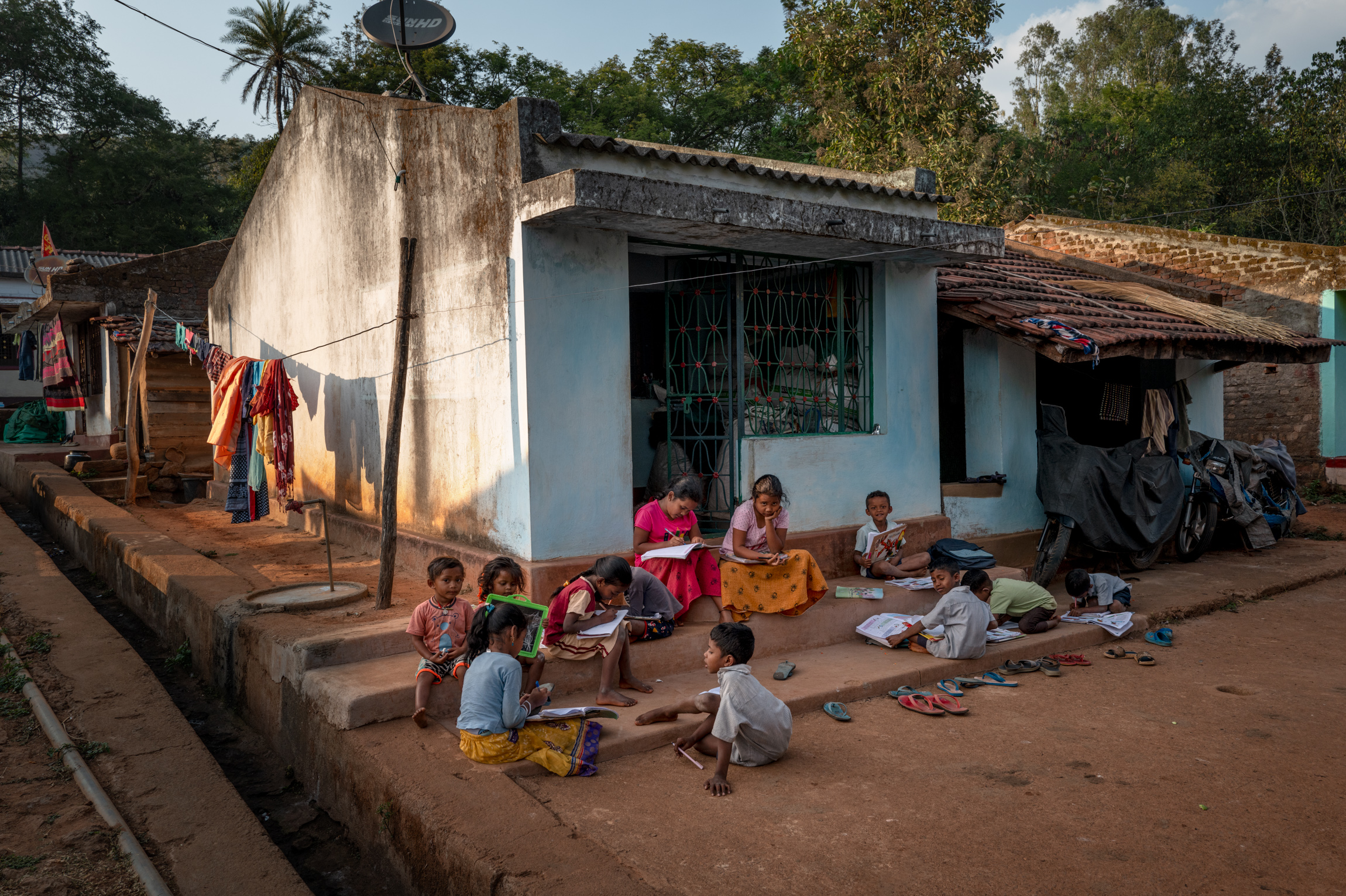
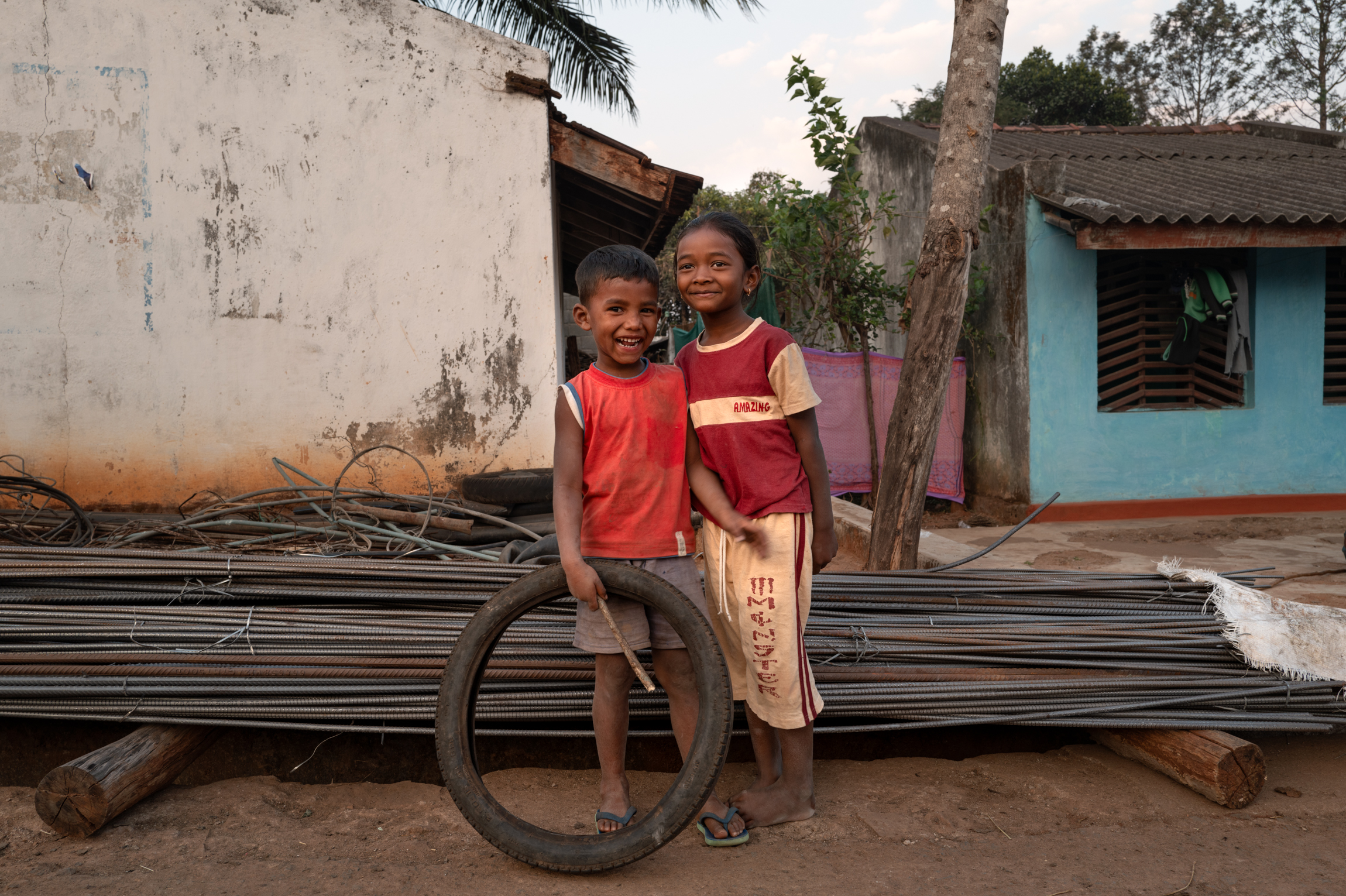
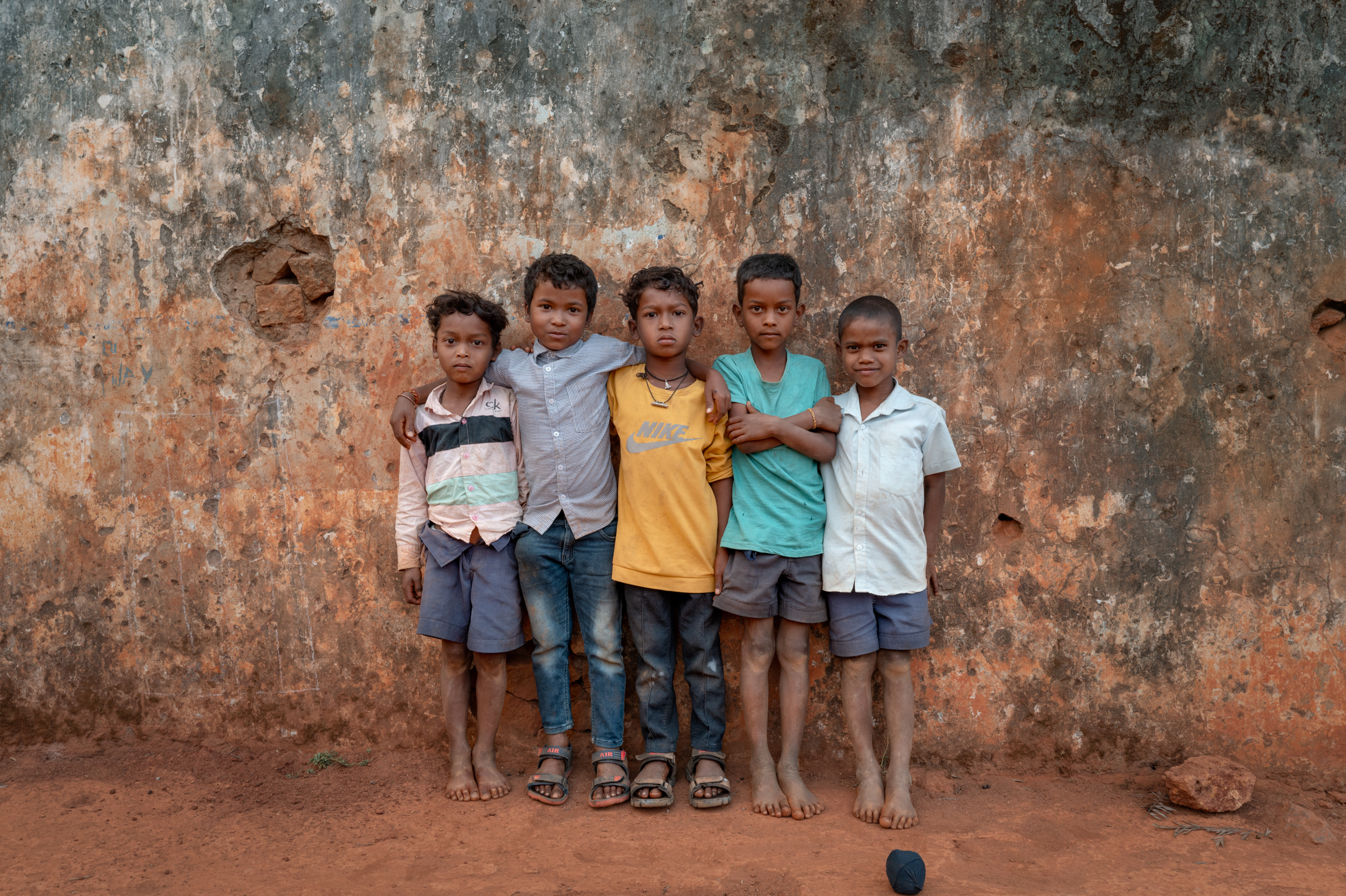
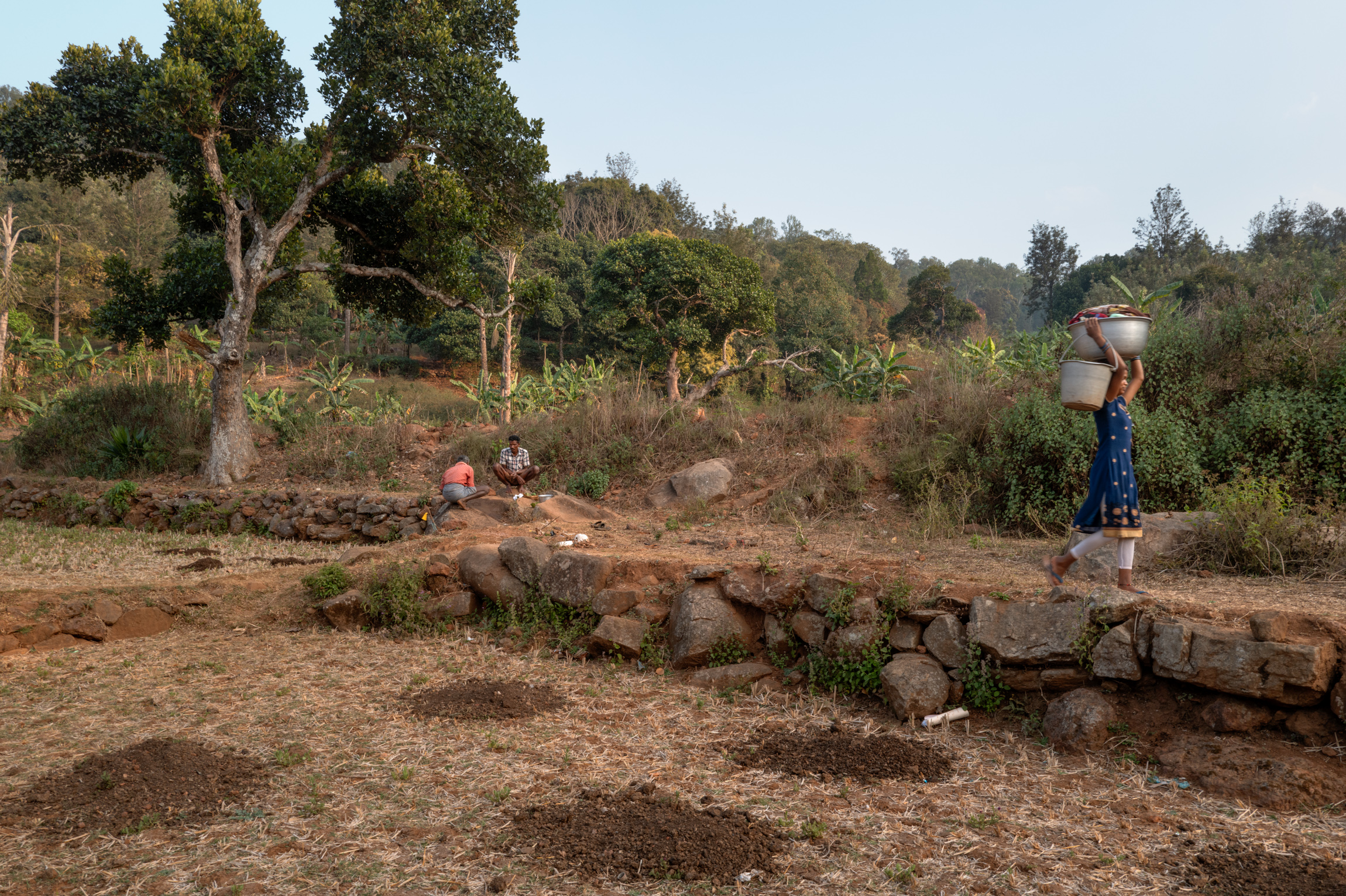
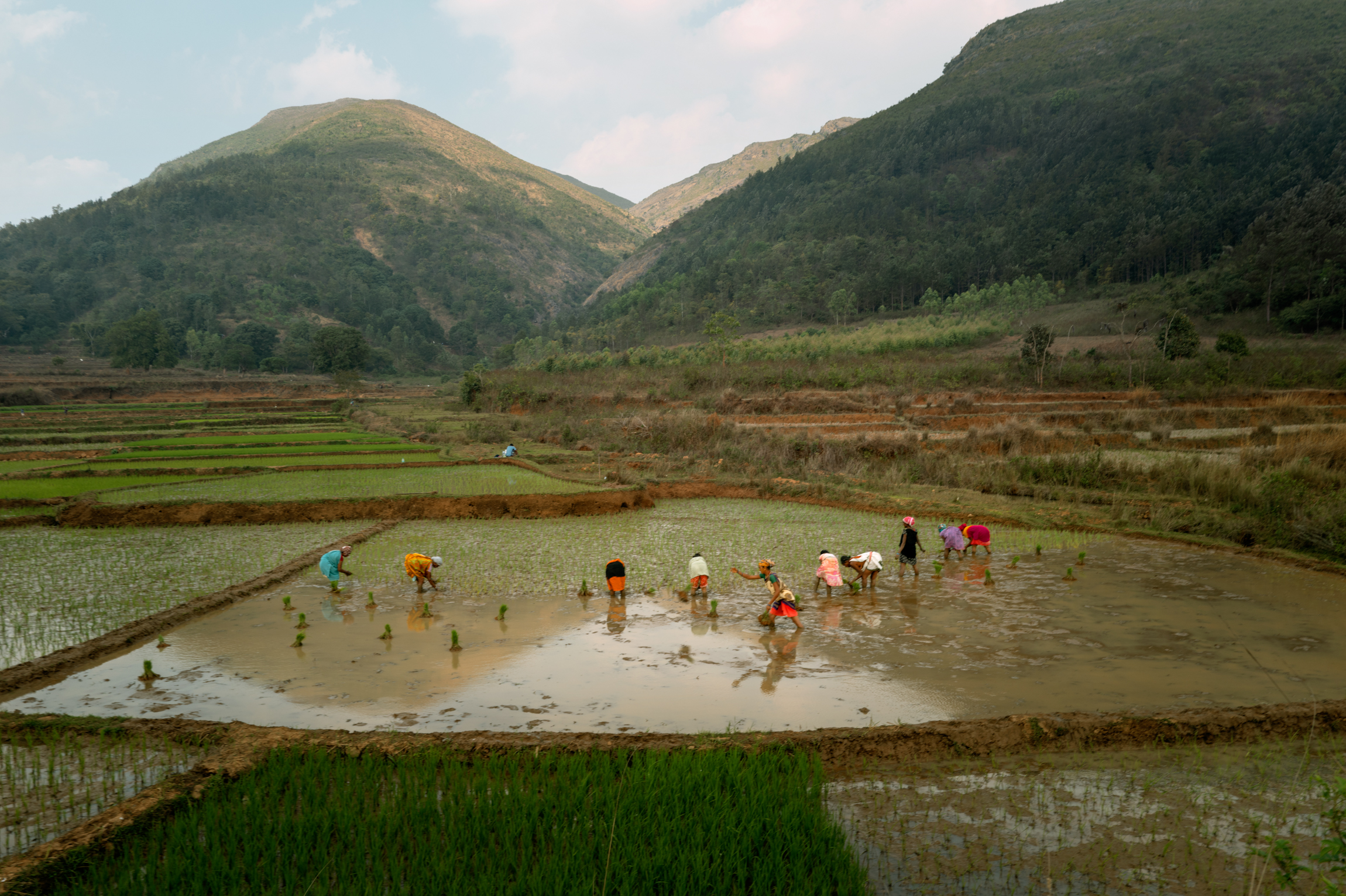
Araku Valley is a hill station in Alluri Sitaram Raju district in the Indian state of Andhra Pradesh, lying 111 km west of Visakhapatnam city. It is a valley in the Eastern Ghats inhabited by different tribes. We travelled halfway around the world to learn what Arakunomics is, the integrated development concept that has been applied in this part of India by the Naandi Foundation for the past 25 years. More than a hundred thousand people from the most disadvantaged group in the country, the Scheduled Tribes, or Adivasis, previously also called people of the forest, had been lifted out of the worst poverty and deprivation.
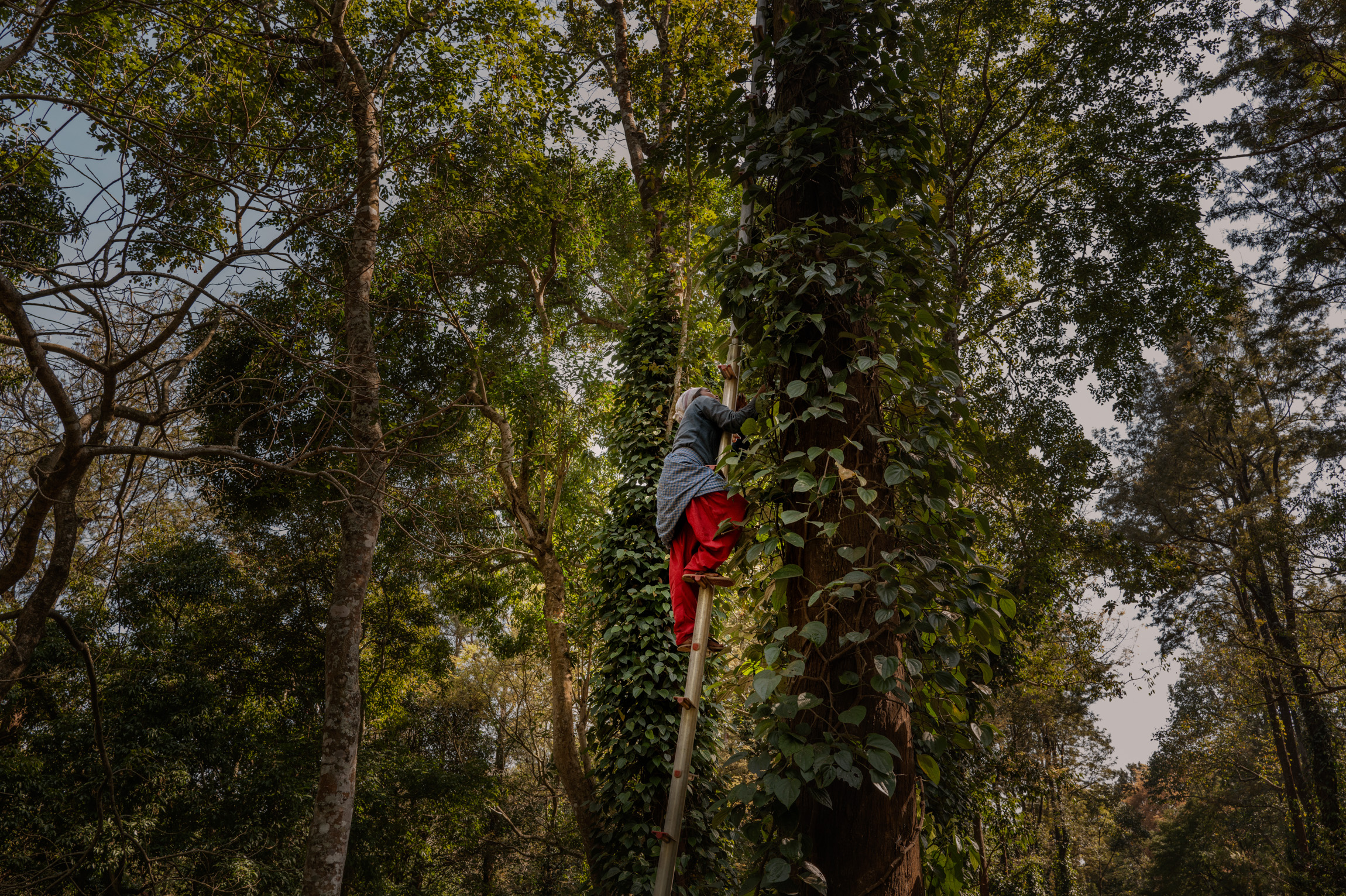
People of the Forest
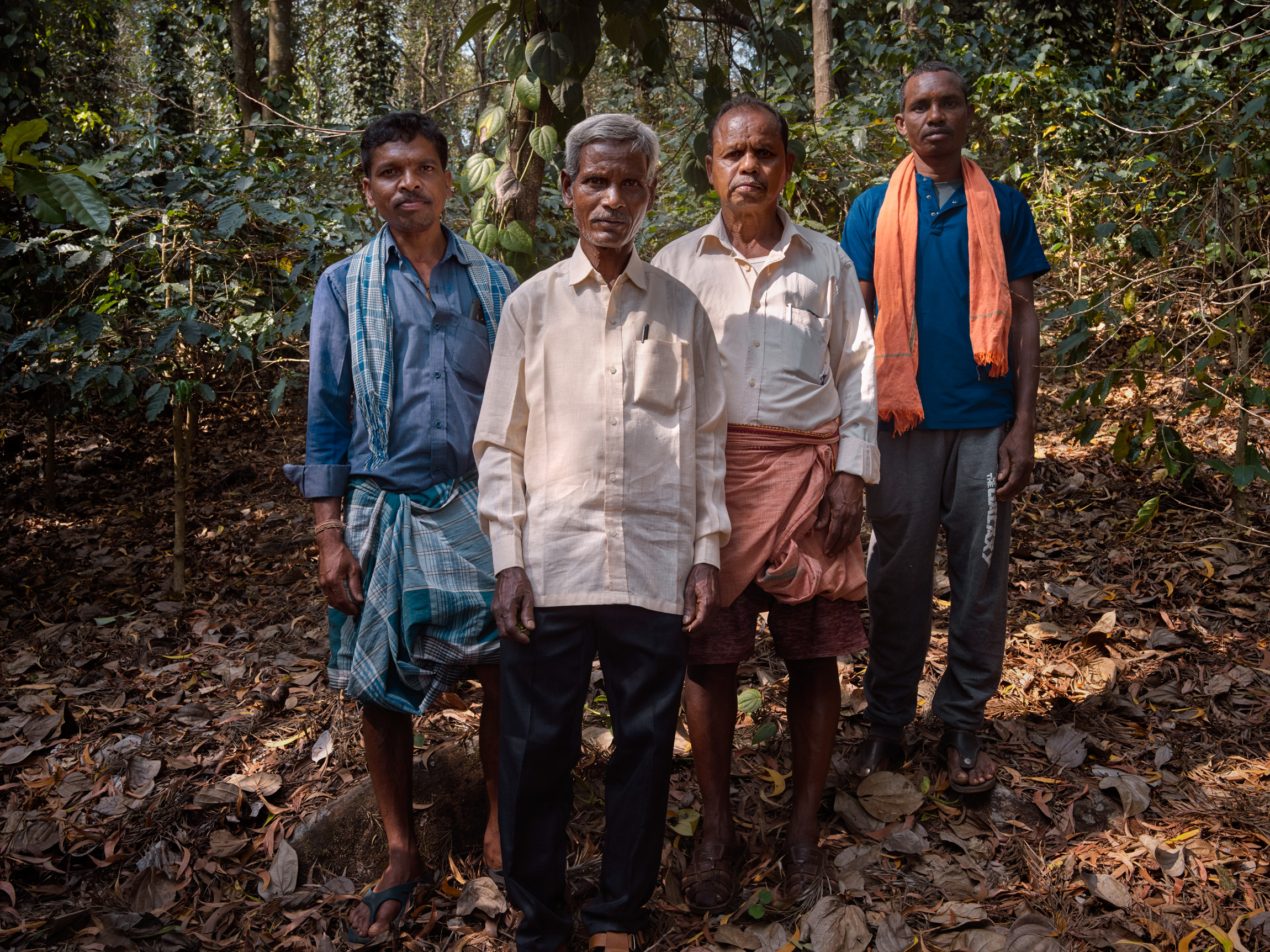
The culture of the Adivasis is strongly linked to their natural habitat, mostly in remote hilly and forested areas. Their name, People of the Forest, refers to their traditional way of life as hunter-gatherers. However, this has become impossible due to deforestation, industrialisation, and climate change in the twentieth century. Their unskilled attempts at farming yielded little due to the actions of rogue traders and loansharks from outside who exploited the people. They survived largely through barter. What little money there was, they got from the middlemen who lent them money charging very high interest. Problematic debts made life even harder.
Only 25 years ago there were no roads here, no schools for the children. It was an inhospitable area and closed from the outside world. On paper, that is, according to the 1950 Constitution, the tribes had all kinds of rights, but in practice, little had changed for the better since India’s independence. Due to the traditional cultivation system of annually clearing forests by burning them to provide land for crops, many primary forests have been lost to erosion. The landscape in which they lived was deforested, and the slopes became drier and barer. The landscape threatened to turn into a desert.
We meet Manoj Kumar, who travelled here 25 years ago as a young pioneer for the newly established Naandi Foundation. We asked Manoj about the circumstances of those early days.
Arriving in Araku Valley, staying overnight in leaky schoolrooms and trying to gain the trust of the residents, Manoj got deeply impressed by the tribals’ simplicity and hardened survival mentality, their freedom of thought, and strong sense of community. Their resistance to all outside interference seemed to stem from a mixture of a great desire for autonomy and a deep fatalism.
‘Money? Oh well, there’s no shop anywhere. We do some hunting, we grow rice, and we make our own alcohol. We’re okay like that.’
But that was 25 years ago. Now the farmers believe in the agricultural method based on cooperation with nature, which works with the rhythms of the sun and moon and regards the soil as a living being. Everyone in the village soon understood that the use of chemicals is bad. It also conflicted seriously with their natural religion. They experienced it can result in wealth.
‘In one generation, an atmosphere of fear, fatalism, distrust and malaise has made way for an atmosphere in which eagerness to learn and work ethic are rewarded.’
Manoj KumarWhere thanks to the support of Naandi and the large farmers’ cooperative, some prosperity has come in a way that is based on self-governance and allows the communities to look confidently to the future. Moreover, the slopes are green again, the forest is returning, and millions of new trees are still being planted every year.Thanks to the crops from these functional forests, economic autonomy has been achieved.
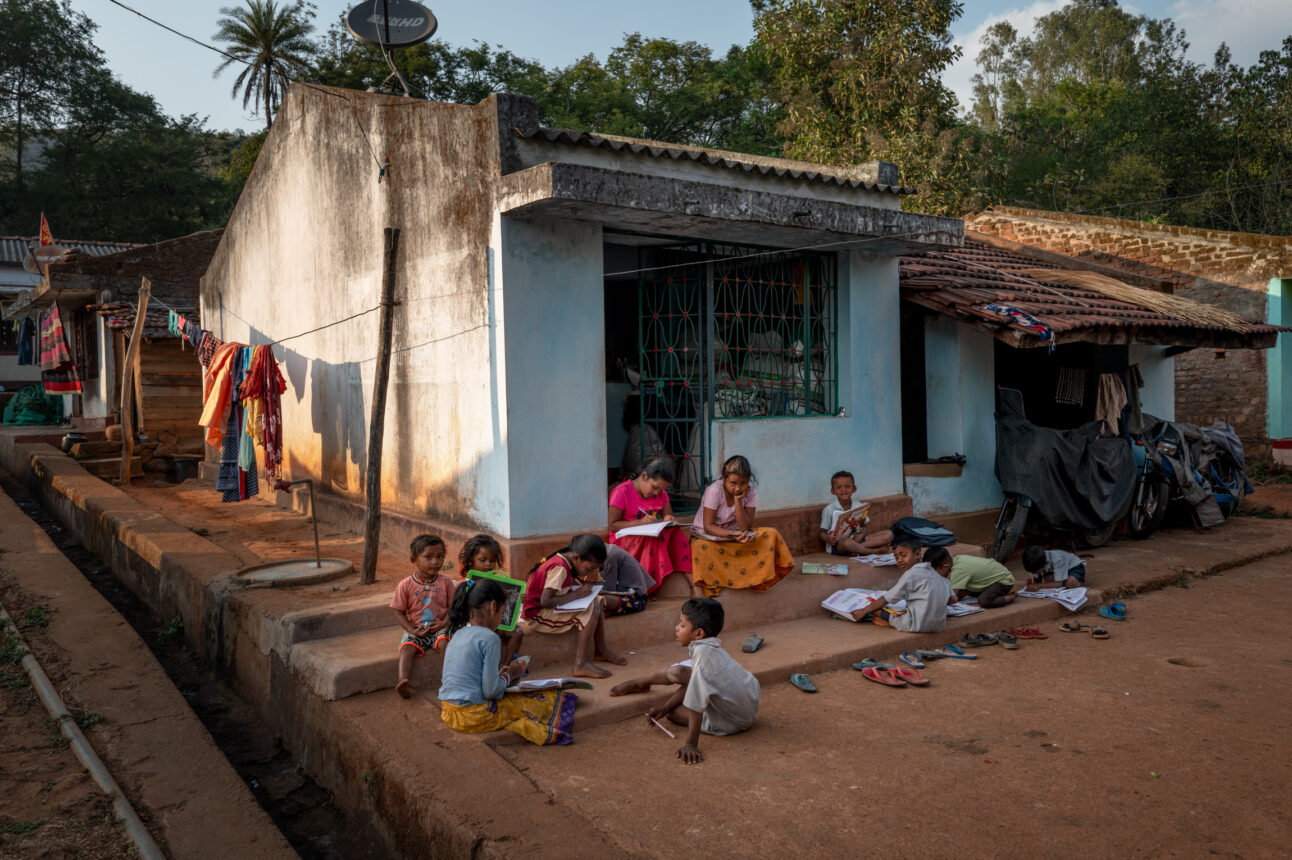
The life of the tribals has been modernized; there is running water, electricity and telephone, public health has improved, and there are pensions and insurance.
But all this does not mean that the hill people are forced to give up their communal lifestyle and cultural heritage.
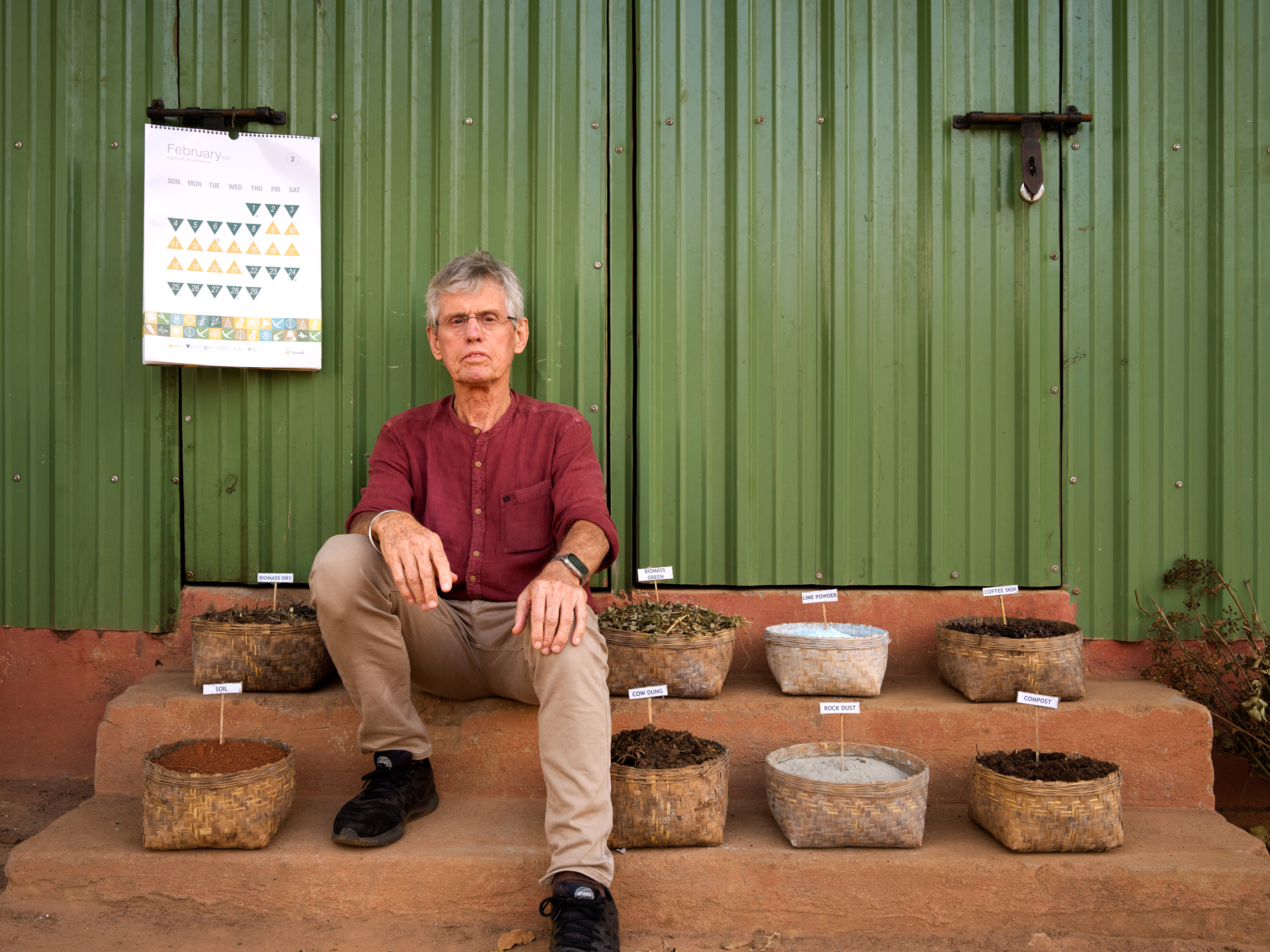 David Hogg, Chief Regenerative Agriculture Advisor, Naandi Foundation
‘For the first time in my life, I began working to scale. Working with hundreds of tons of compost, thousands of tons of compost working with 100,000 smallholder farmers, building up the soil and creating beautiful coffee.’
David HoggDavid Hogg came to India as a twenty-year-old and chose to stay. He developed himself into an expert and consultant in regenerative agriculture and joined Naandi in 2009.
Araku coffee became the flagship for the community. They developed methodologies for working with food crops, building up the forest again. A journey that was set upon to transform this community that had been so ignored for a century or more.
Next to a small building, we saw about ten long piles of compost. In each of the one-and-a-half-meter-high piles was a sign stating exactly how old the compost was, how often it had been turned, and when the last preparations had been added. David Hogg talked about measuring the temperature daily, the tested layered structure of green and dry biomass, cow dung, and coffee husks, which delivered the best results. This compost centre is almost like a temple where they provide and develop these microbial cultures.
A sign explained which substances were used to make the preparations to enrich the compost. These are flowers and herbs (nettle, dandelion, yarrow, chamomile) bark of oak trees, which, together with cow dung, quartz powder, and lime, are buried in the soil of the fields, in clay tubes, or in coconuts, banana leaves or gourds, to start the bio-chemical process that can last for months. This is to enrich the compost with lime, potassium, magnesium, silicon, phosphorus, nitrogen, and trace elements.
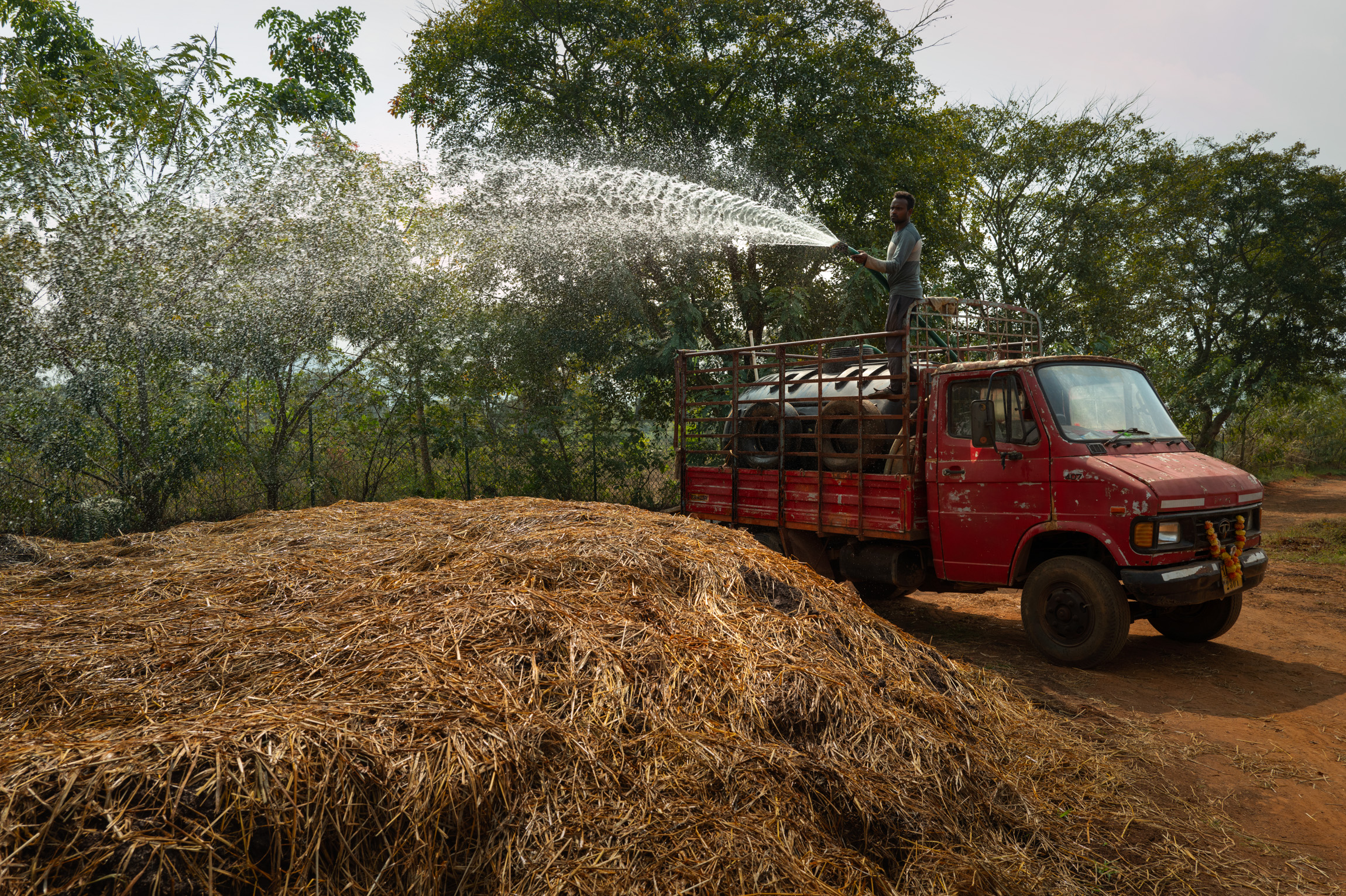
The ‘old faithful’, the original red truck.
The famous 19 steps in order to produce premium coffee. This red truck in a cloud of dust, driving on that single road through the valley had become a regional legend.
On the government plantations, the coffee was harvested on a certain date and all the berries, in various stages of ripeness (red, pink, green), were stripped from the bushes at once and processed. The advantage of this is that you only have to harvest twice a year. The disadvantage is that the quality of the coffee is much lower due to the unripe berries. Picking just the bright red, ripe berries by hand requires weeks of walking between the bushes, repeated dozens of times. The coffee bushes are on high plots, often on steep slopes, miles from the road. That is hard work and a task that requires concentration.
In the project’s early days, Manoj used the red truck to capture the pursuit of quality and prosperity in a single striking image.
‘The farmers asked, ‘ Will you pay the same if the quality varies? ‘ The answer was No.
I will pay you 50% more than the market price, but I will pay you three times as much if all the berries are ripe and red. If a farmer says he will only give me red berries, I will send a red truck to pick them up. If there are other colours, such as green, pink, etc., I will not send the truck again. In a few years, more than 80% of the farmers had put in the effort.
48,000 training meetings are held annually. There are master trainers who teach the village trainers. In groups, in the field, the actions and operations relevant to each month of the season are explained and discussed. The village trainers then ensure that the farmers receive information in the same way. In the fields, by demonstration, using documentation that consists of 75% images and 25% text.
By choosing the right people and using tablets and smartphones and creating monthly reports, a lot of feedback from the farmers can also be returned to the Naandi team. The trainers are paid for teaching, because it involves many hours per week. The 2,800 active trainers are all farmers themselves.
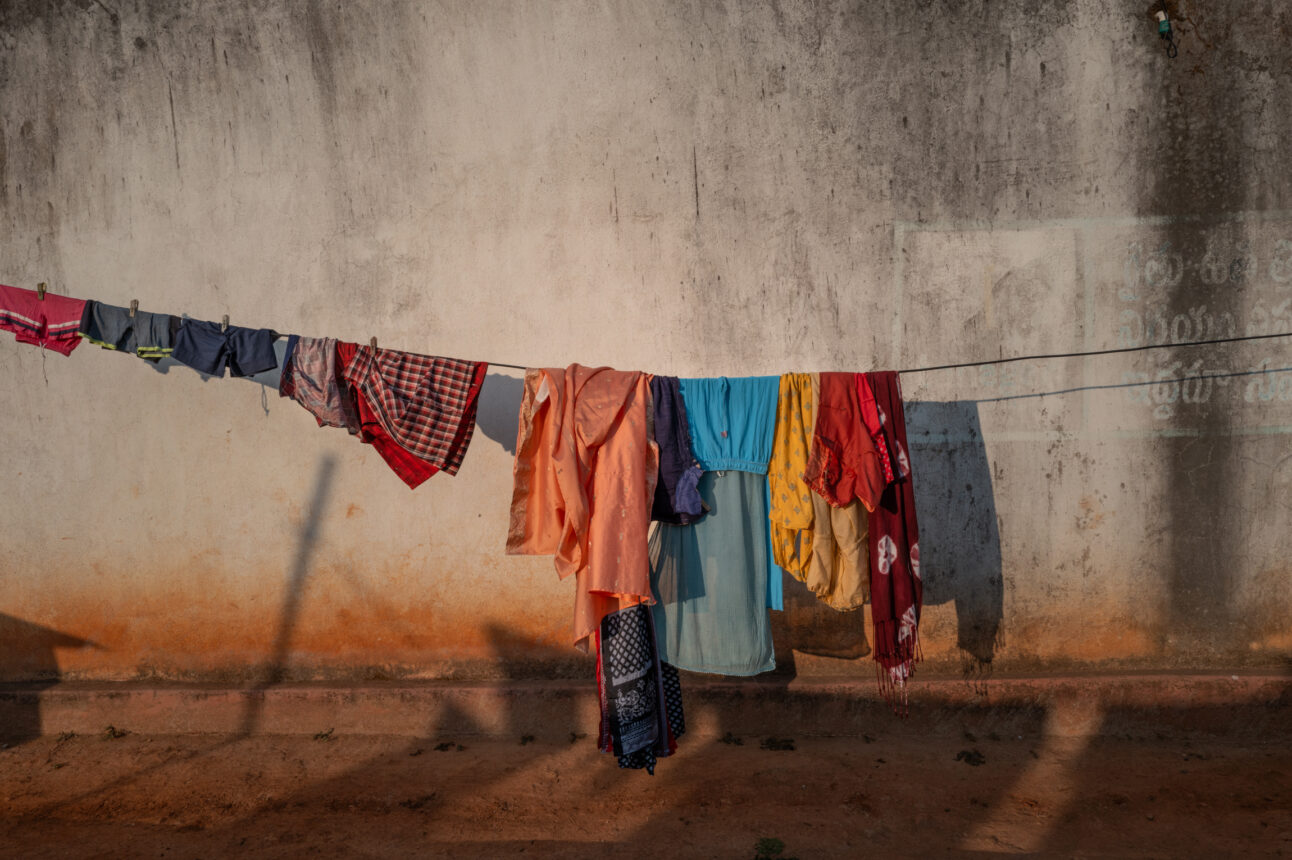
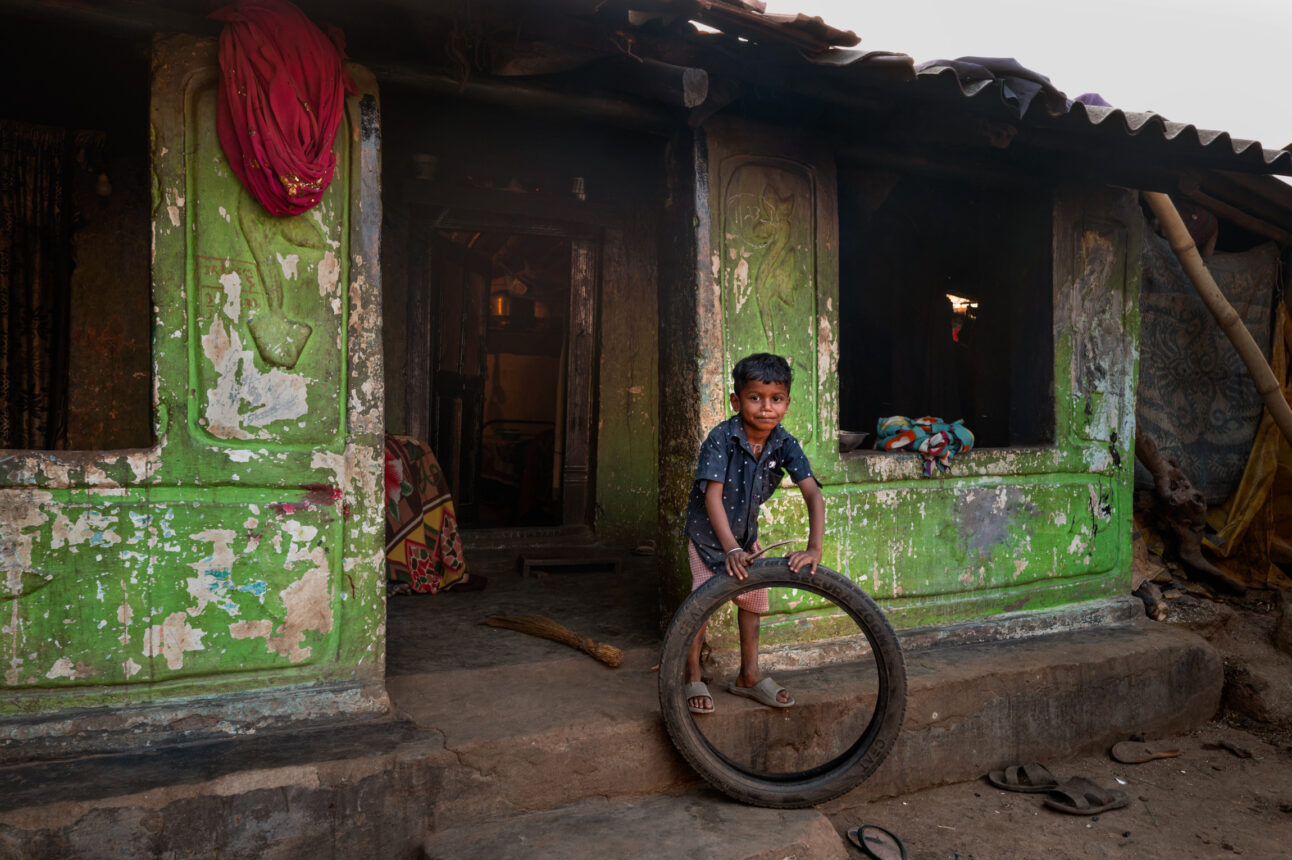
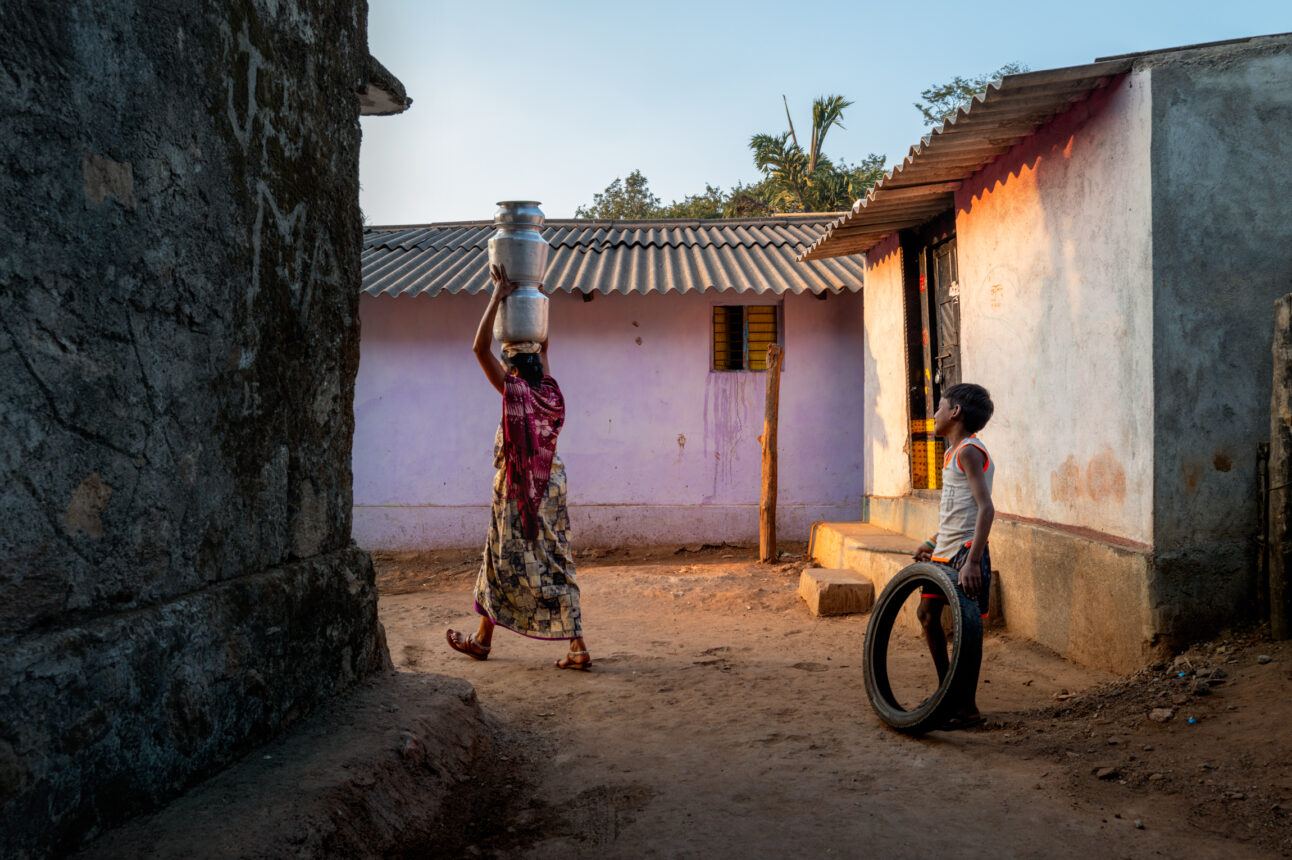
Then the twittering of the work schedule also stops, and the forest turns out to be higher, wider, deeper, mightier than during work. They are large, mysterious hills behind which lie the villages. The way back to the village makes us realize how old and big the world is, how precious the houses, the courtyard, the barns with sheep, the streets with children and chickens scratching around, the clean water, the fires with pots of food on them, the voices, the bodies, the looks of the family, the memory of the old people.
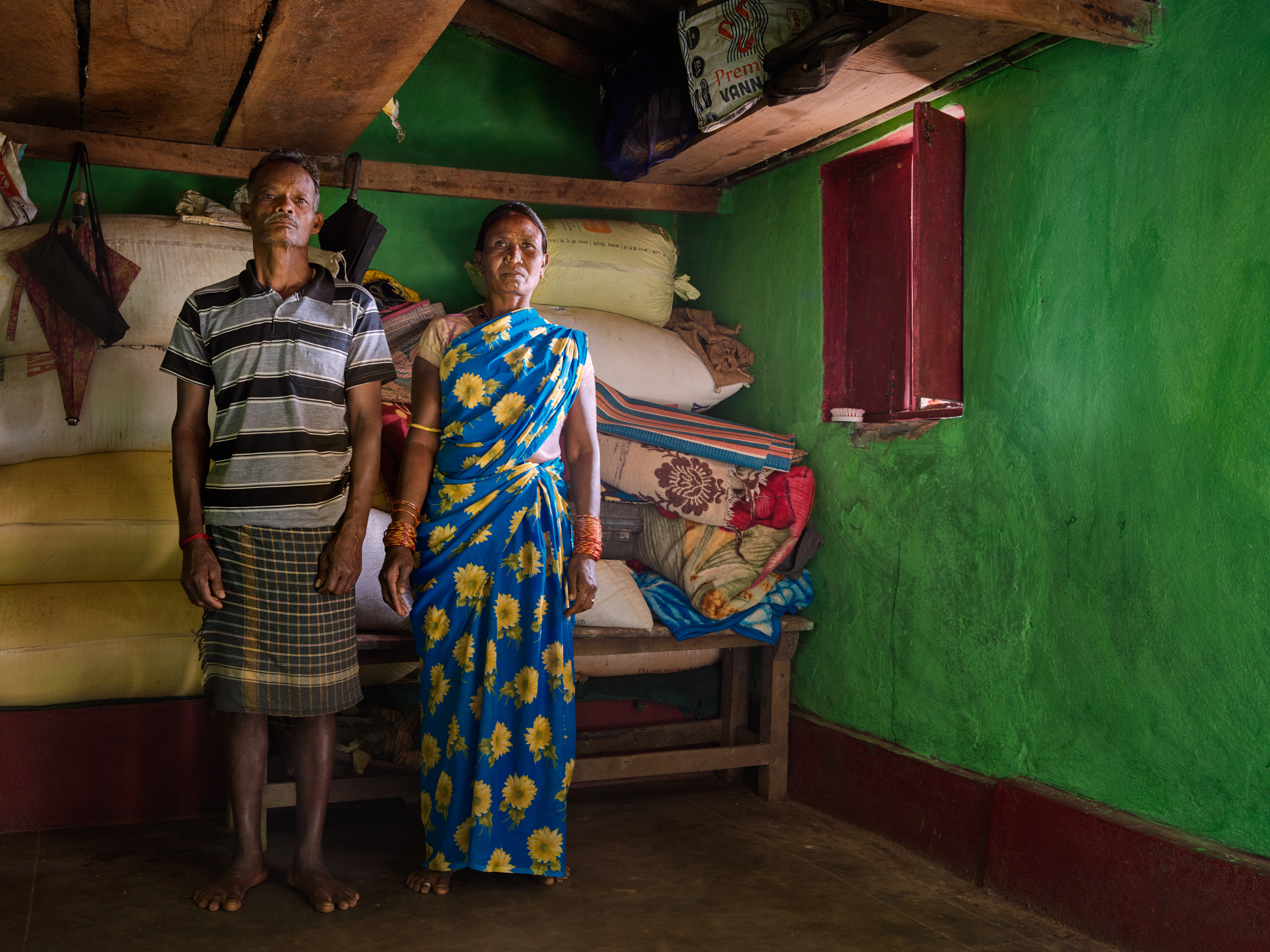
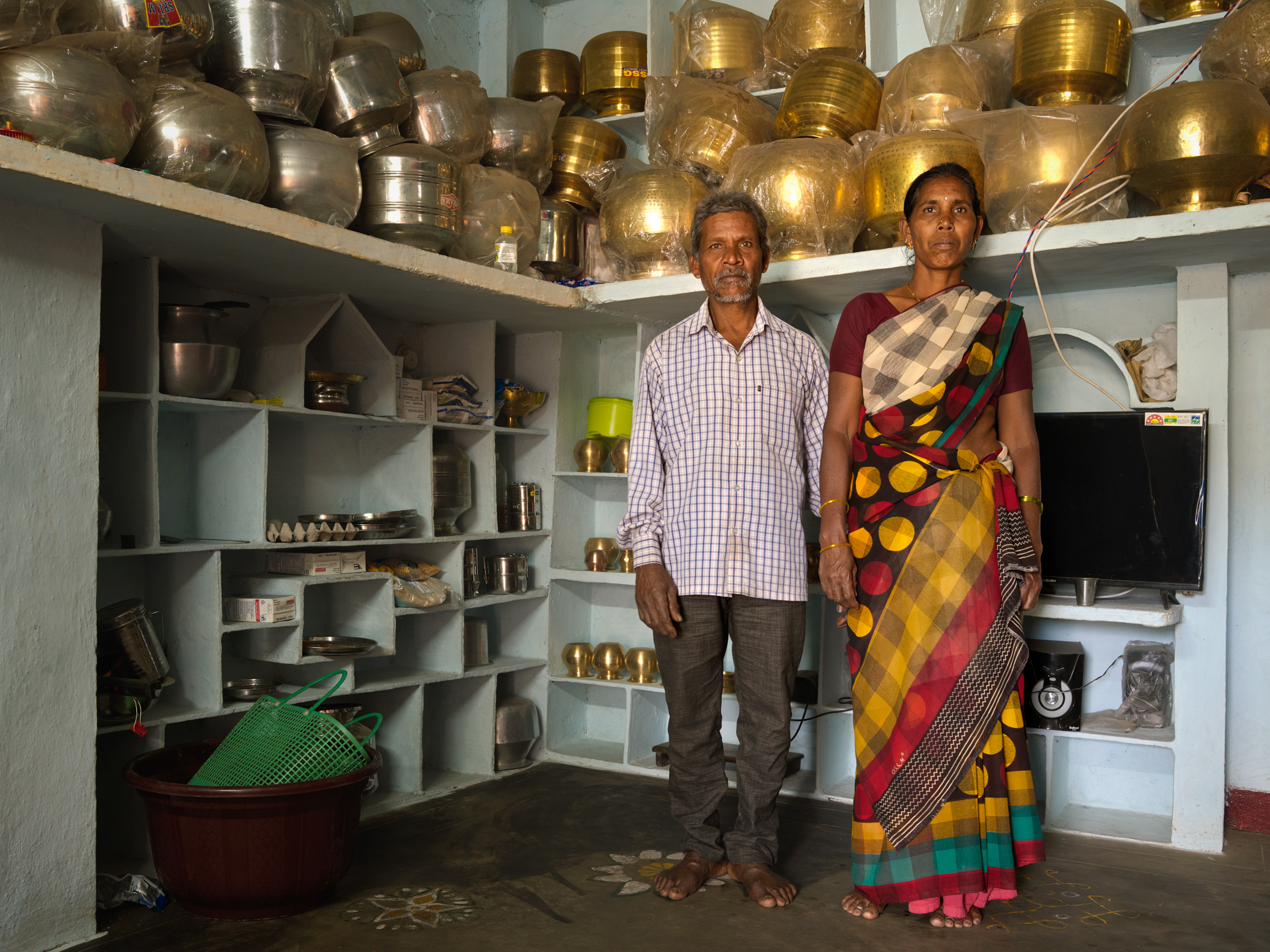
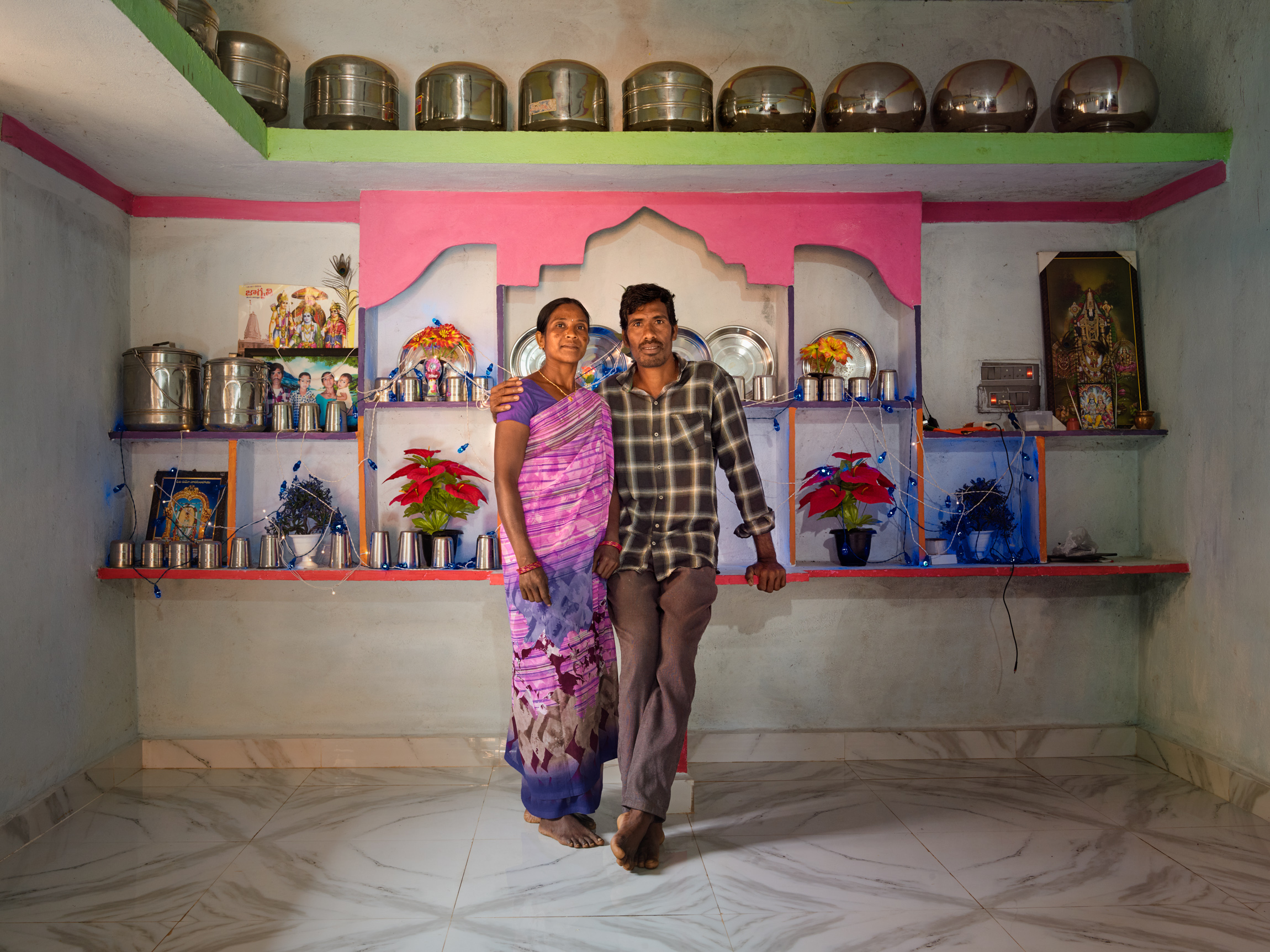
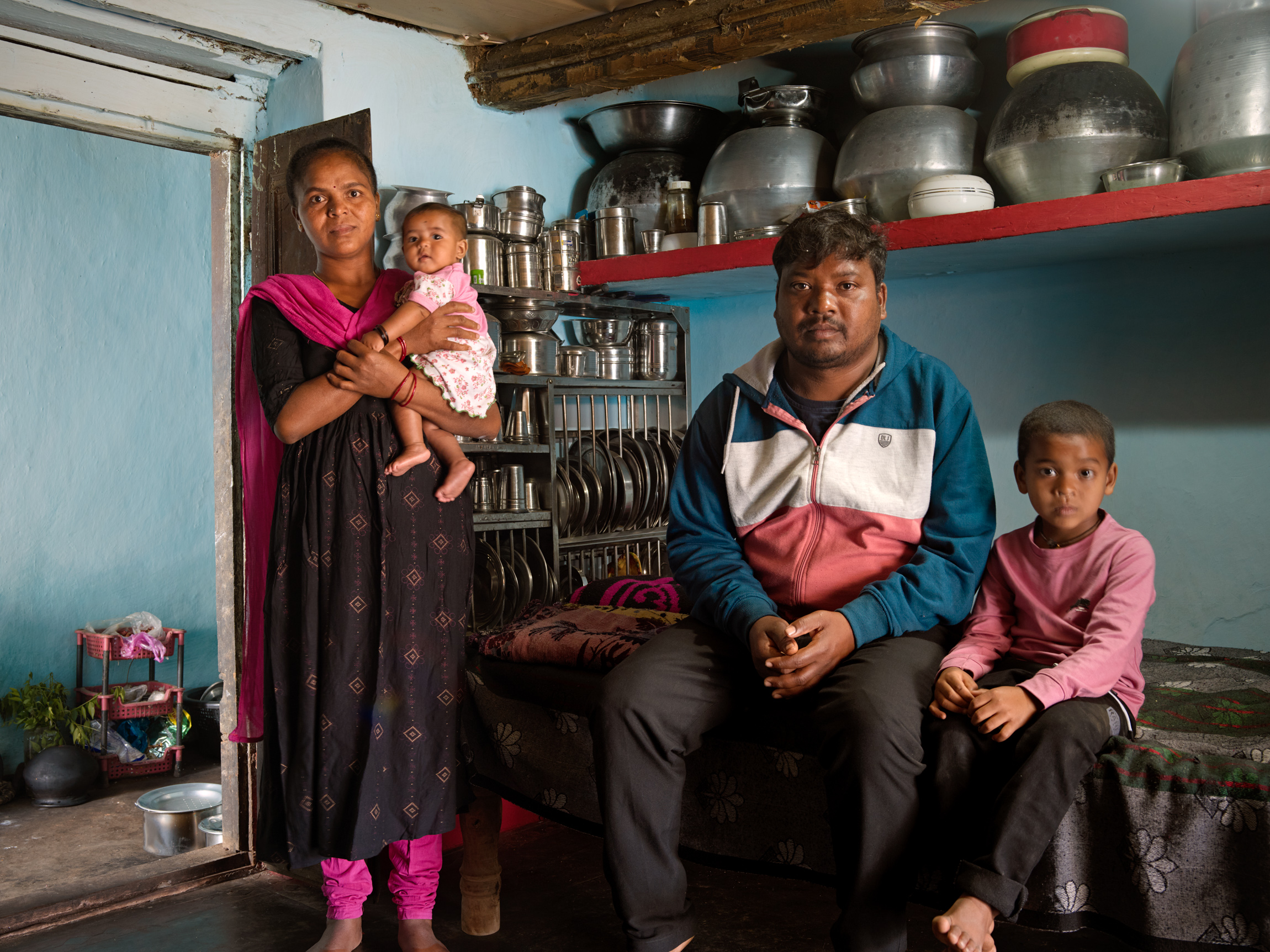
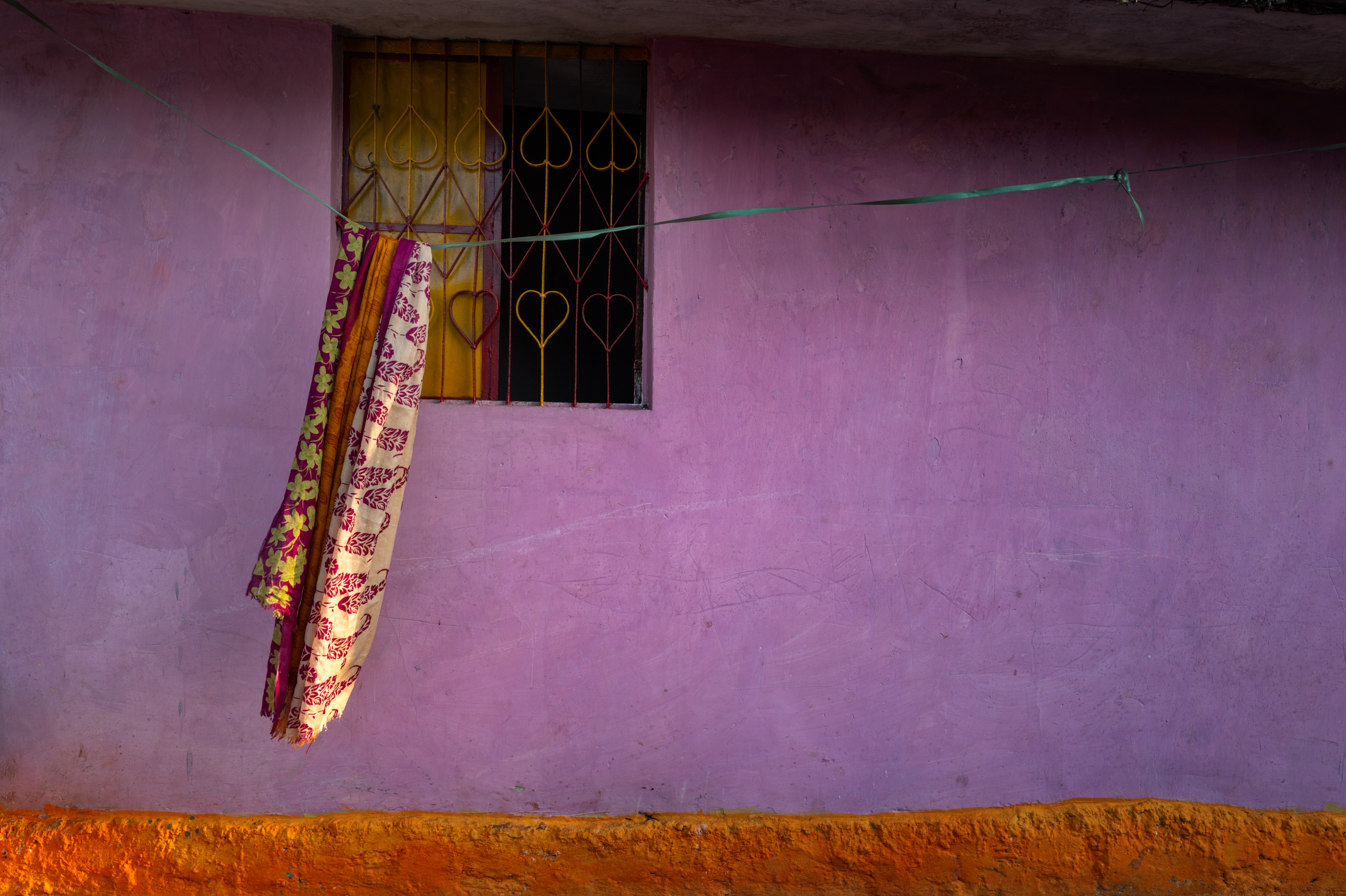
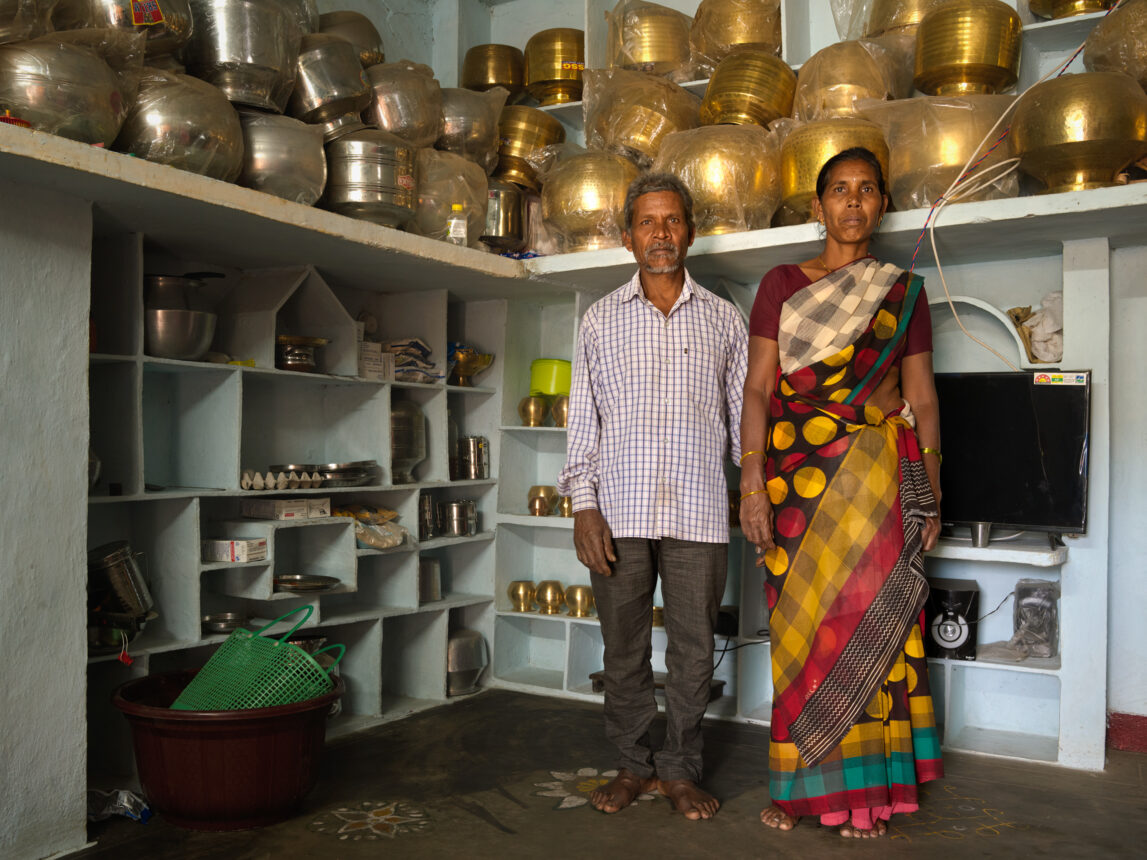
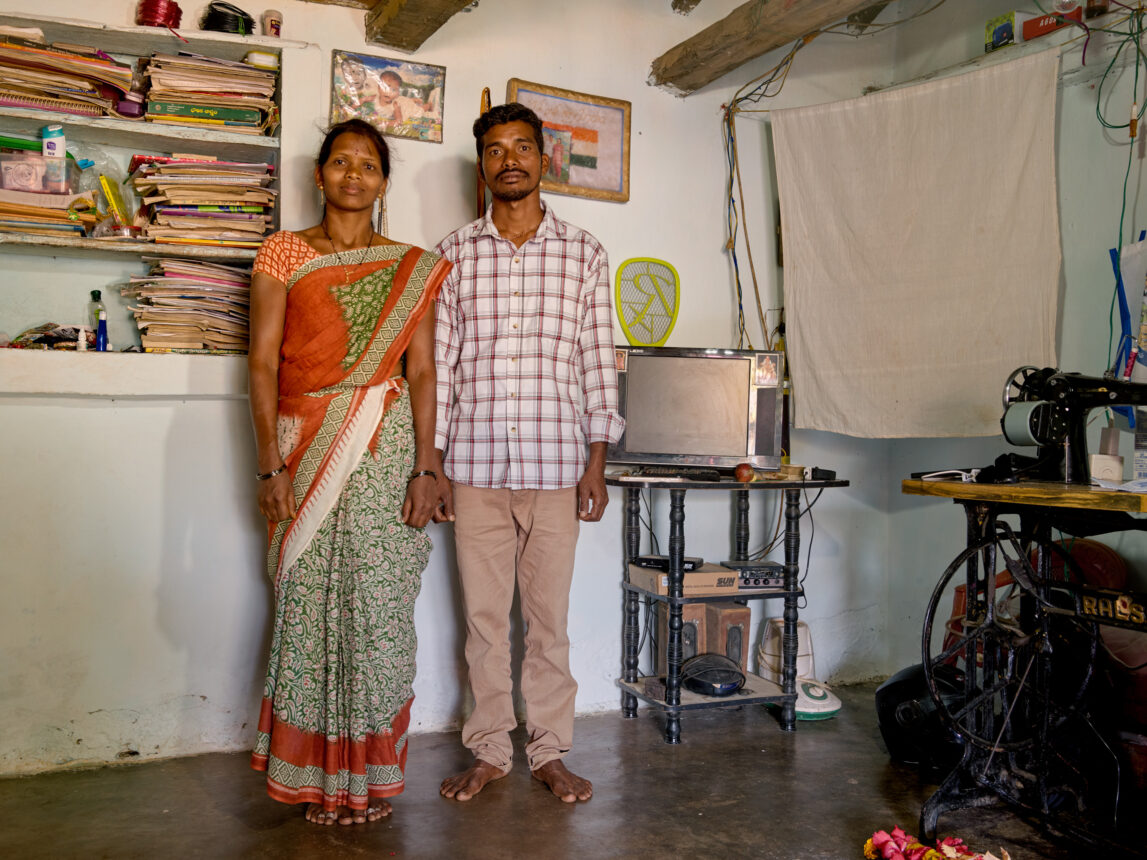
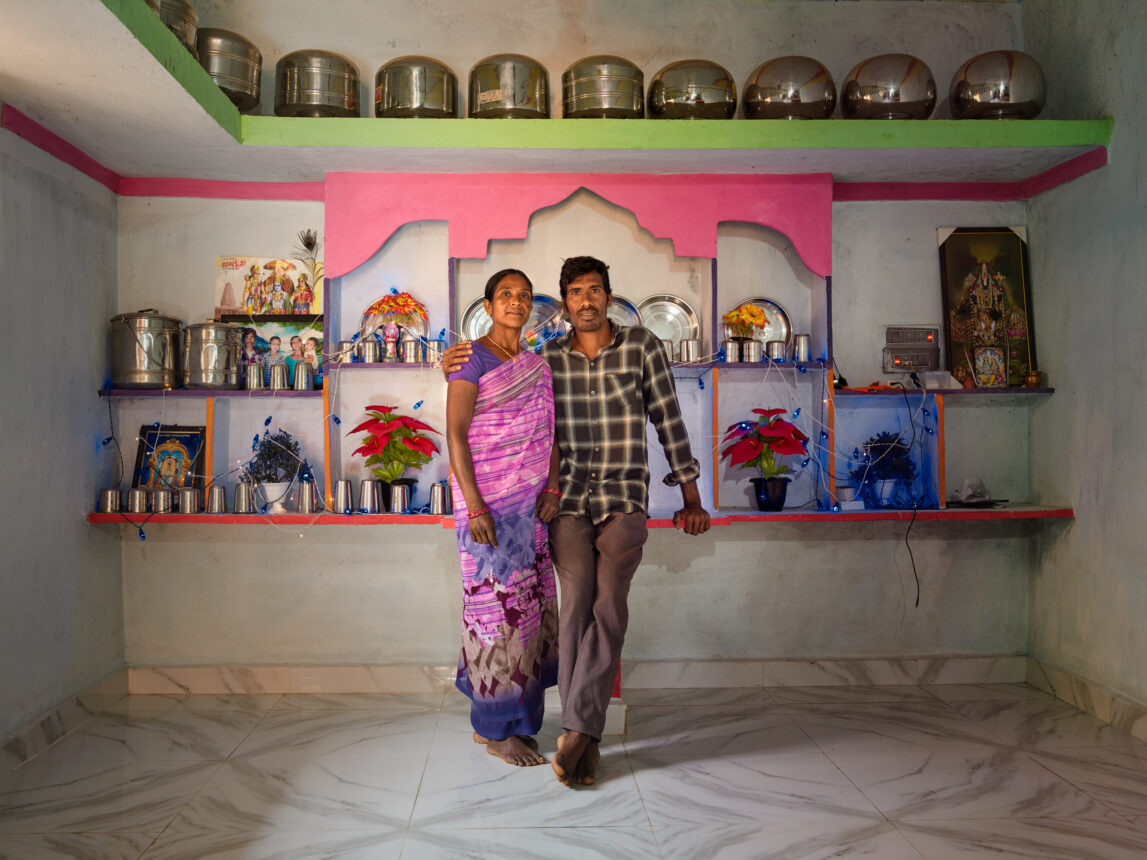
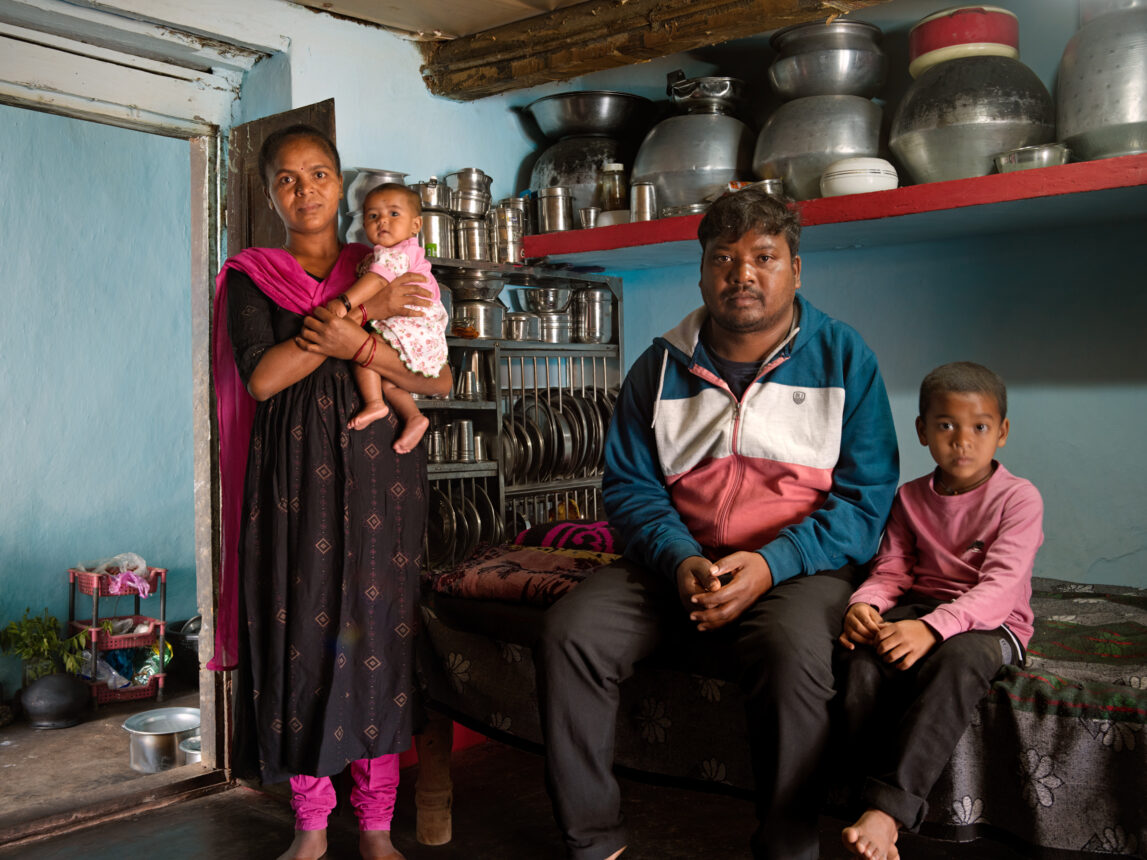
In the houses built from the colors and shadows of the earth, the gleaming metal is a reminder of the glow of the wedding party. The carrying arms, the admiring glances of the family and the village. The light that gathers daily in those radiant pans and bowls is also an incentive to maintain discipline, to endure the effort and not to forget that every day worked is a coin in the children’s piggy bank.
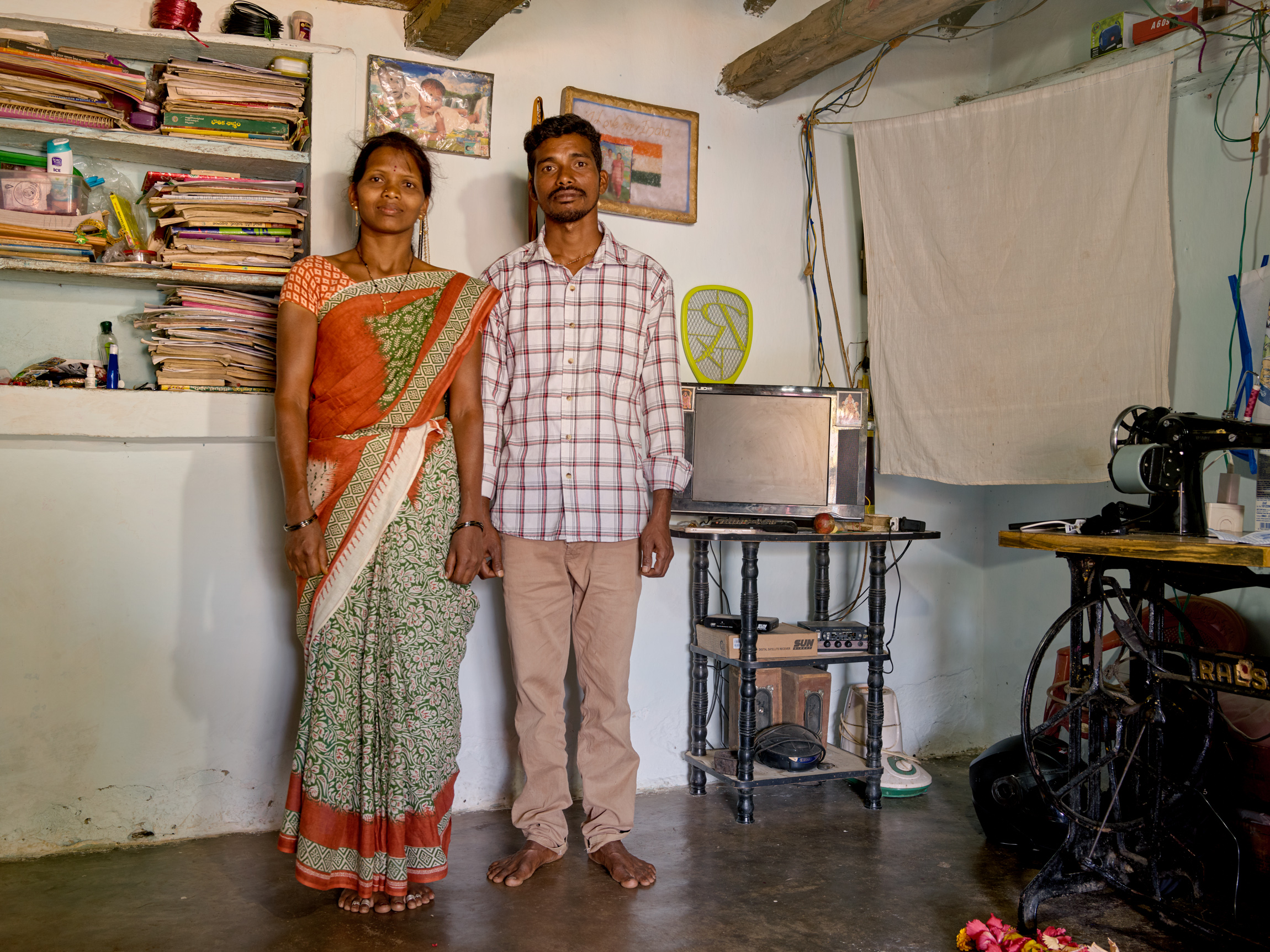
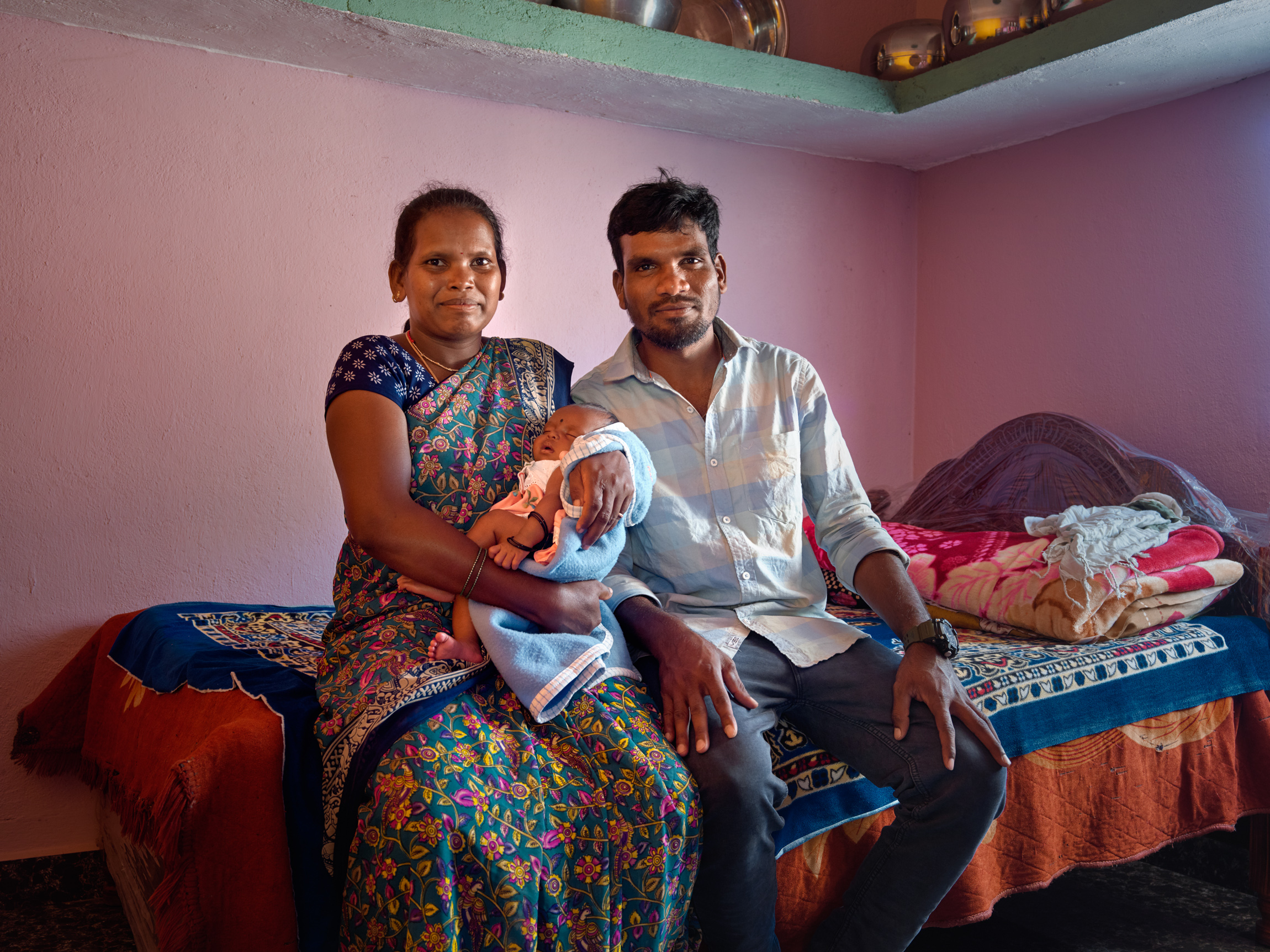
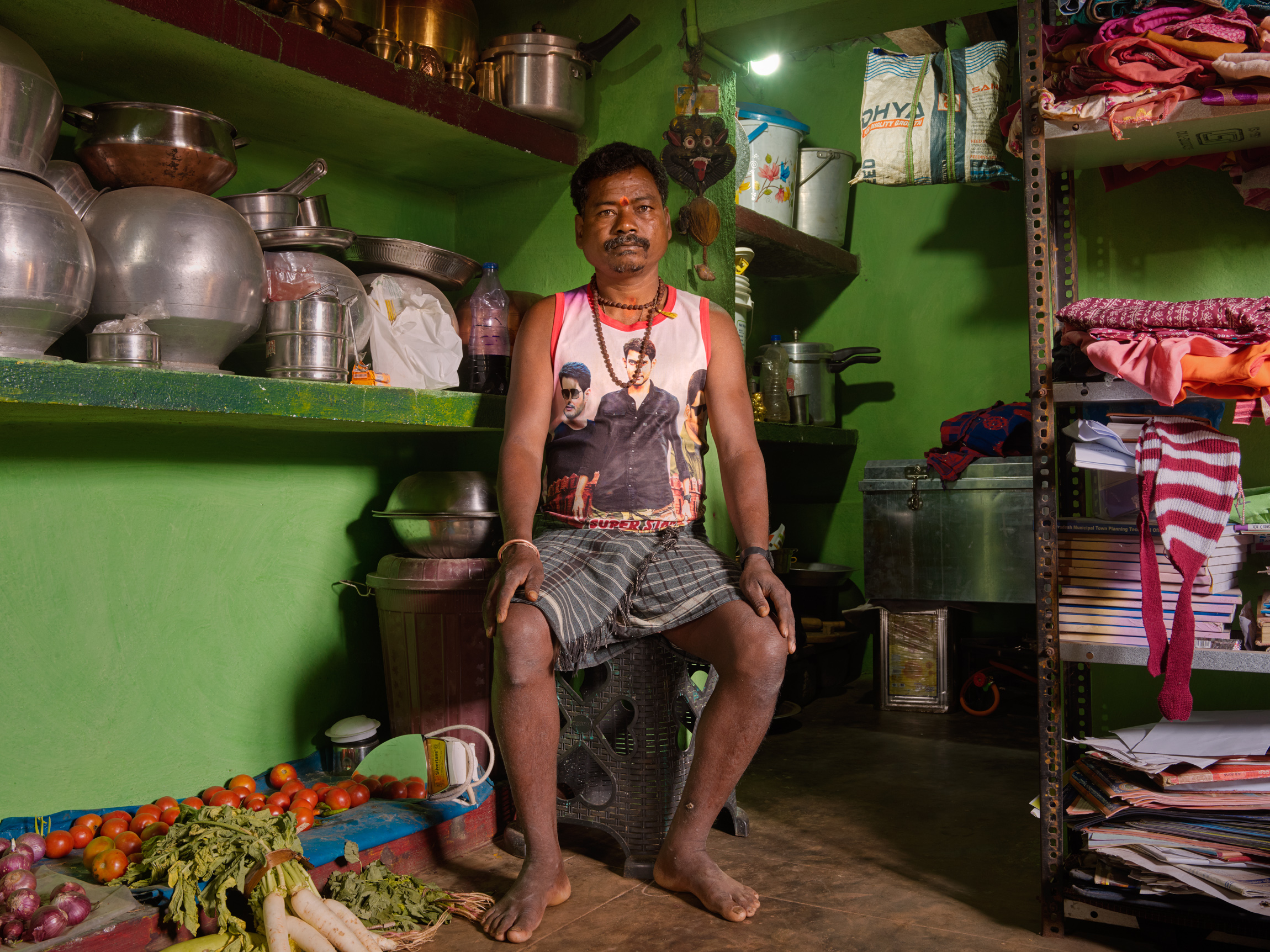
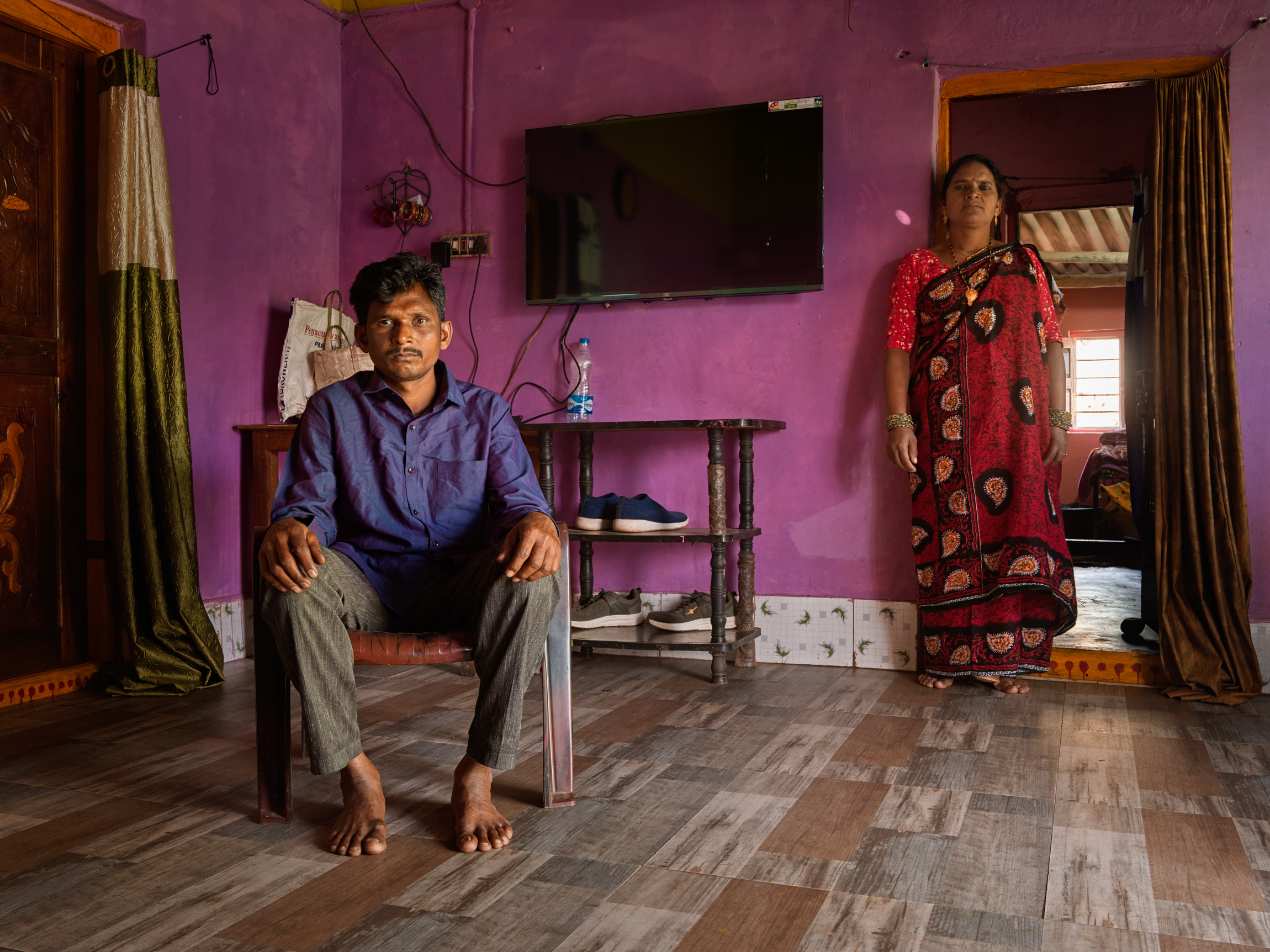
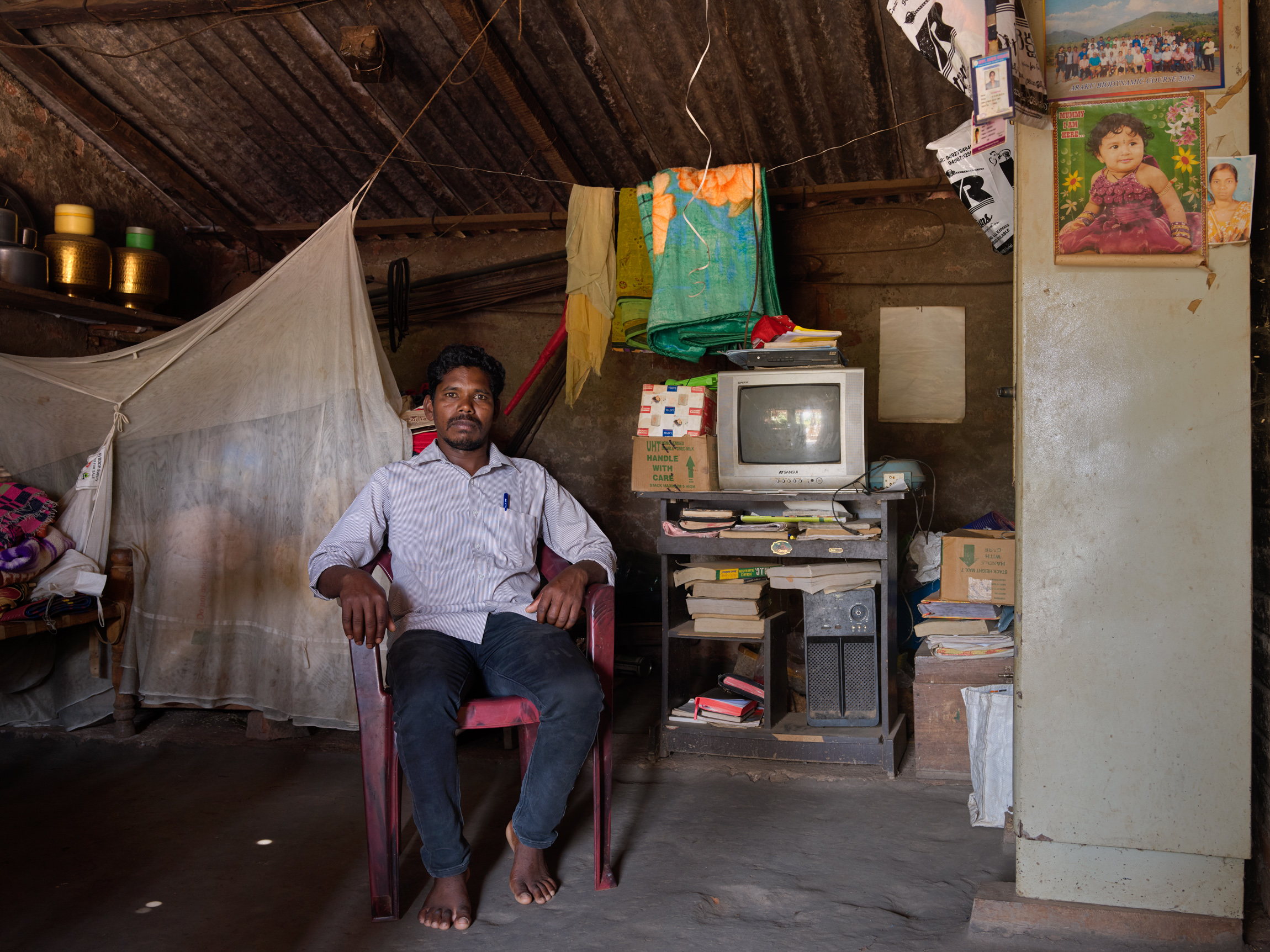
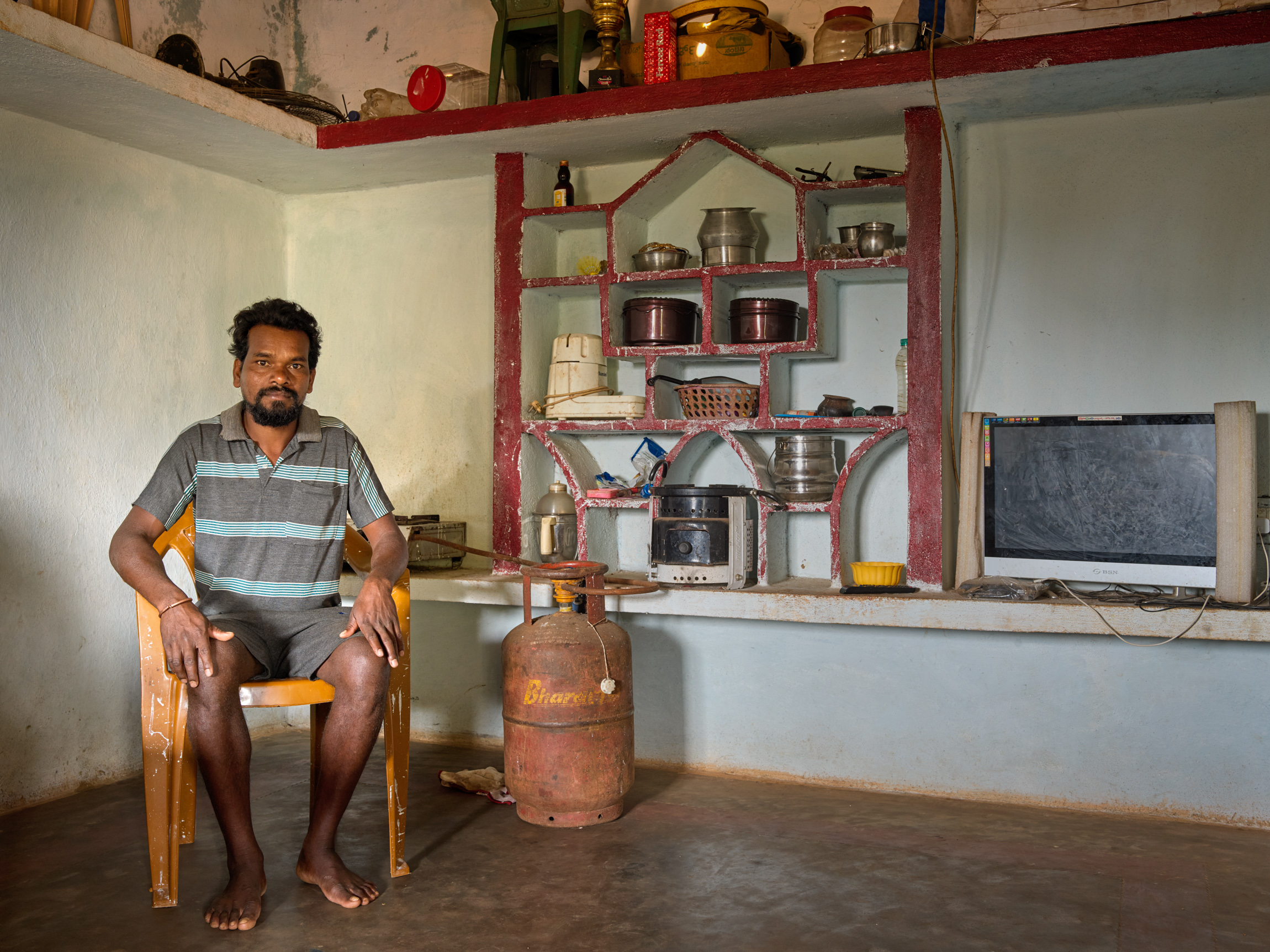
Because they had the courage to learn new things. Because they decided to work every day. Finding that their patience and perseverance paid off, they sit next to their televisions, their gas cylinders, their computers, their stacks of brochures and course books, their well-deserved awards. Next to their supply of millet and rice, in their crisp, marble-tiled pantry, walls full of gleaming pans and bowls. The young people, used to modern media, sometimes cautiously smile, the older generation are more serious.
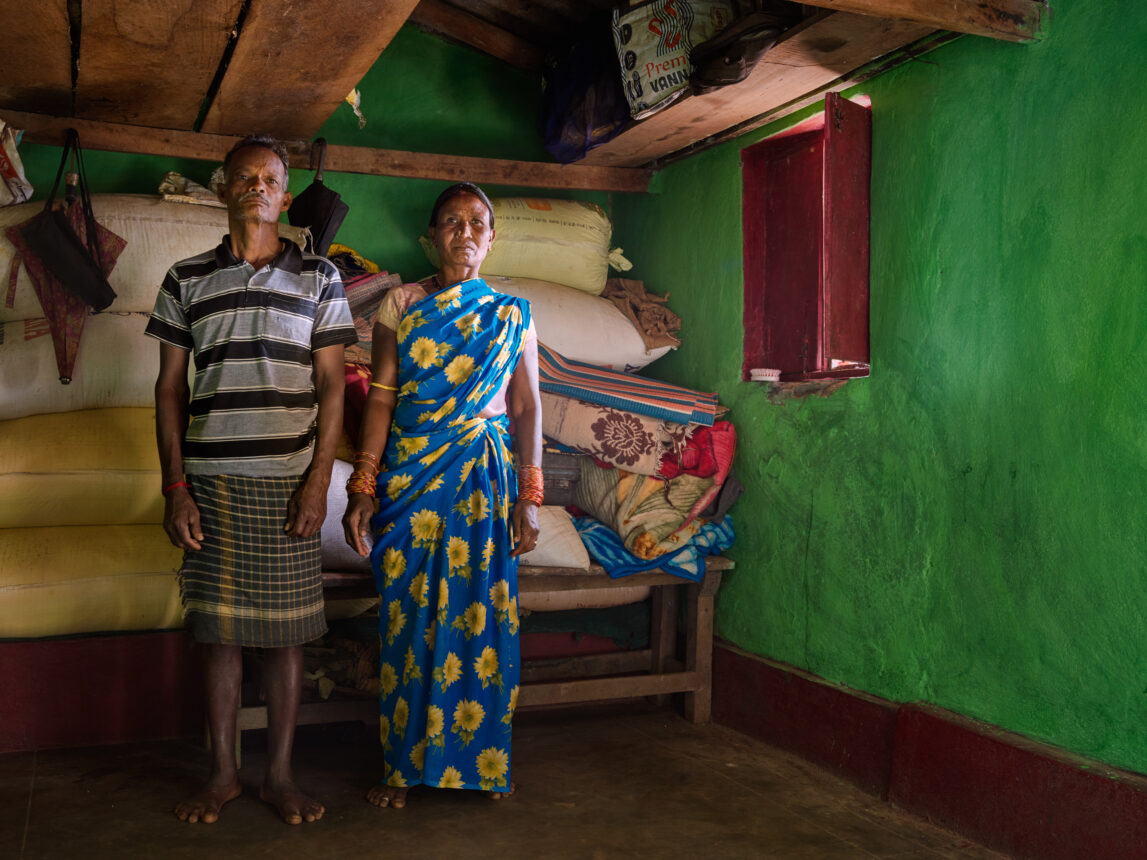 Jetti Ganeswarrao and Jetti Bullamm
 Boini Kondababu and Boini Rajulamme
 Lake Balachandara Babu and Roopavathi
 Korra Sabbu Rao and Korra Sujatha
 Thamarla Janardhan and Thamarla San
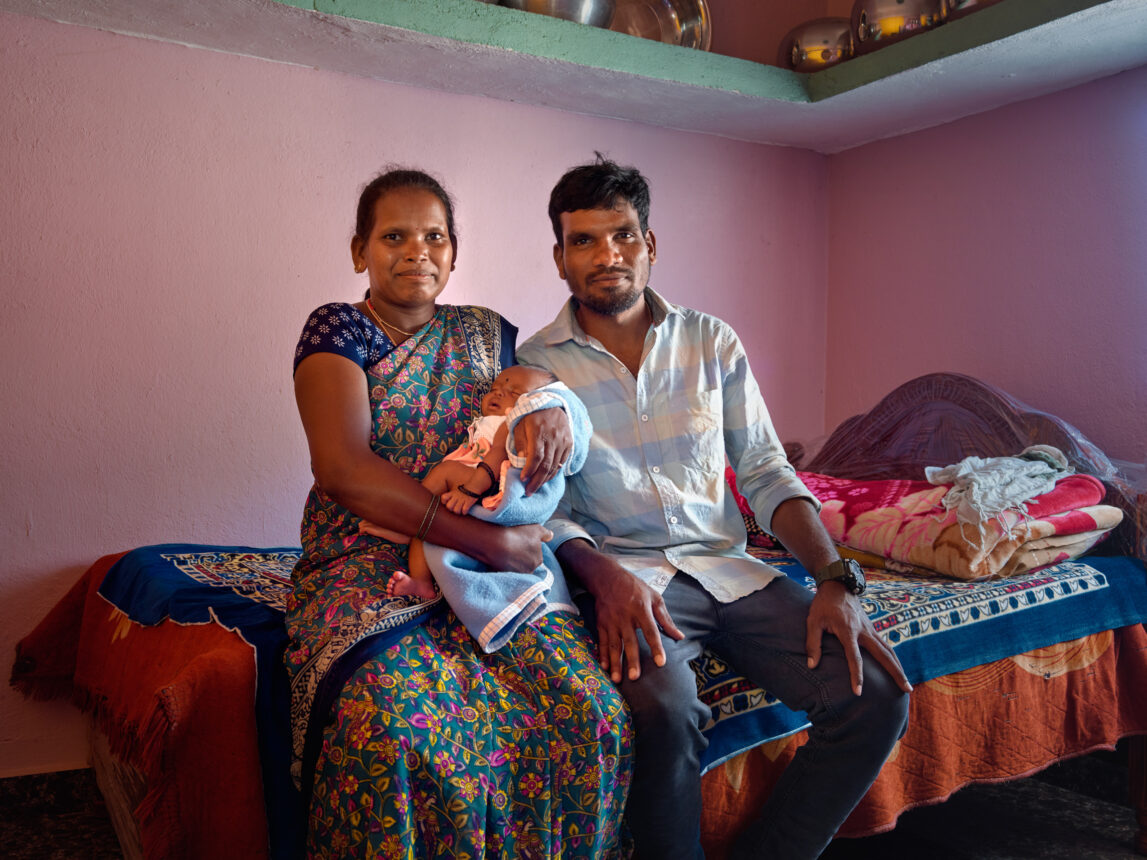 The Pagi Rambabu family
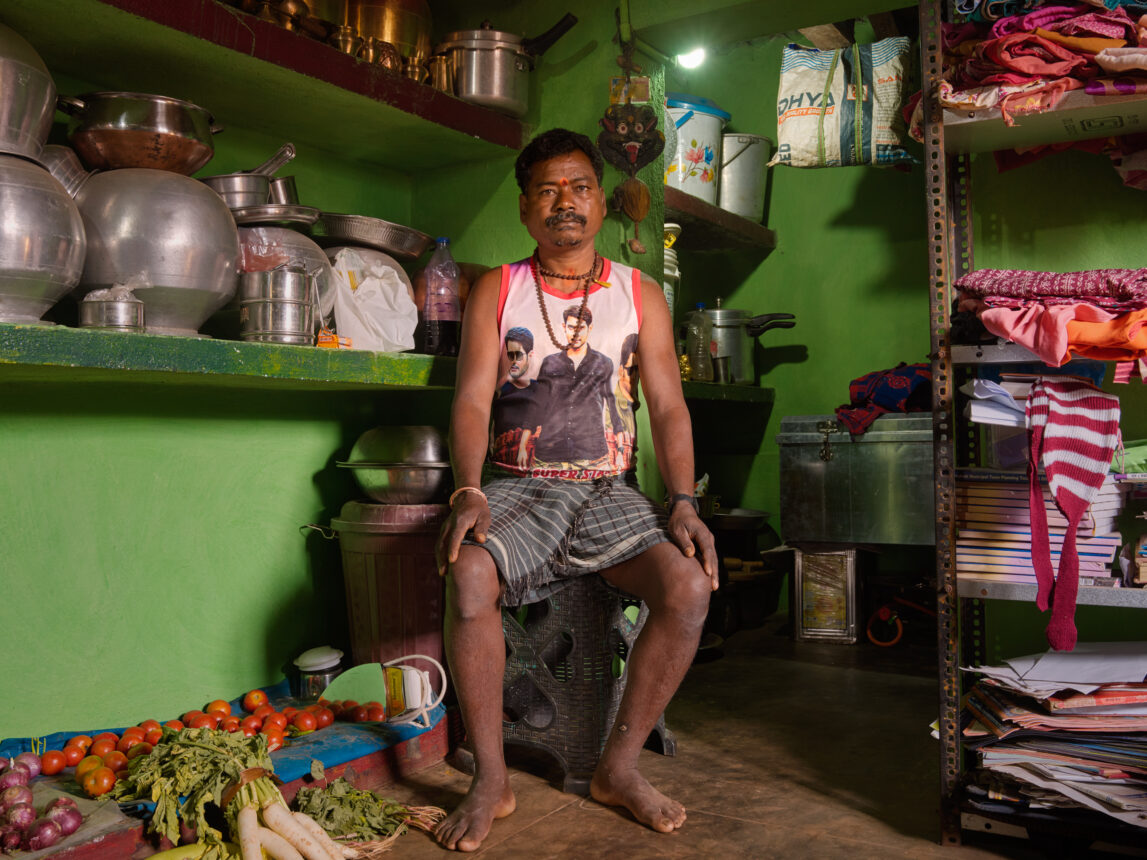 Korra Pottanna
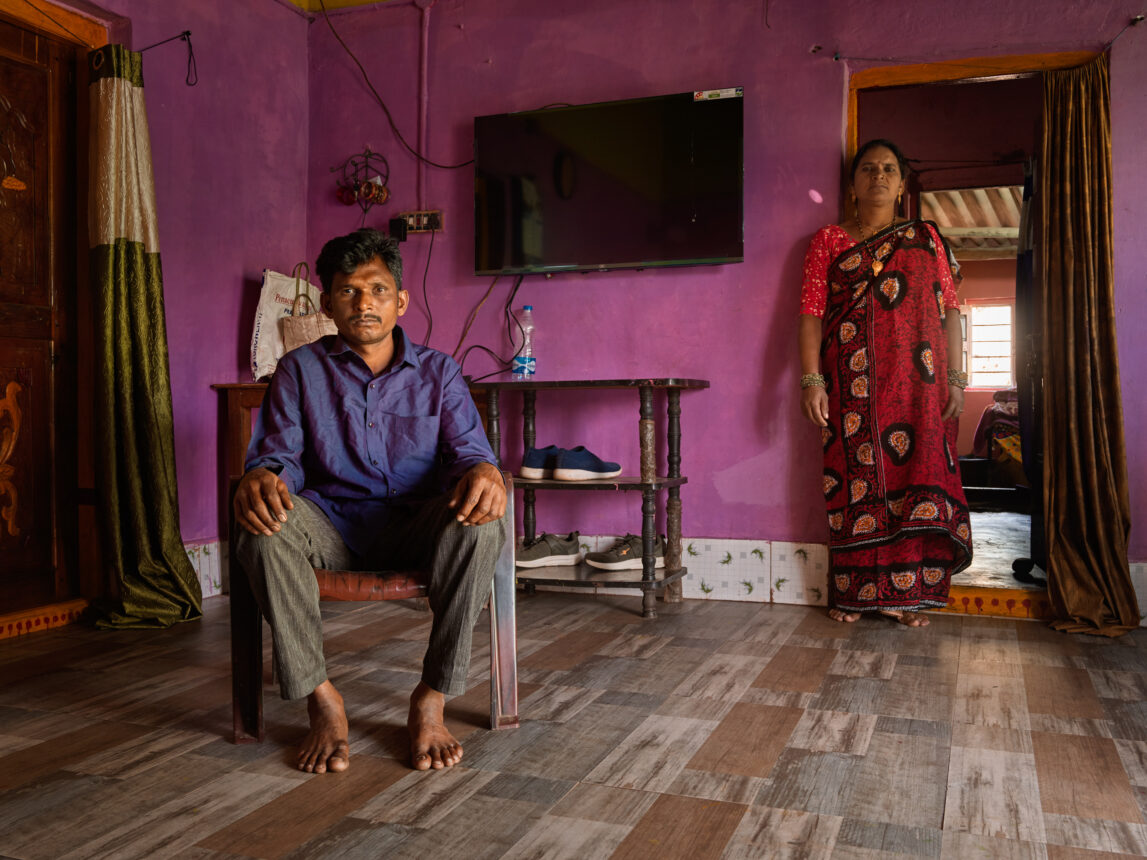 Bebortha Abhimanyu
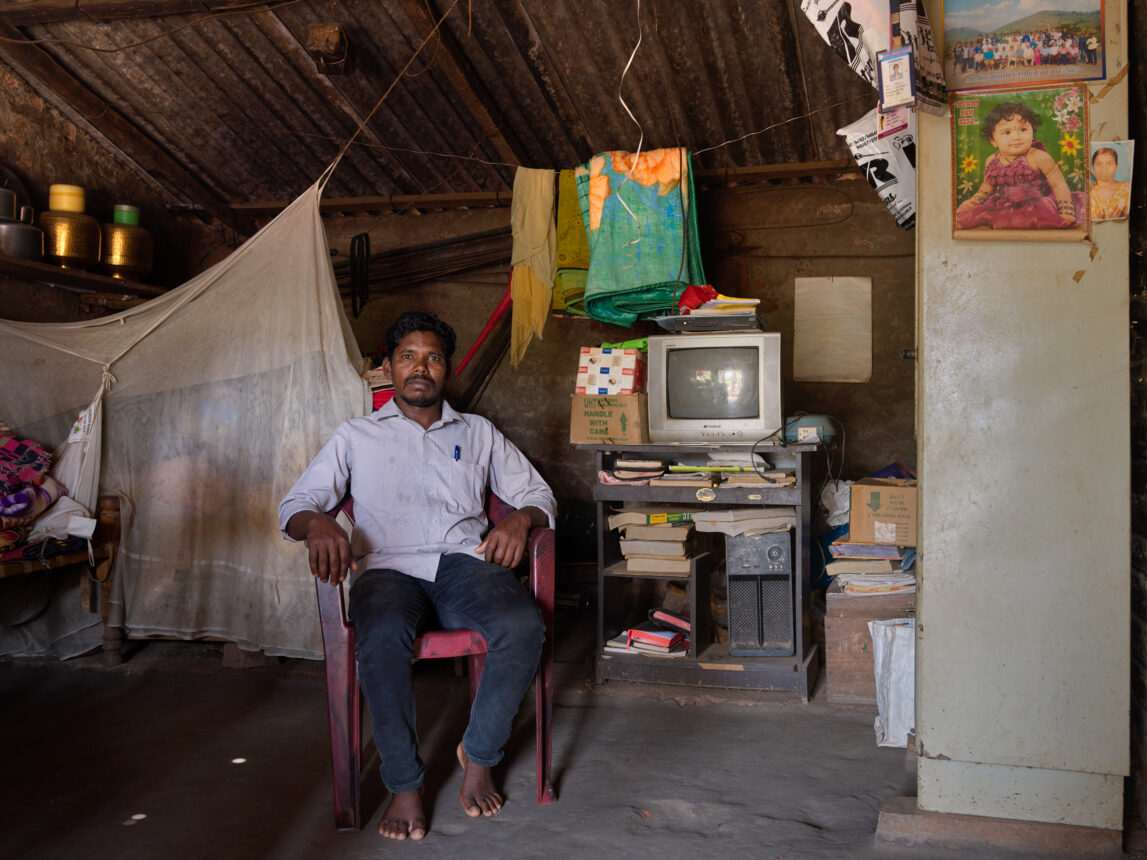 Korrai Jamguda
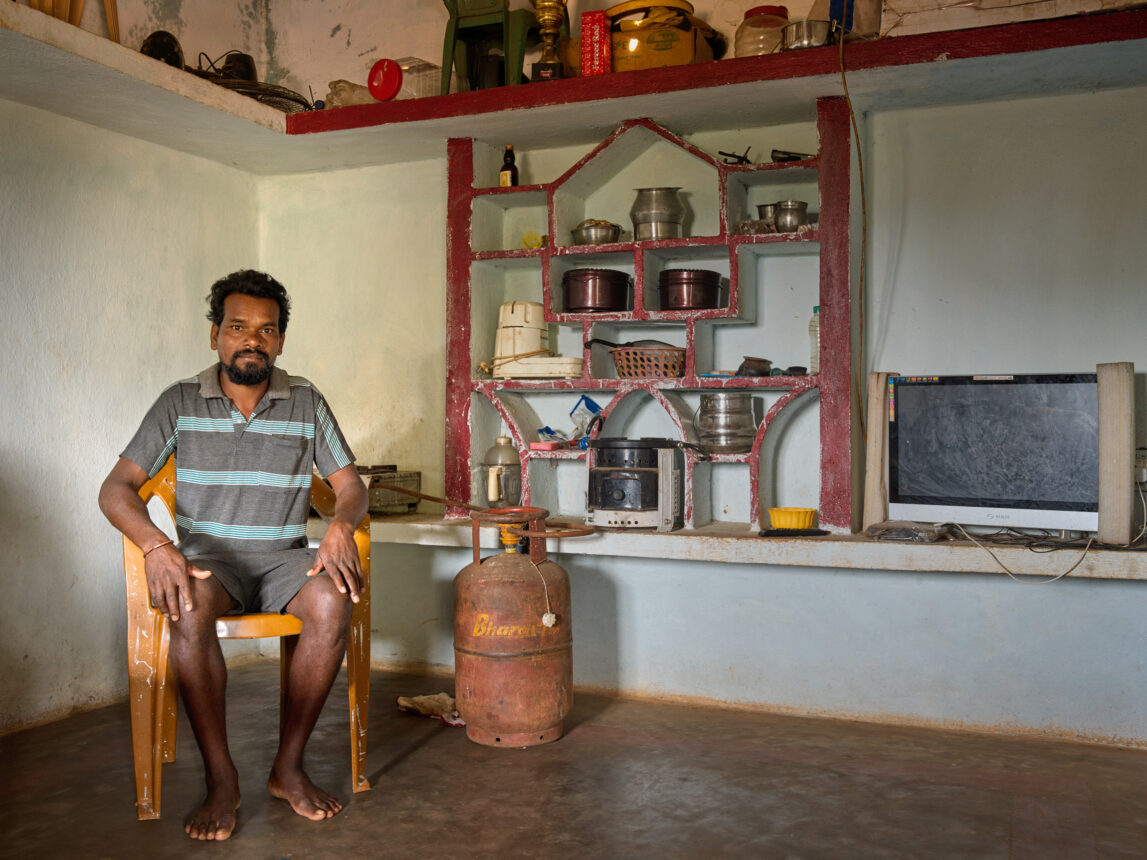 Satyam Babu
Jetti Ganeswarrao and Jetti Bullamm
Boini Kondababu and Boini Rajulamme
Lake Balachandara Babu and Roopavathi
Korra Sabbu Rao and Korra Sujatha
Thamarla Janardhan and Thamarla San
The Pagi Rambabu family
Korra Pottanna
Bebortha Abhimanyu
Korrai Jamguda
Satyam Babu
Jetti Ganeswarrao and Jetti Bullamm
Boini Kondababu and Boini Rajulamme
Lake Balachandara Babu and Roopavathi
Korra Sabbu Rao and Korra Sujatha
Thamarla Janardhan and Thamarla San
The Pagi Rambabu family
Korra Pottanna
Bebortha Abhimanyu
Korrai Jamguda
Satyam Babu
Satyam Babu
Jetti Ganeswarrao and Jetti Bullamm
Boini Kondababu and Boini Rajulamme
Lake Balachandara Babu and Roopavathi
Korra Sabbu Rao and Korra Sujatha
Thamarla Janardhan and Thamarla San
The Pagi Rambabu family
Korra Pottanna
Bebortha Abhimanyu
Korrai Jamguda
Satyam Babu
Jetti Ganeswarrao and Jetti Bullamm
Boini Kondababu and Boini Rajulamme
Lake Balachandara Babu and Roopavathi
Korra Sabbu Rao and Korra Sujatha
Thamarla Janardhan and Thamarla San
The Pagi Rambabu family
Korra Pottanna
Bebortha Abhimanyu
Korrai Jamguda
Satyam Babu
‘Smallholder farmers in India are a large number.’
Rohini Mukherjee Head Partnerships and Strategy Naandi Foundation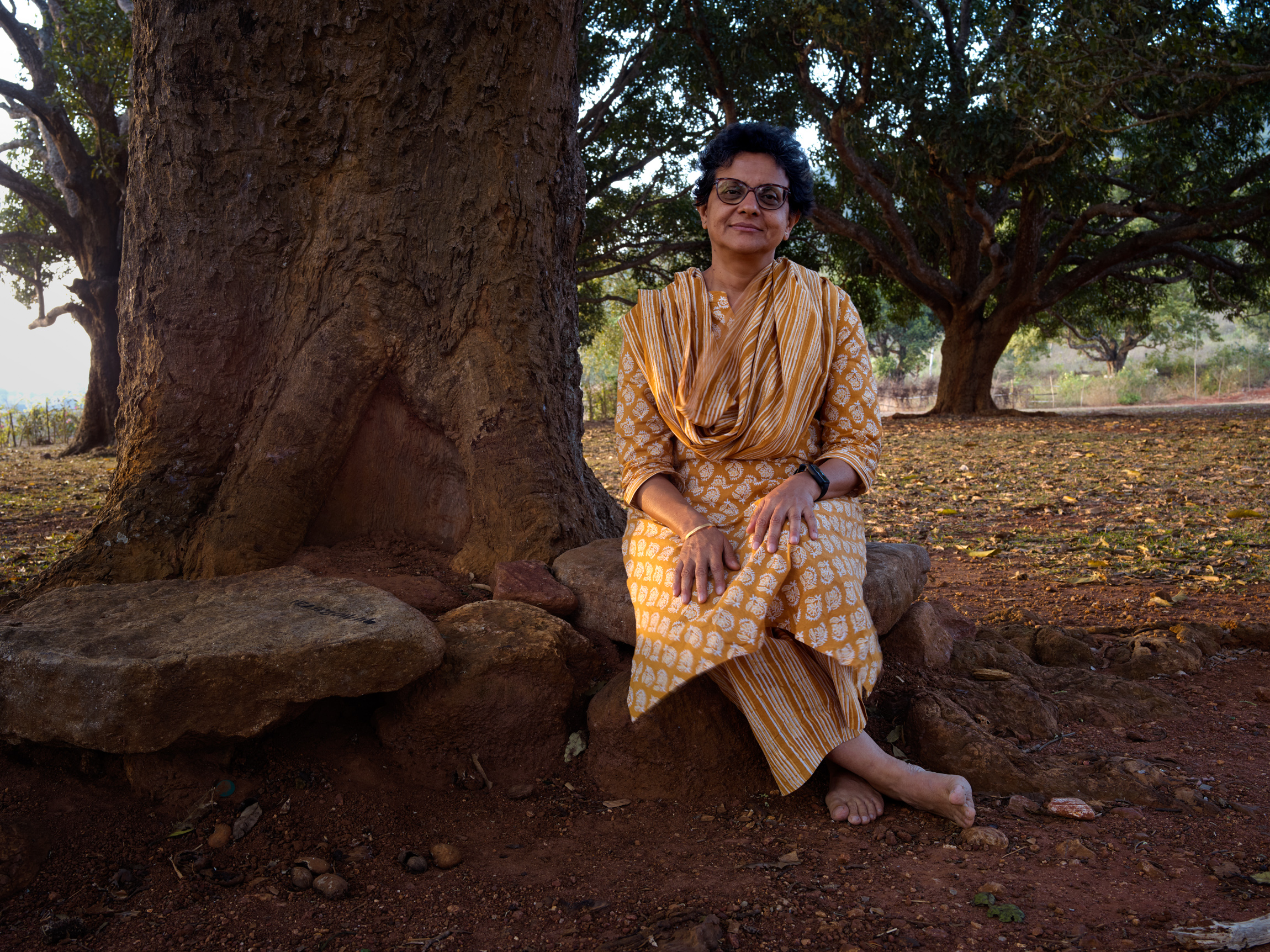 Rohini Mukherjee Head Partnerships and Strategy Naandi Foundation
'Just to give you an idea, let's say India has a population of more than 1.4 billion. Of this, 70 per cent are people who depend on agriculture for a living. Broadly, we can call them farmers. Of those, 80 per cent are smallholding farmers. So that's a really large number. These are the people who feed us all in our country but they are also the people who face the most poverty-stricken conditions. While they're feeding us, they don't really have the ability to feed their children well. And I think our work with smallholding farmers starts there.’
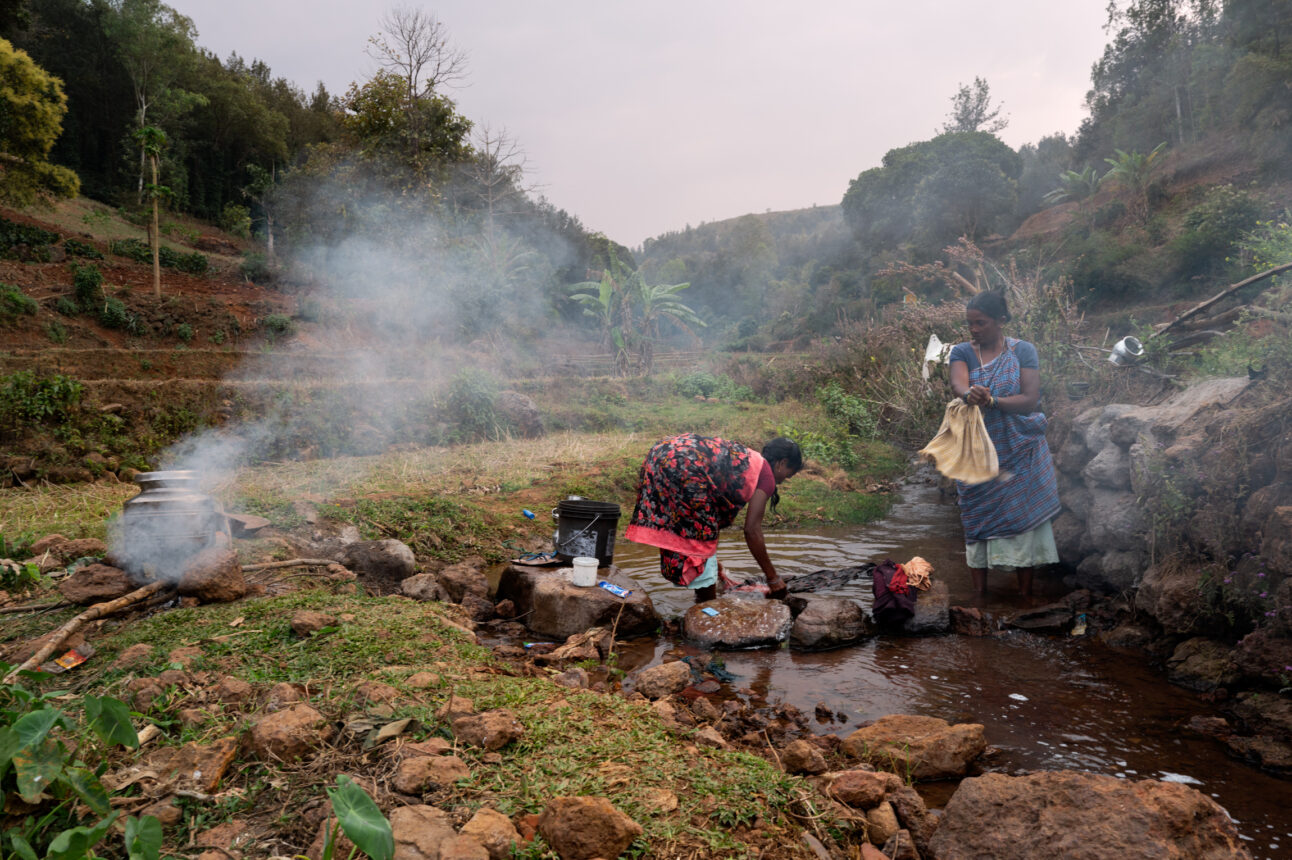
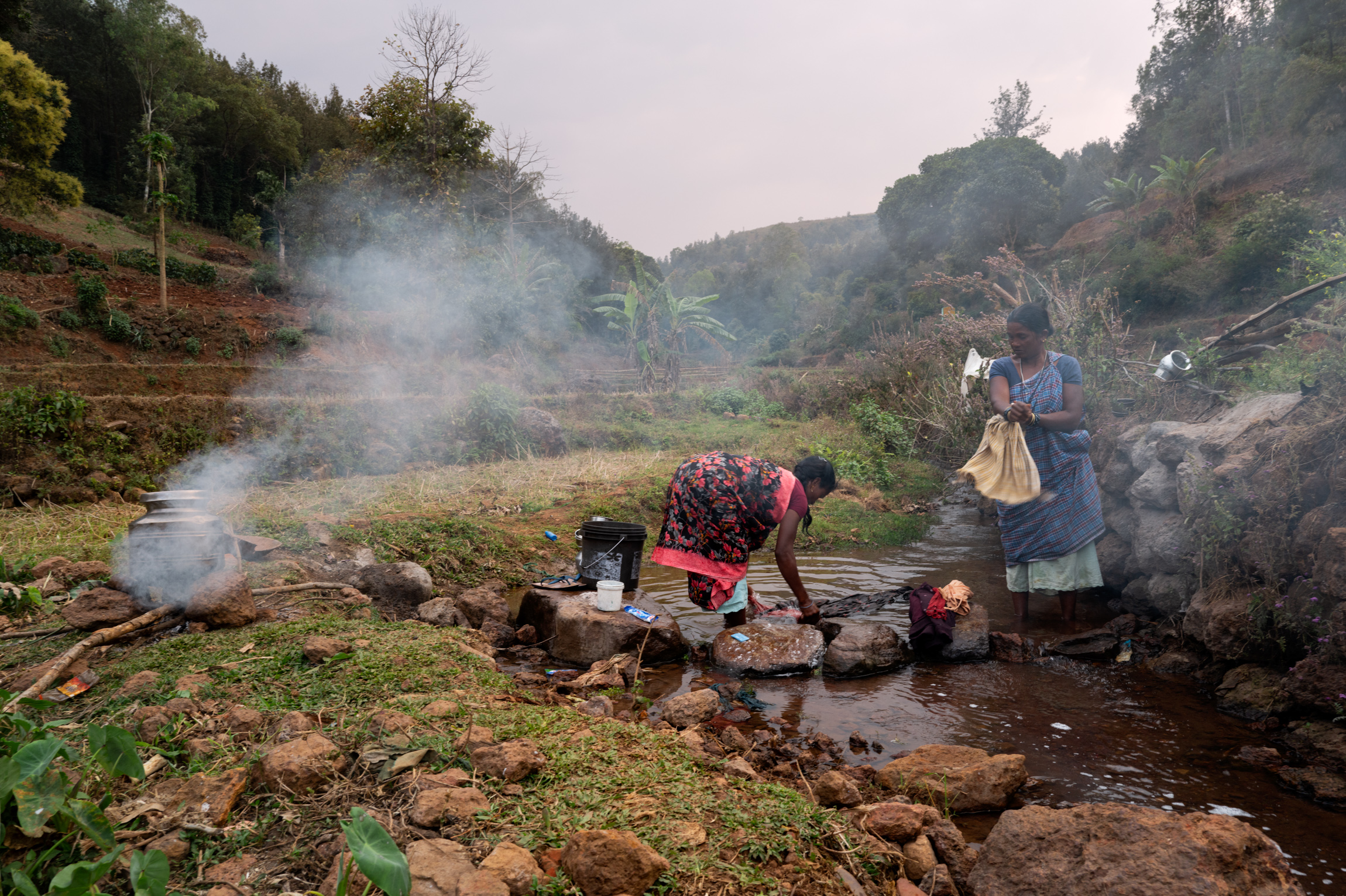
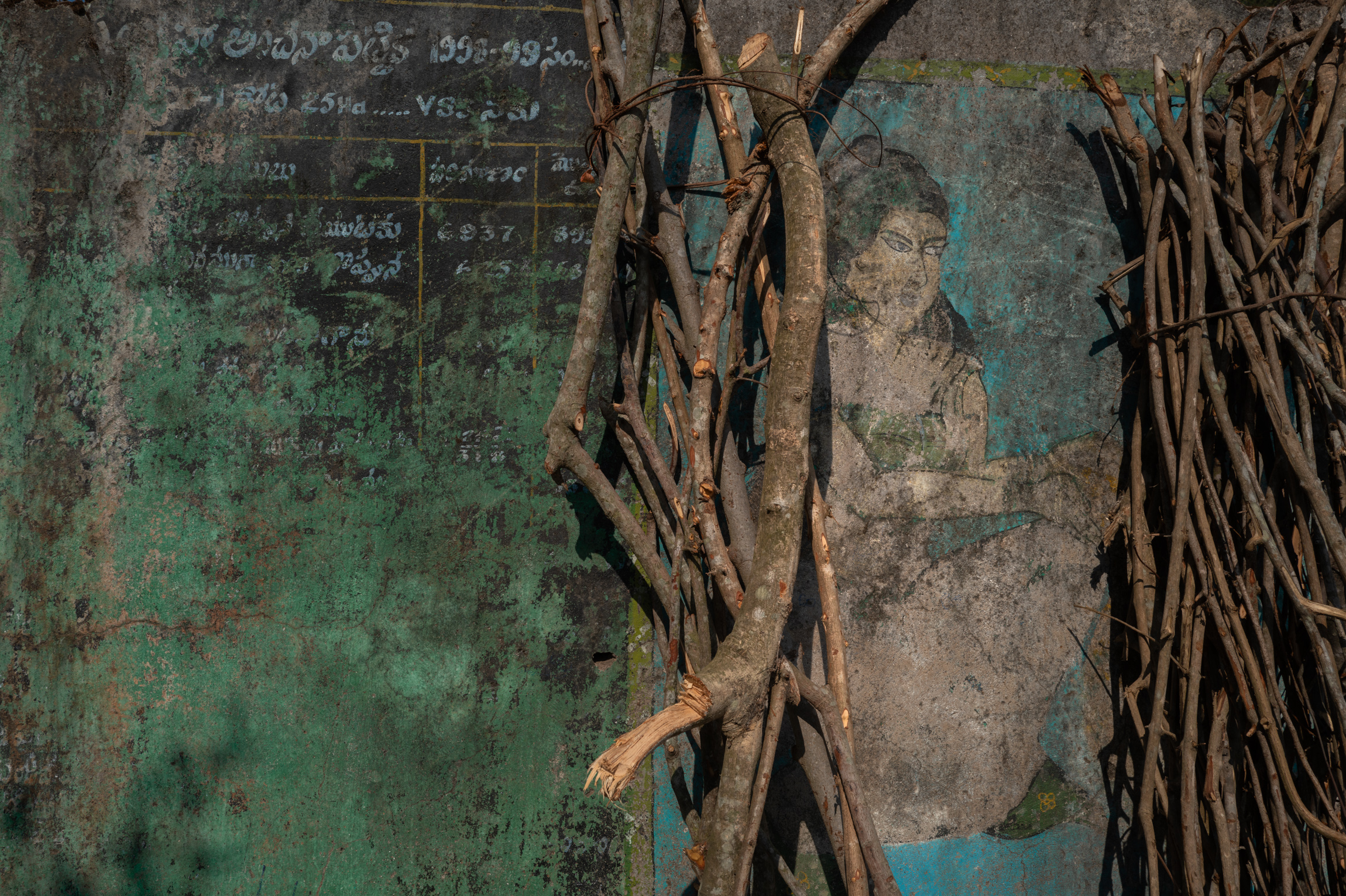
In the villages we visited there really seemed to be the kind of harmony whereby care for the living soil, and the communal way of life with its tribal traditions, goes together with increased wealth, education and healthcare. There was one aspect of village life, however, that struck us particularly. Despite the government’s campaigns and subsidies, and the presence of the liquid gas bottles in almost every kitchen, meals were prepared over a wood fire. The same went for the bowls of water heated for washing.
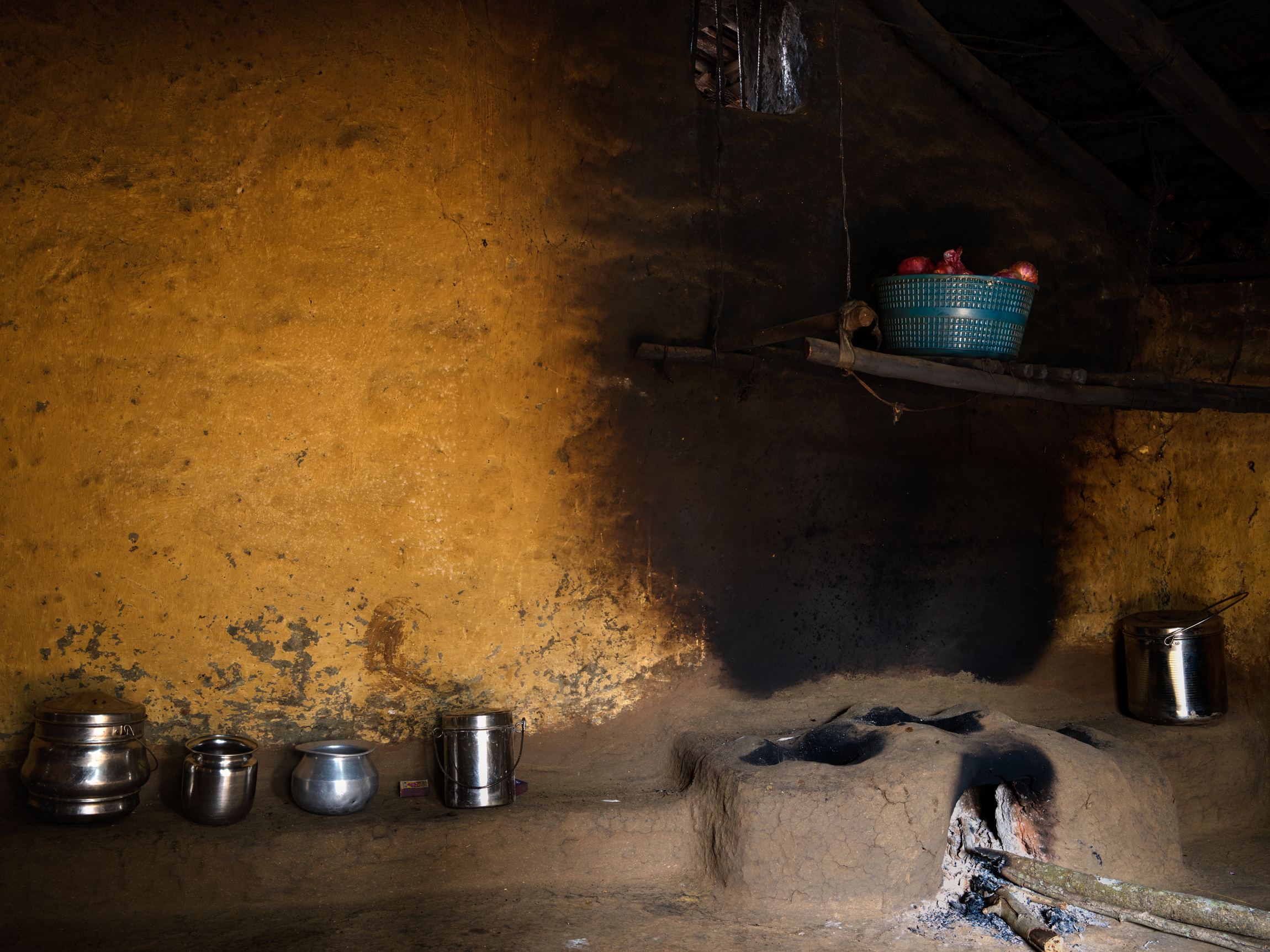
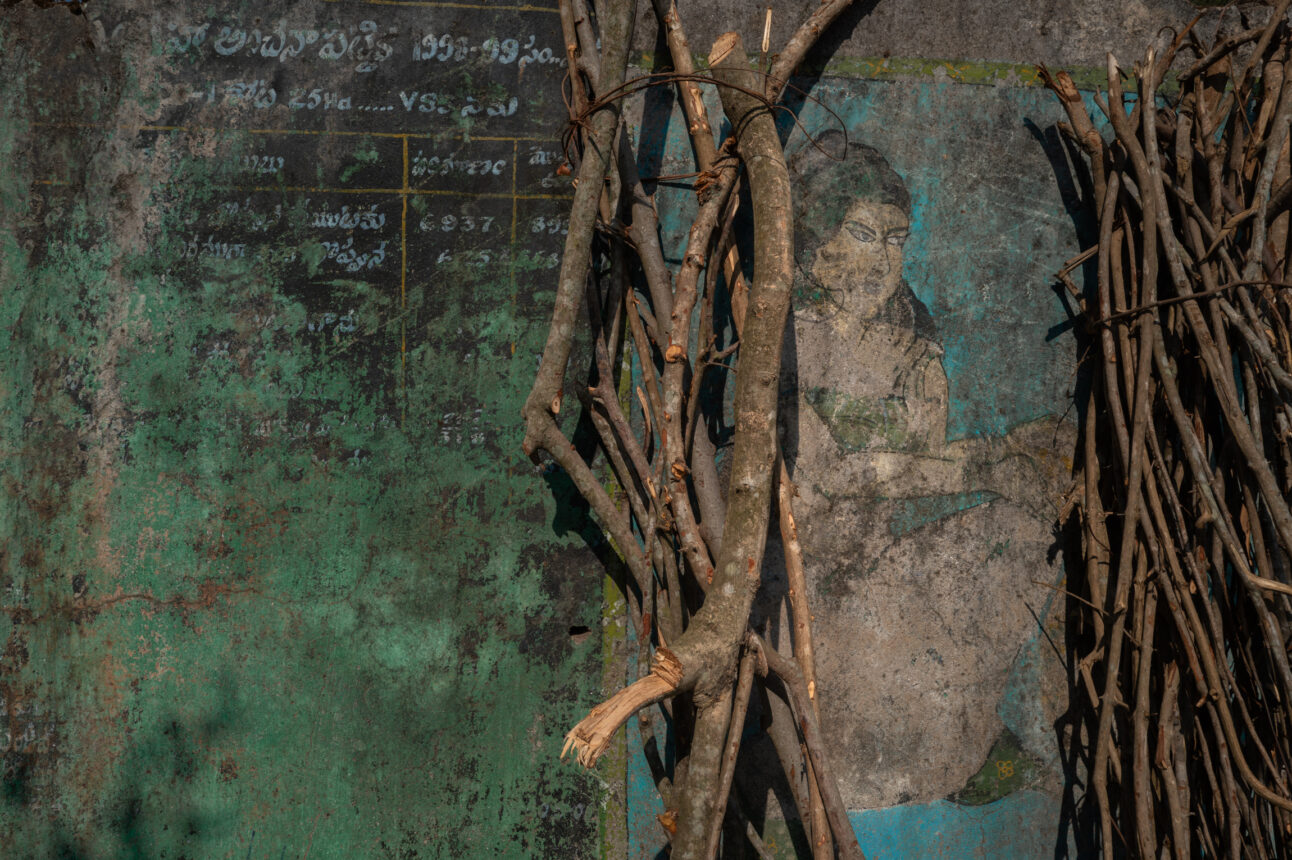
Few people realize that CO2 emissions from wood fires are equal to the emissions of the entire aviation and shipping sectors combined. It’s one of the biggest sources of pollution worldwide. Forty million people die prematurely from inhaling soot and smoke. An additional factor is that in many countries firewood is scarce, so people cut down valuable fruit trees. Collecting firewood is hard and time-consuming work. During the rainy season, access to firewood is harder still. In Africa the use of wood for cooking is an important factor in deforestation and soil erosion. In Araku this is fortunately not the case, as millions of trees are being planted each year and the forest is returning. There seems to be a huge cultural obstacle that keeps people from cooking with gas or electricity. It appears the farmers in Araku will sooner drive an electric car than stop using firewood.
Source: FAO, Food and Agriculture Organization of the United Nations
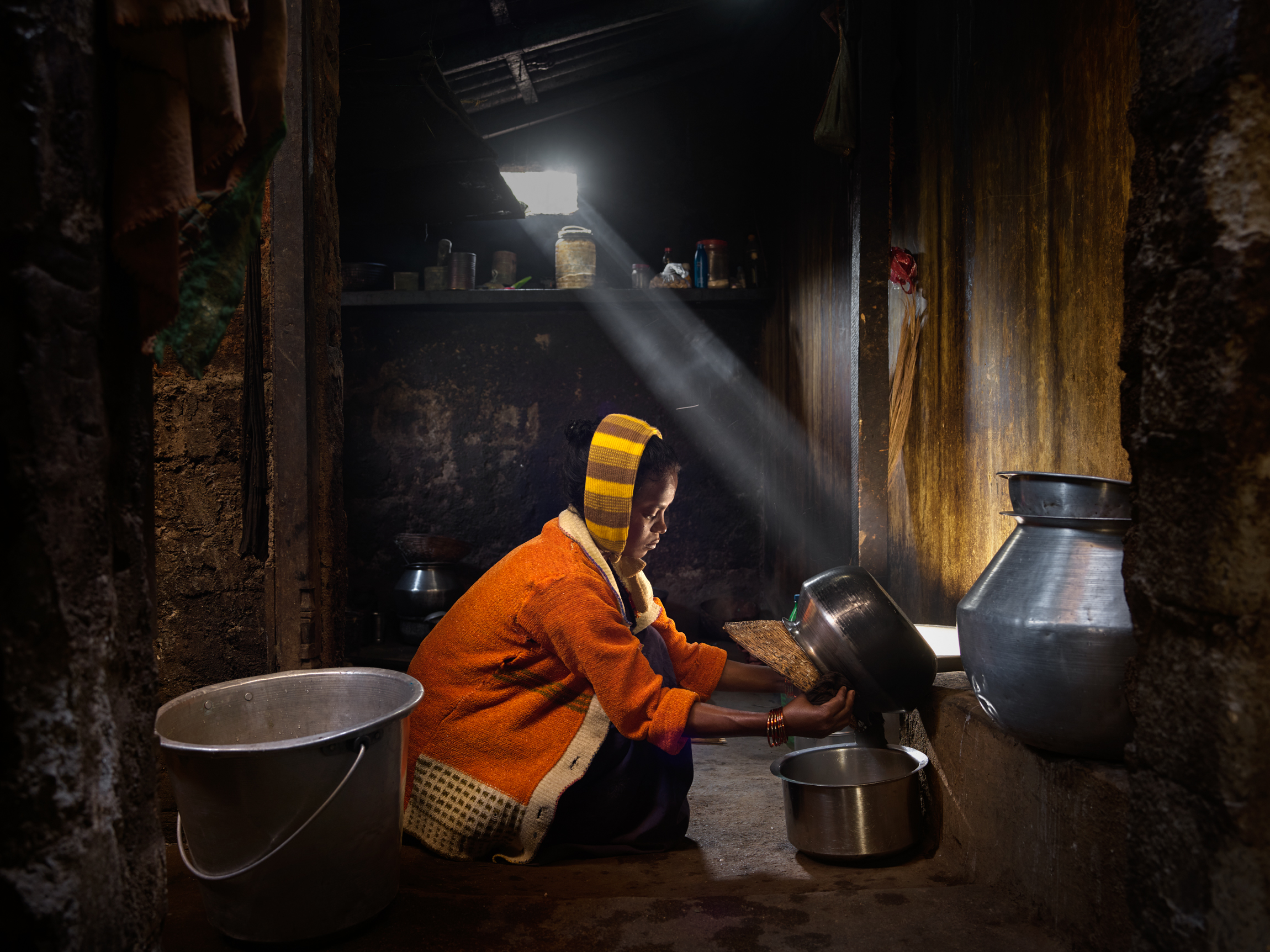
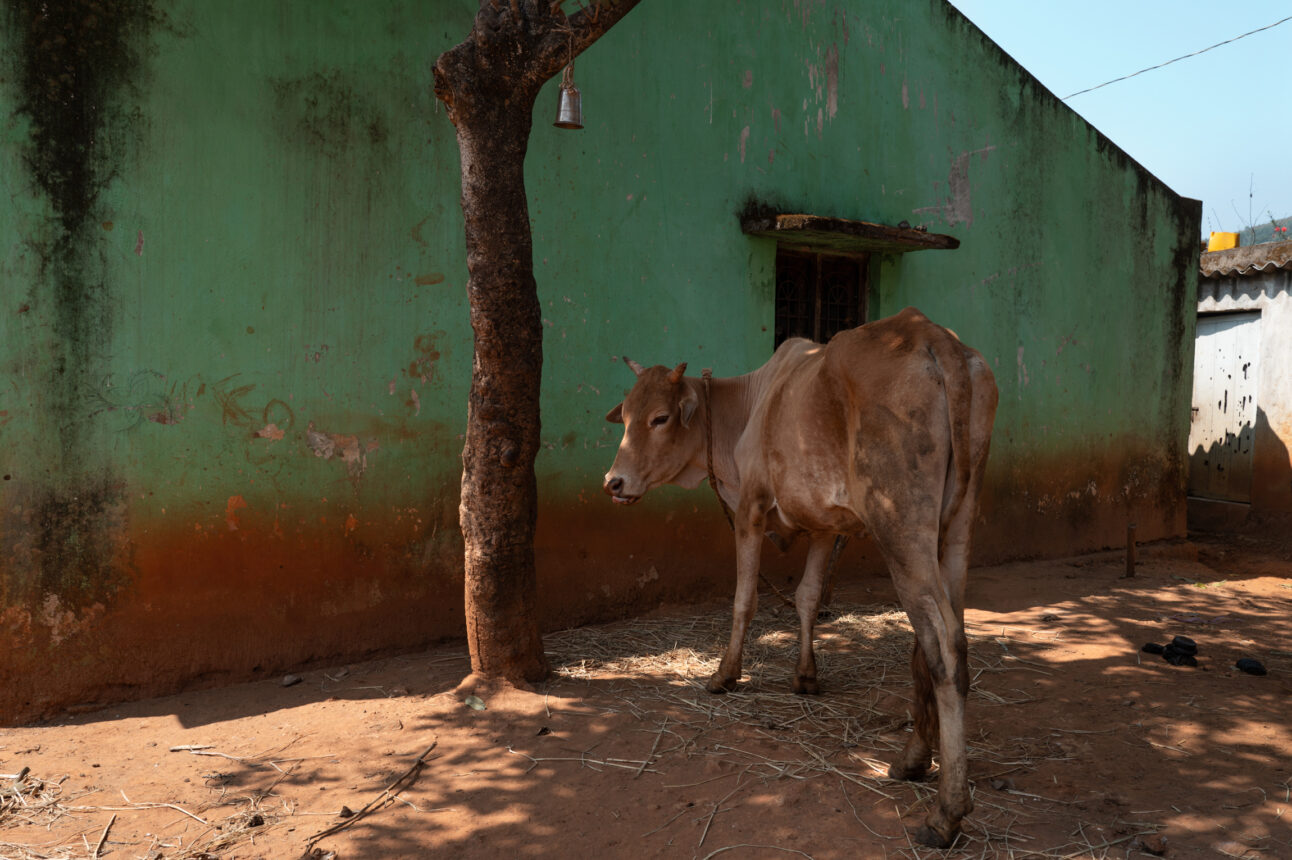
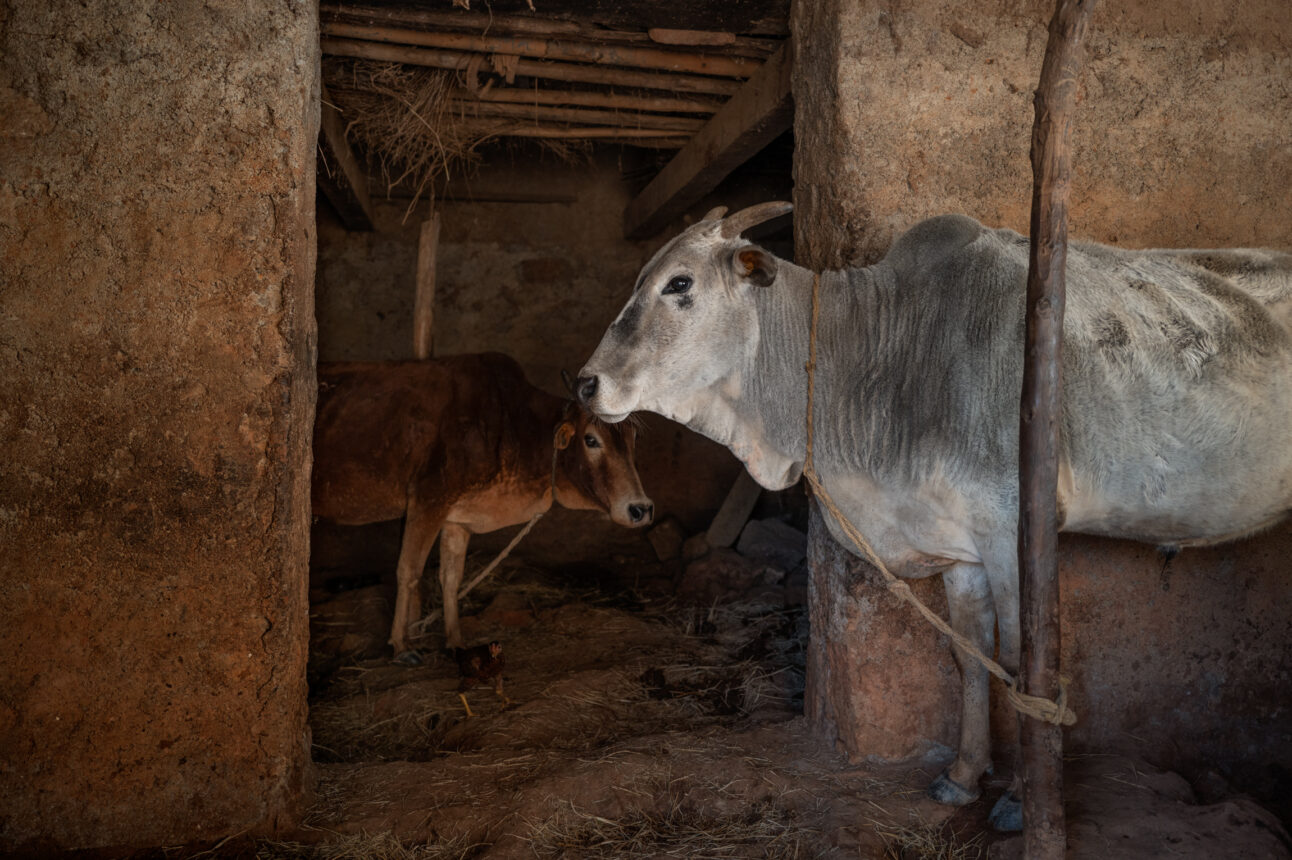
Just this morning, the light was fast, sharp and weighed nothing. Now it drags itself along the walls, saturated and languid. The flanks of the cows deepen in colour. In the motionless treetops, the shadows become the first splinters of the night to come.
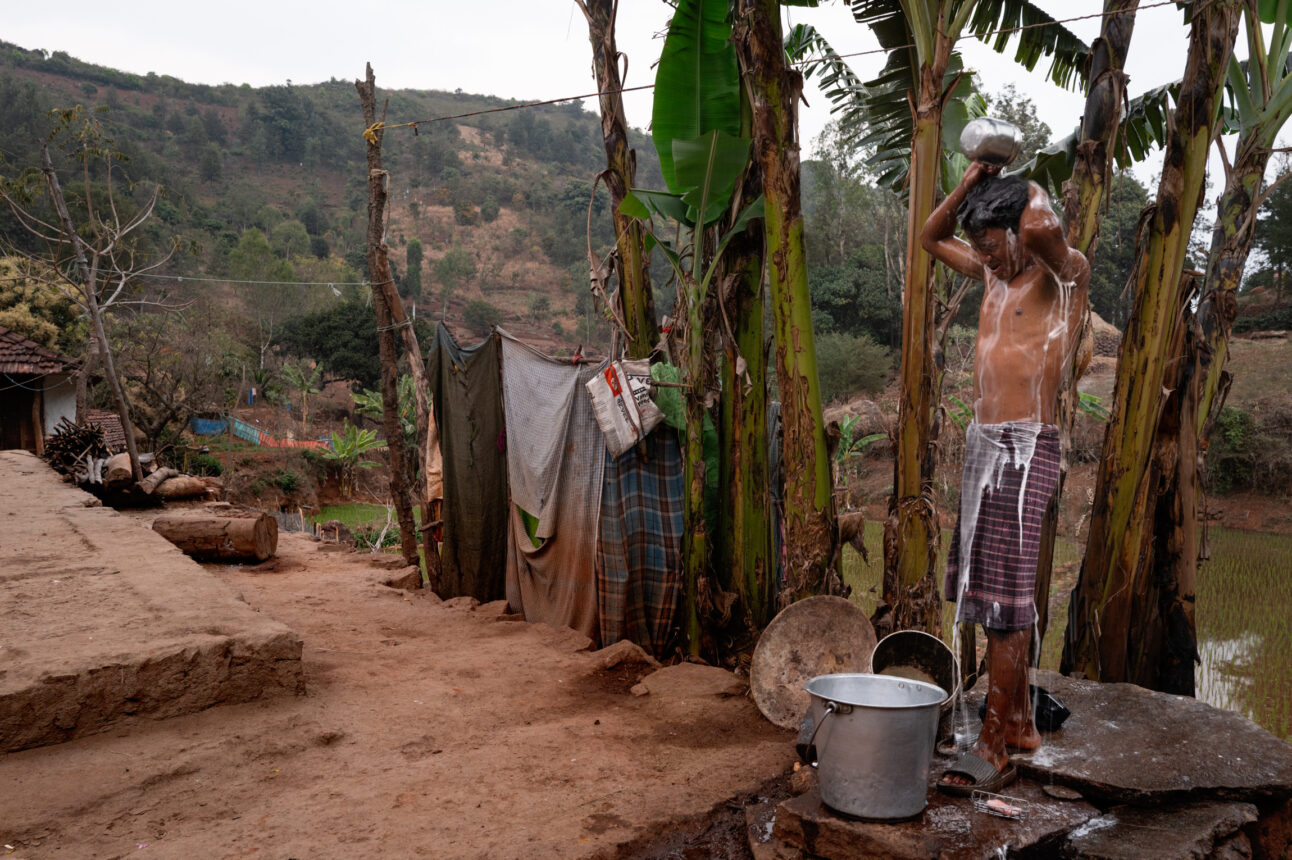
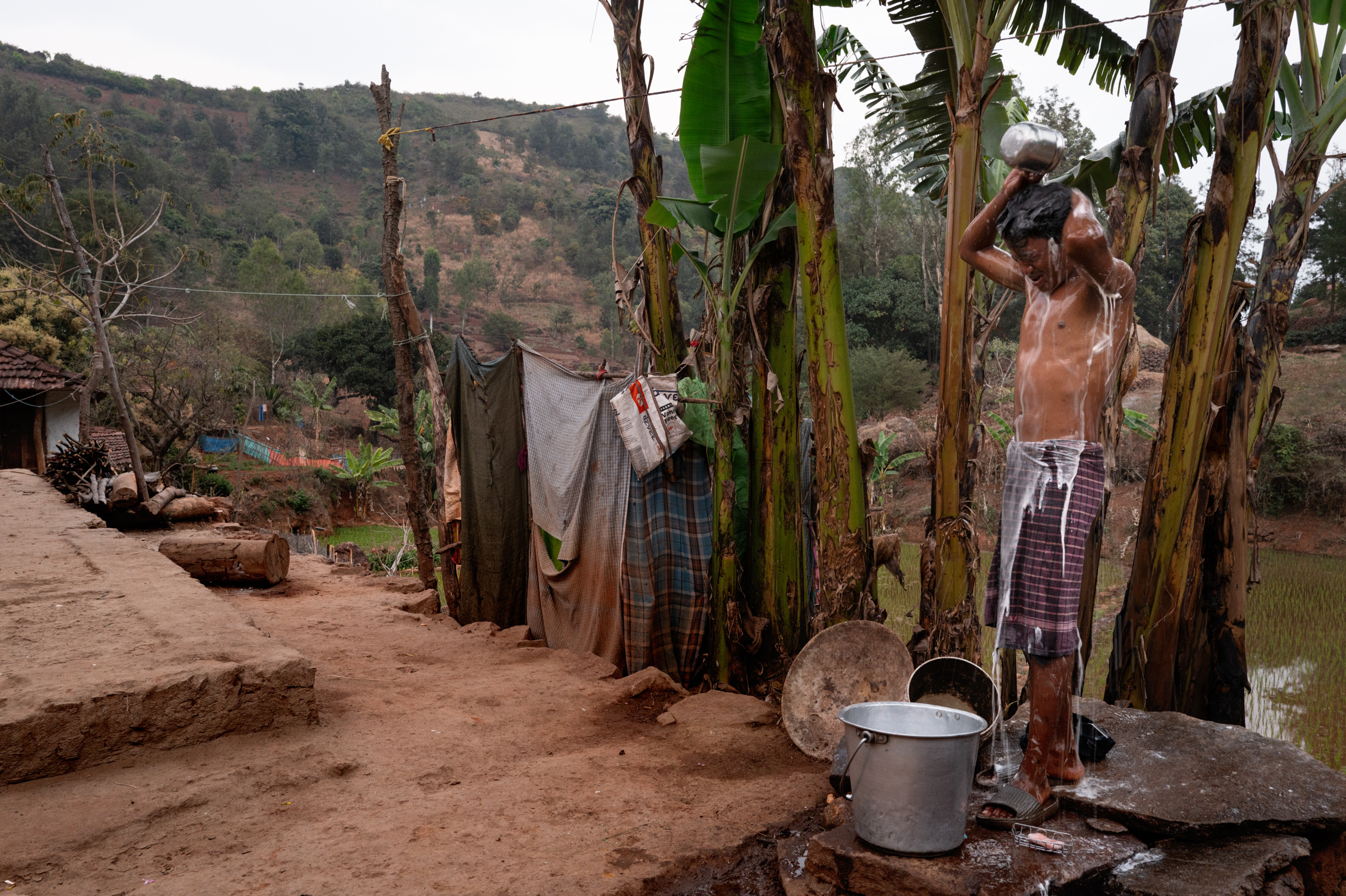
When water washes away the dust and sweat, and its tingling flashes across the skin, the breath stops. Every day the beneficial, deep sigh follows. This is how the body folds the time of work and the time of eating and resting. On the breathing rhythm of the day. Then the little children crawl on your lap.