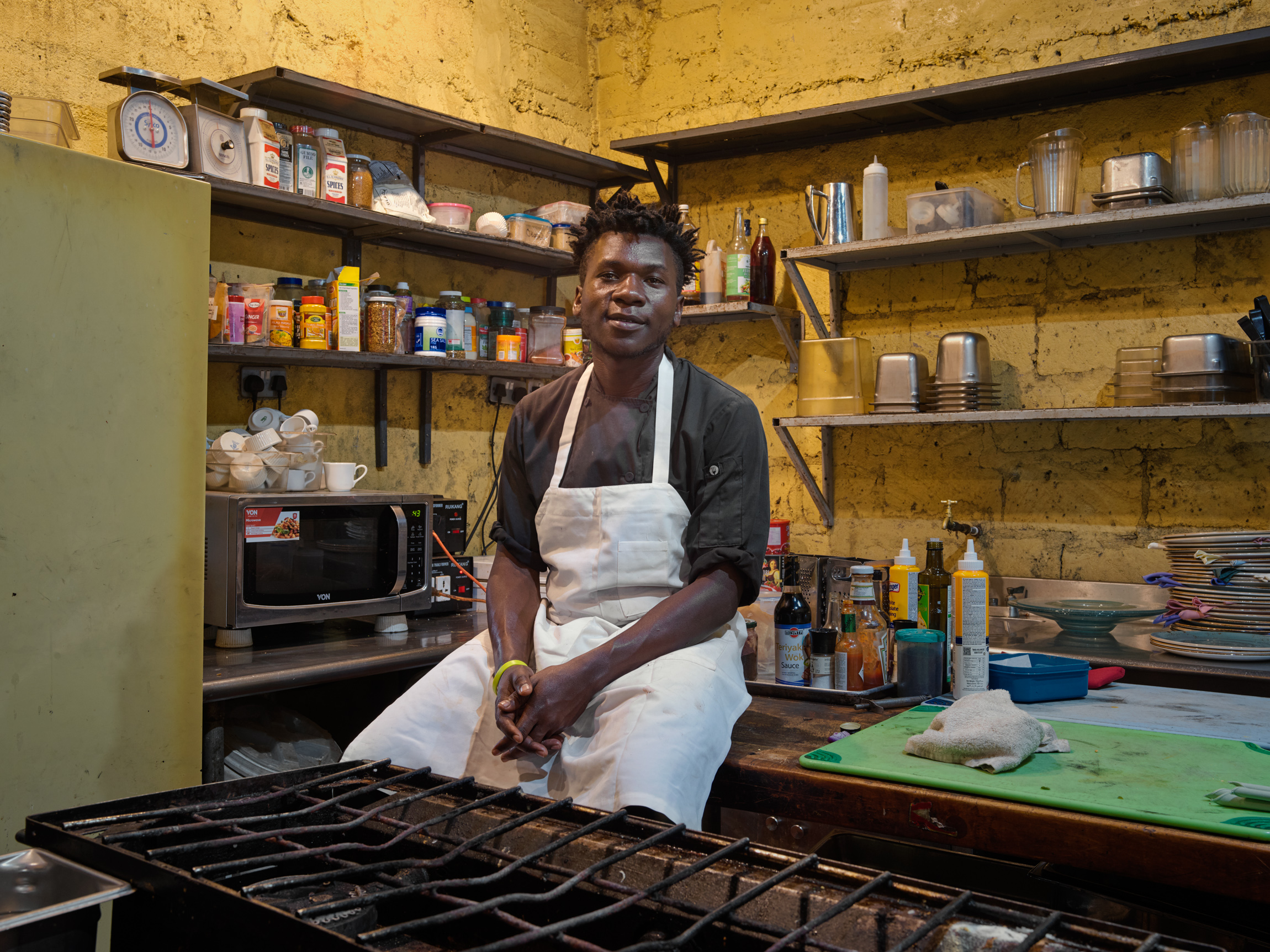
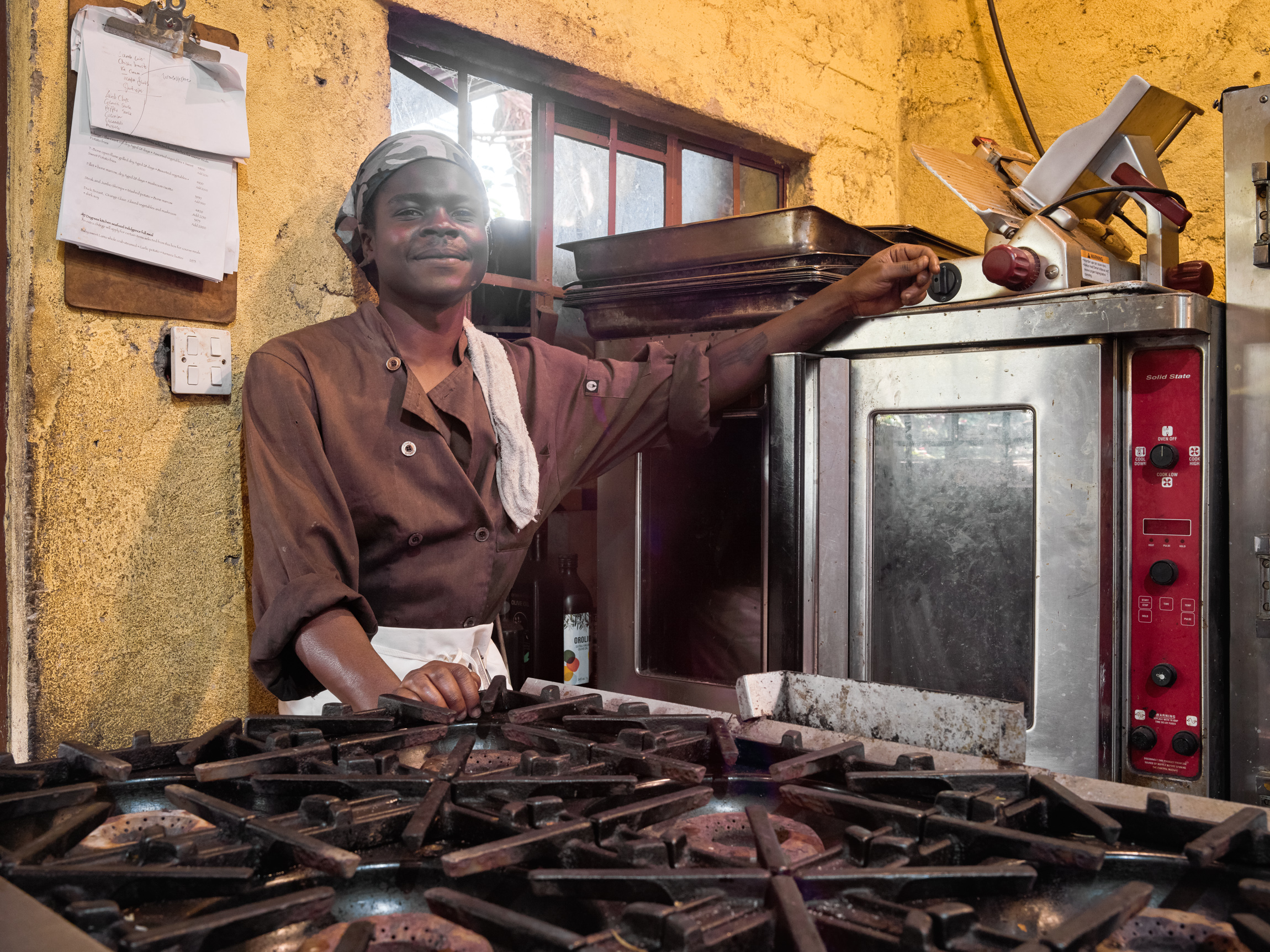
Harold Sena Akoto grew up with his grandparents on a cocoa plantation in Ghana. His father insisted he must go to university, because ‘farming equals poverty’. But after a year he gave up his studies. He wanted to cook, so he left for Italy. After a career in London, Italy, France, Canada and the United States, where he had his own restaurant, he returned to Africa and set up the 45 Degrees Kitchen in a house belonging to his parents-in-law. He wanted to cook the way his grandmother did, with ingredients from his own land.
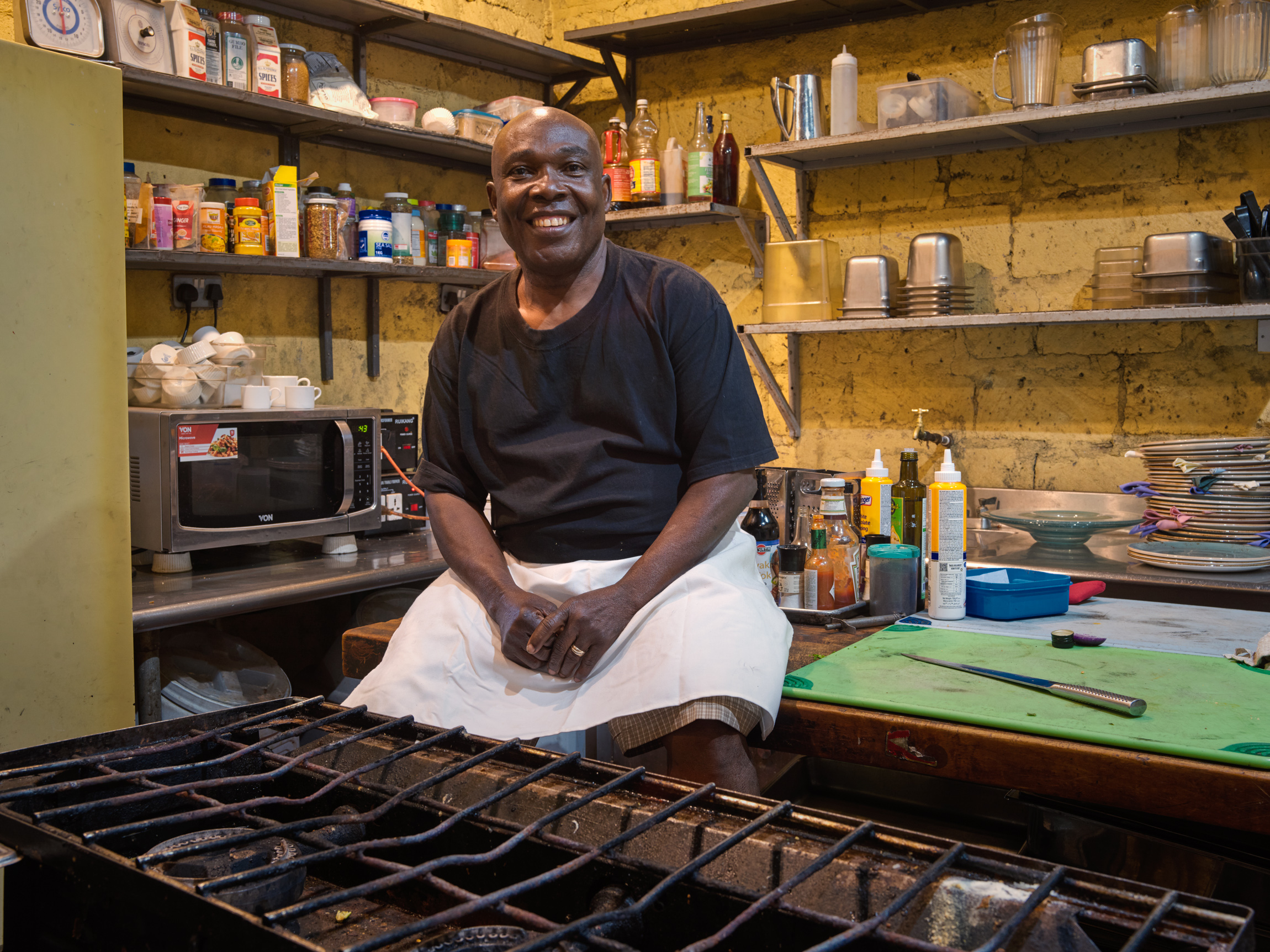 Harold Sena Akoto
The meeting with Harold in his restaurant starts with an anecdote, when I ask him where the name 45 Degrees comes from.
With a radiant smile he tells me how as a young chef he started work in a fancy restaurant in the US. How on his first working day he went to sharpen his knife with the honing steel and apparently put his knife to it at the wrong angle. At which a member of the team shouted across the kitchen, ‘This isn’t a chef, this is an idiot. He sharpens his knife at a 45-degree angle.’ That day, he decided that if he ever started his own restaurant, he would call it 45 Degrees.
'Let’s celebrate one fresh ingredient at a time.'
At 45 Degrees Kitchen, they believe food is the centre of everything that they do as humans, whether at home with family and friends or at a fancy restaurant. 45 Degrees Kitchen is committed to food with integrity. They understand the connection between how food is grown or raised, how it’s prepared and how it tastes. Genuine raw ingredients come from their own garden and are also sourced from organic farms in Nairobi and its surroundings.
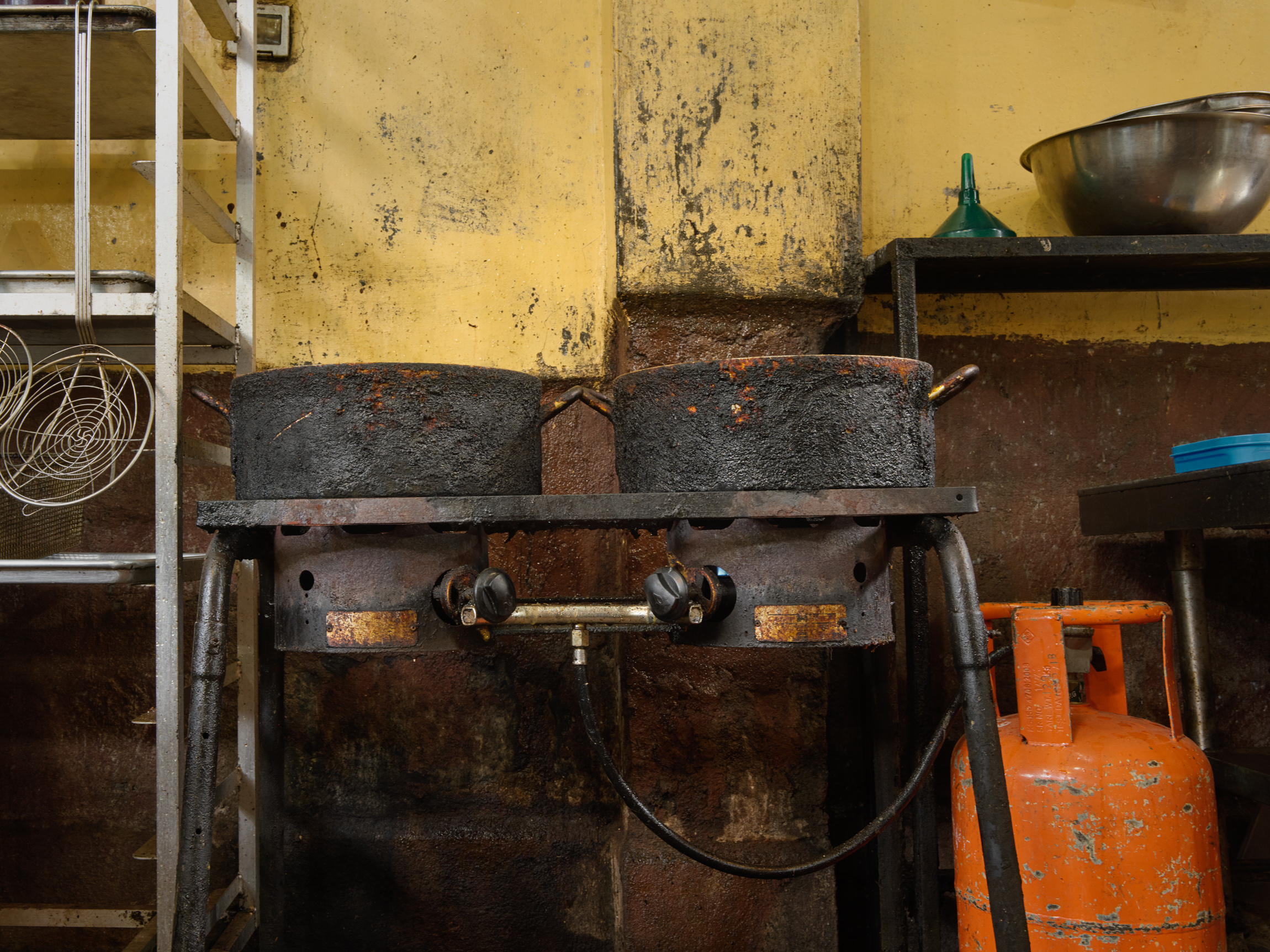
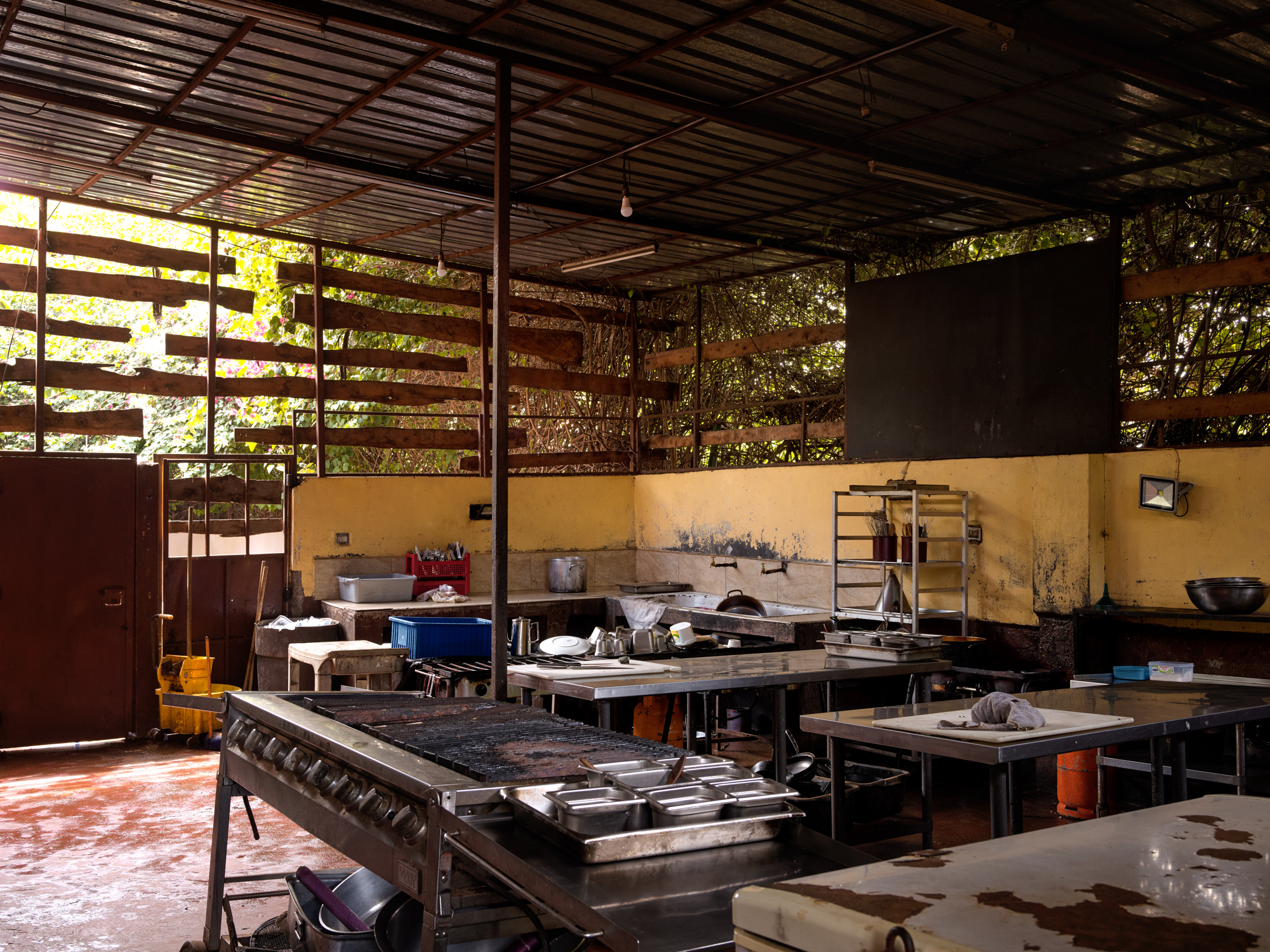
Harold wants to cook the way his grandmother did, with ingredients from his own land. His pans are as black as his grandma’s from years of cooking on an open fire.
‘These pans just get better and better. They’re meant to be black. Gleaming saucepans are only for show.’
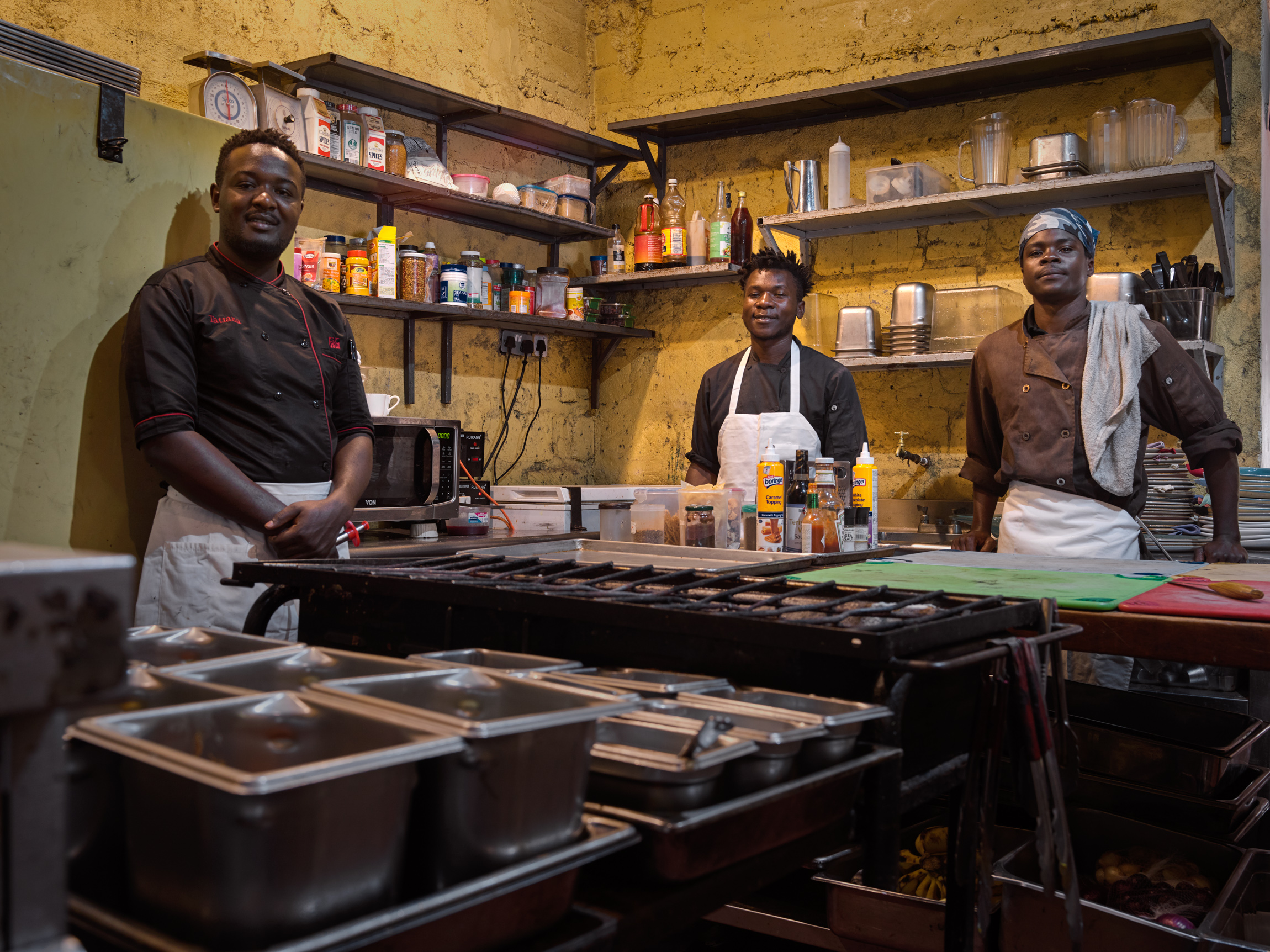
‘We need a little bit of direction on how food should be prepared in Africa. I’m not saying I know it all, but I took it upon myself to say: I’ll come here, to Kenya, and set up a little restaurant for myself, and the most important part is to be able to train young kids or young people who are interested in cooking, because I realize that food is actually the medicine of life. One of the things that amazes me is that my wife has given me a challenge. My wife told me that Kenyan men don’t cook, which I know anyway because, you know, African guys, they don’t want us in the kitchen. So one of the things I took from my wife is this: I will find guys in Kenya who love to cook. That’s where Murithi came in, that’s where Joshua came in, that’s where Michael came in. These guys had no knowledge about food at all, but I took it upon myself to train them.’
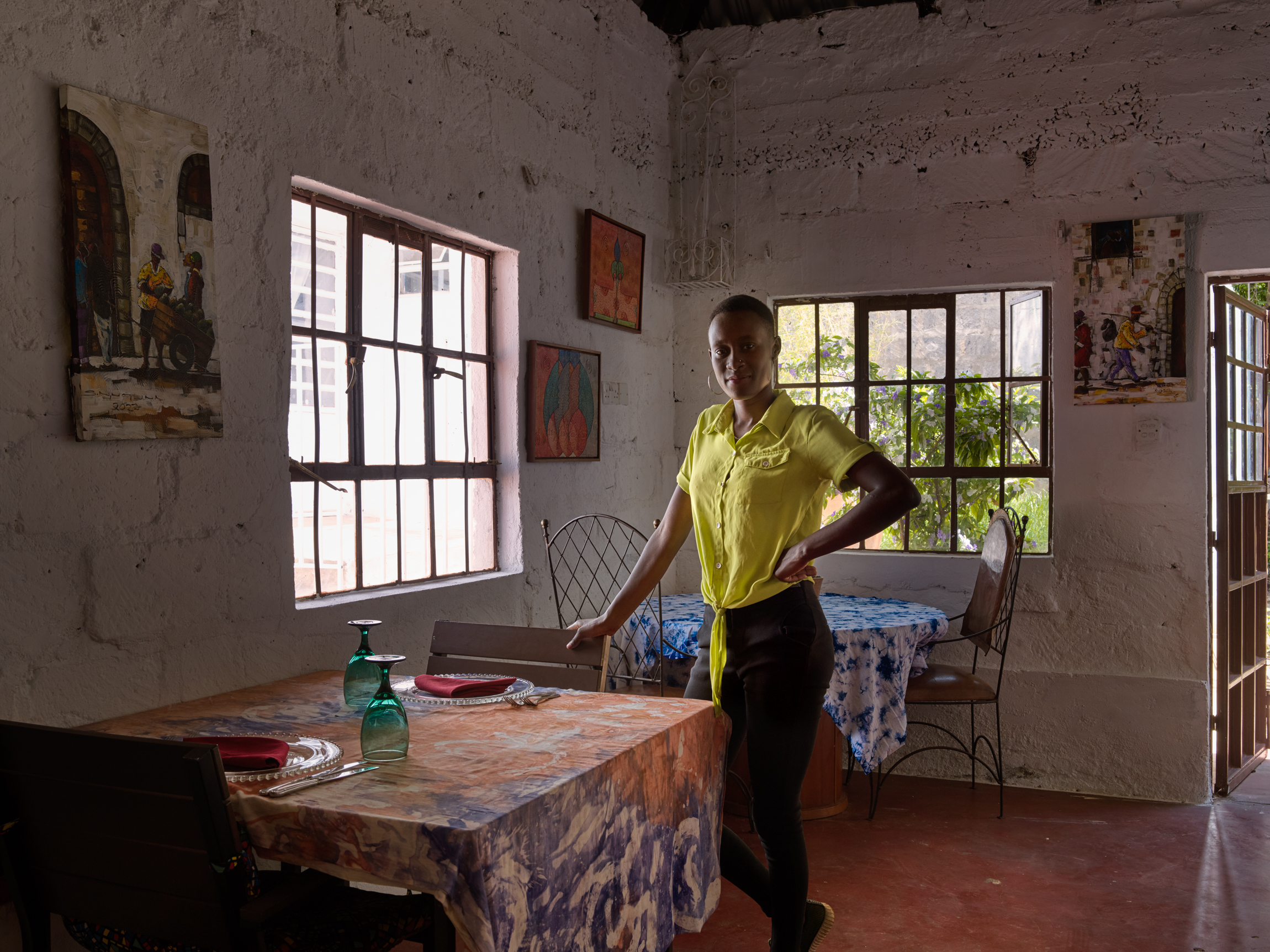 Nancy, wait staff 45 Degrees
‘My wait staff, Nancy and Shiro – none of them had ever worked in a restaurant before. But I took it upon myself to train them so that they would know what food actually is. We have our own farm down the road, not too far from here, in the same compound. We have a guy called Murithi, another Murithi, who does all the growing for us, for the restaurant.’
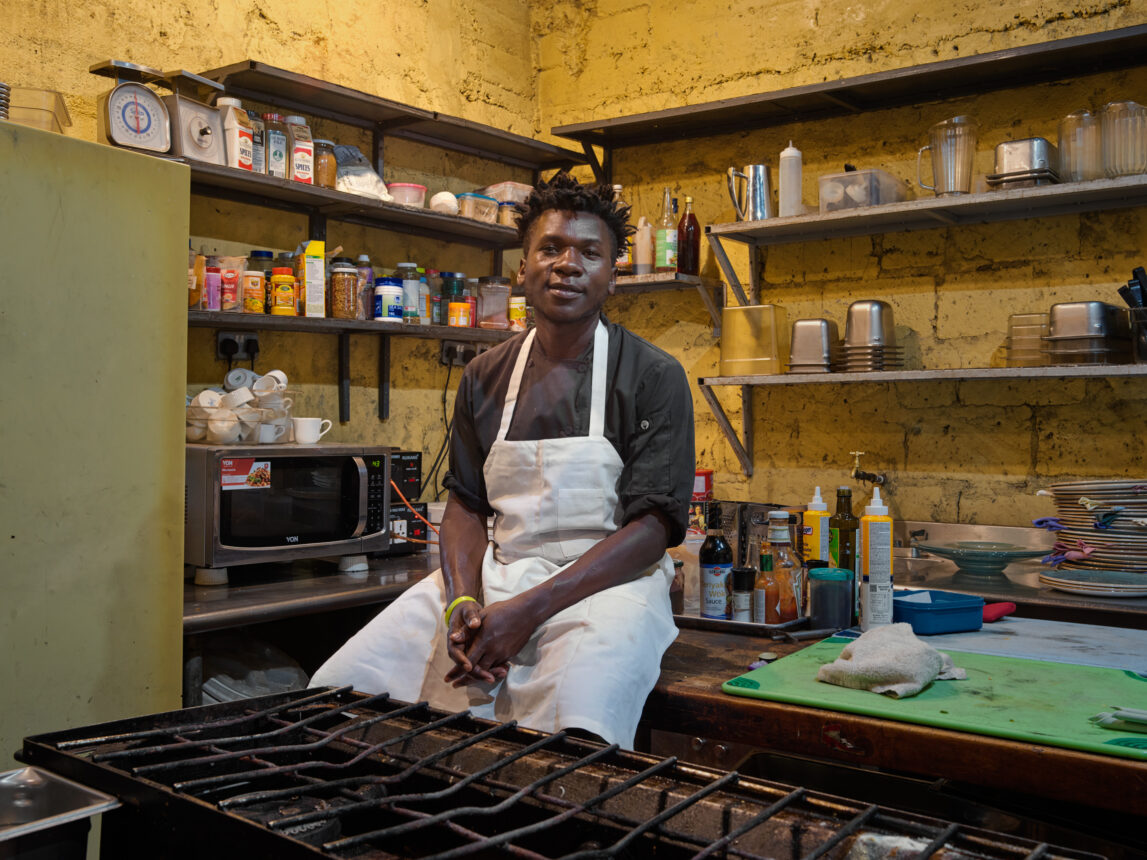 Michael
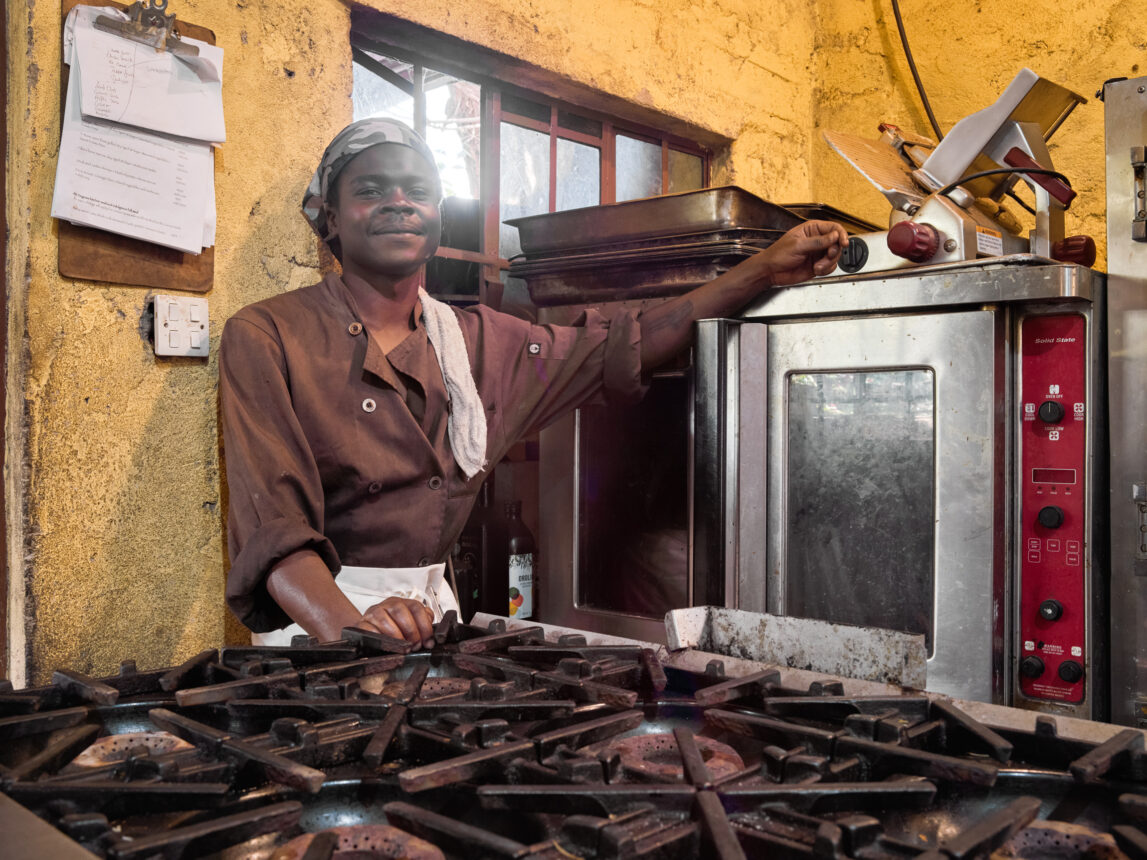 Joshua
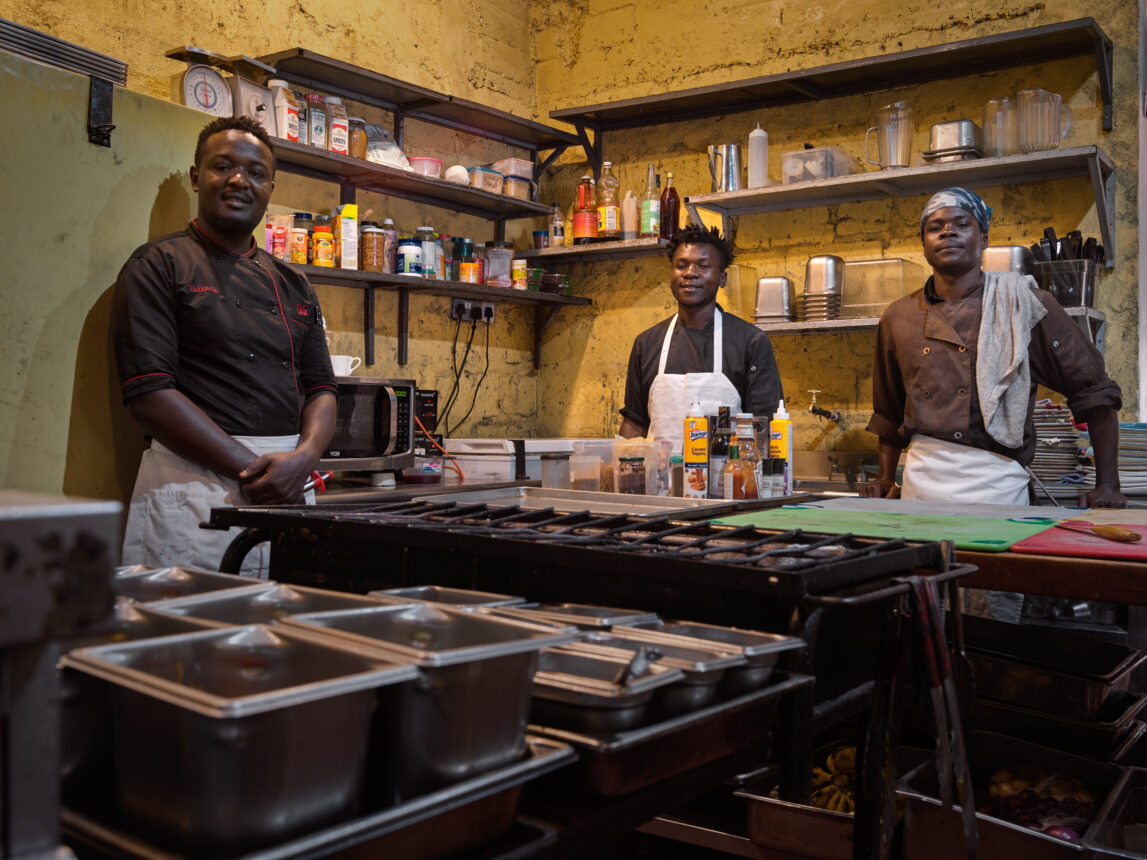 Murithi, Michael and Joshua
Michael
Joshua
Murithi, Michael and Joshua
Michael
Joshua
Murithi, Michael and Joshua
Murithi, Michael and Joshua
Michael
Joshua
Murithi, Michael and Joshua
Michael
Joshua
Murithi, Michael and Joshua
45 Degrees Kitchen is a bit of a hideout. It’s hard to find, tucked away in a suburb of Nairobi. And it needs to stay that way. Harold doesn’t give his restaurant too much publicity, because it’s a place where you need to feel at home, almost as if you’ve come to eat at his house.